
Security
Planning Security Technology Upgrades Without Disrupting Daily Operations
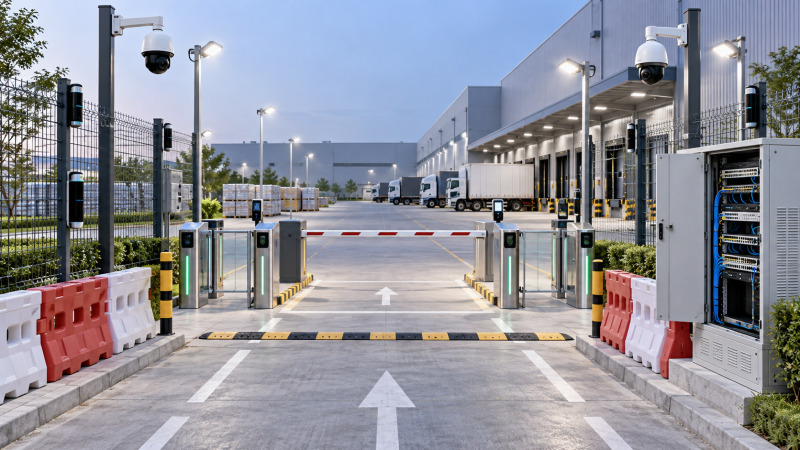
Security technology upgrades fail operationally long before they fail technically. A new camera platform, access control panel, perimeter sensor, or intelligent lighting system can meet its specification and still create avoidable disruption if installation changes traffic routes, interrupts credential use, overloads the network, blocks work areas, or leaves temporary security gaps.
The practical objective is not simply to install better equipment. It is to move from one working security state to another without creating an unmanaged period in between. That requires a deployment plan built around operational dependencies: who needs access, what cannot be taken offline, which spaces change function by hour or shift, how incidents are handled during cutover, and who owns each decision when conditions on site differ from the design drawings.
Define continuity before selecting the deployment sequence
“No disruption” is rarely a realistic standard. A controlled, limited, and communicated interruption is often safer than attempting a completely invisible changeover. The more useful question is: which activities must continue without interruption, and which activities can tolerate a defined maintenance window?
Those answers should be documented before the implementation programme is finalised. In a logistics facility, uninterrupted functions may include gate access, vehicle circulation, loading-zone visibility, alarm response, and emergency egress. In an occupied commercial building, the critical functions may be tenant access, lift interfaces, fire-door operation, reception procedures, and protection of restricted plant areas. On an active construction site, the priorities may shift by phase: worker induction, delivery control, temporary perimeter protection, and coverage of high-value materials can each become critical at different times.
A continuity register is more useful than a generic installation schedule. It should identify, for every affected system or zone:
- the operational function supported by the existing equipment;
- the maximum permitted outage and the periods when an outage is unacceptable;
- the fallback procedure if the new system is not ready at the planned cutover time;
- the person authorised to accept a change in operating condition;
- the dependencies on power, network, doors, lifts, fire systems, lighting controls, or third-party monitoring.
This exercise exposes a common planning error: treating physical security as an isolated low-voltage package. A door controller may depend on a power distribution arrangement that is being altered by another contractor. A network camera may share switching capacity with building systems that cannot tolerate an unplanned reboot. An upgraded lighting scheme may improve image quality but introduce glare at a gatehouse or reduce visibility during a sensor transition. Security technology upgrades are coordinated infrastructure work, even when the installed devices appear small.
Survey the live site, not only the drawings
Design documents establish intent, but live conditions determine installation risk. A pre-construction survey should test the assumptions that matter to continuity: actual cable routes, usable containment capacity, ceiling access restrictions, radio interference, available switch ports, PoE budget, cabinet space, grounding arrangements, and the physical condition of legacy locks and door hardware.
Access-controlled openings deserve particular attention. Replacing a reader is usually straightforward; replacing a controller, lock, door contact, request-to-exit device, or power supply can change the behaviour of the whole opening. A door that is intended to fail secure may not do so if its lock type, fire interface, and emergency release arrangement have not been mapped accurately. Conversely, a prolonged fail-safe condition can create a security exposure even if it protects egress.
Camera upgrades also need an operational rather than purely visual survey. The useful field of view is affected by vehicle queues, seasonal changes in daylight, interior reflections, protective fencing, opening doors, and activities that were not present during the original design visit. If analytics are planned, the survey should identify scene conditions that reduce reliability: shadows across pedestrian routes, rapidly changing illumination, repetitive machinery movement, rain on external domes, or camera angles that make object classification ambiguous.
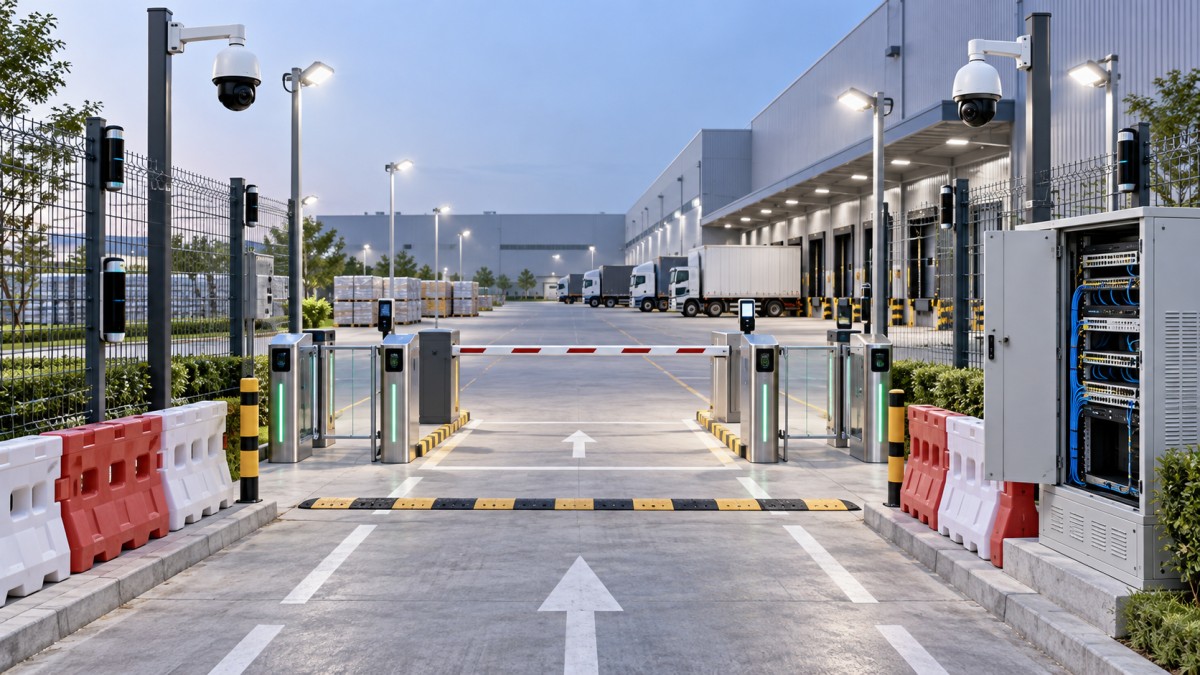
Lighting should be assessed as part of the surveillance environment rather than as a separate amenity system. More light is not automatically better video. Excessive contrast, direct glare, poorly positioned floodlights, reflective surfaces, and mismatched colour temperatures can impair both human observation and camera performance. Where illumination upgrades and video upgrades are delivered in separate work packages, the final camera validation should occur after the intended lighting scenes are active.
Use zones as the unit of change
Large, single-event cutovers are attractive on paper because they appear efficient. They are also difficult to reverse, hard to test thoroughly, and capable of spreading one fault across an entire site. A zone-based deployment reduces the consequence of a defect and creates a repeatable process for later phases.
A zone should be operationally meaningful, not merely convenient for cabling. It may be a reception and visitor route, a loading yard, one building floor, a materials compound, a perimeter segment, or a group of doors governed by the same access policy. The right boundary is determined by how people, vehicles, assets, and emergency procedures move through the area.
Each zone should pass through defined states: surveyed, prepared, installed, configured, tested, operationally validated, cut over, and stabilised. The distinction between testing and operational validation matters. Technical testing can confirm that a camera streams video, a reader reads credentials, and a detector triggers an alarm. Operational validation confirms that the security team can locate the camera feed, the access procedure remains understandable, alarm priorities reach the right recipient, and a manual fallback is available if the control platform becomes unavailable.
A pilot zone is valuable when the new system changes more than hardware. For example, migration from standalone access panels to centrally managed access control may alter enrolment workflows, visitor procedures, reporting, permissions, and incident response. A pilot provides evidence about those process changes before they affect every entrance. It should represent real operating conditions, not simply be the easiest room or least-used doorway.
Build temporary controls into the method statement
During migration, the old protective measure may be removed before the new one is fully commissioned. This is the point at which a technology project becomes a security management issue. Temporary controls must be specified in advance, costed, assigned, and briefed; they cannot be left to a vague instruction to “maintain security.”
The appropriate control depends on the exposure. A removed camera may require a temporary camera, a monitored patrol, restricted vehicle access, or adjustment of existing camera views. A door being rewired may need a staffed entrance, temporary physical locking, a controlled key issue process, or a revised delivery schedule. If a perimeter trenching activity interrupts detection coverage, the site may need a temporary barrier, lighting adjustment, and clearly defined response patrols until protection is restored.
Temporary measures must also preserve life-safety requirements. Security controls must not compromise emergency escape routes, fire-door operation, accessibility provisions, or emergency service access. Where access control interacts with fire alarm systems, the cause-and-effect arrangement should be checked against the approved site design and applicable local rules before any work begins. A temporary measure that appears secure but obstructs safe evacuation is not an acceptable control.
Separate installation readiness from cutover readiness
Equipment mounted on walls and cables pulled into cabinets do not mean the site is ready to switch systems. Cutover readiness should have its own gate, with evidence rather than assumptions. This avoids the familiar situation in which a date is retained because installation is “nearly complete,” while configuration, credential migration, network permissions, or operator training remain unfinished.
For access control, readiness commonly includes verified door schedules, approved access groups, tested emergency release functions, current cardholder data, a process for lost or failed credentials, and confirmation that old and new credentials will coexist as intended. Credential migration deserves careful attention. If replacement cards or mobile credentials are introduced, the issue process should be completed before reliance on the old system is withdrawn. A technically correct reader installation does not prevent queues at an entrance when users do not possess valid credentials.
For video systems, the gate should include camera naming conventions, correct time synchronisation, retention settings, user permissions, recording confirmation, incident export testing, and a documented process for responding to device faults. It is prudent to test retrieval of recorded footage, not just live view. Investigations depend on the ability to find, export, and preserve usable evidence under the organisation’s established controls.
Network readiness is equally important. Camera bandwidth calculations should account for resolution, frame rate, codec choice, scene complexity, recording mode, and simultaneous viewing. Storage sizing must reflect the agreed retention requirement and recording configuration, rather than a nominal device count. Segmentation, firewall rules, remote support access, password management, certificate handling, and firmware governance should be resolved before devices are exposed to the production environment. Connecting new physical security equipment to an operational network without these controls can transfer project risk into the wider business infrastructure.
Plan cutovers around the operating calendar
The lowest-activity period is not always the lowest-risk period. A weekend cutover may reduce foot traffic but leave fewer supervisors, IT personnel, door specialists, or facilities staff available to resolve a failure. A night shift can be suitable for works in public-facing areas but unsuitable where emergency response arrangements are reduced. Project planning should compare activity level with available recovery capability.
A cutover plan needs named decision points. Before work starts, the team should know what conditions permit progression, what conditions trigger a pause, and who may approve a rollback. A rollback plan is not an admission that the new system is unreliable. It is a controlled method for preventing a local fault from becoming an operational incident.
Rollback criteria should be specific. Examples include failure of a critical access route to operate in its approved mode, inability to verify recording from a required camera, loss of communication with a controller, incomplete credential data, or an unresolved conflict with a life-safety interface. The plan should state whether the prior system remains live in parallel, whether a manual process will be used, and how long that condition can safely remain in place.
Parallel operation can reduce risk, but only when responsibilities are clear. Duplicate alarms, conflicting access decisions, two sources of record, and uncertainty over which video platform is authoritative can create their own problems. The period of parallel operation should have a defined purpose, such as comparing event records or verifying coverage, and an agreed end condition.
Commission against real operating scenarios
Factory settings and bench tests cannot confirm site performance. Commissioning should use the situations the security system is expected to manage: a contractor arriving outside normal hours, a delivery vehicle at a controlled gate, a door held open, a person needing emergency egress, an alarm during reduced staffing, a camera scene at night, or an operator retrieving footage after an incident.
These scenarios reveal gaps between the technical design and actual workflow. They also clarify whether procedures need revision. A security upgrade often changes the speed and location of decisions: an alert may move from a local panel to a remote control room; access permissions may be managed centrally rather than at reception; lighting scenes may be automated instead of manually controlled. Unless the operating procedure changes with the technology, capability can be lost despite successful installation.
Acceptance documentation should record the installed configuration, device locations, cable and network references, test results, fault status, account ownership, warranties, maintenance obligations, and any remaining limitations. Open items should be classified by operational impact. Minor cosmetic work is different from an unresolved camera view at a high-risk entrance or a door function that has not completed emergency interface testing.
Treat handover as the start of controlled operation
The first weeks after cutover often expose configuration issues that were not visible during commissioning: incorrect schedules, unexpected access exceptions, unstable network connections, nuisance alarms, camera scenes that change with weather or lighting, and users who follow old procedures. A short stabilisation period with rapid fault ownership is more effective than declaring completion immediately after installation.
Operational feedback should be captured in a form that distinguishes system defects from process problems. A rejected credential may result from a reader fault, an incomplete database migration, an expired authorisation, a misunderstanding of a new entry route, or a policy conflict. Treating every event as a hardware issue delays resolution and obscures the real cause.
The durable value of security technology upgrades lies in the quality of control they create after the installers leave: reliable protection, understandable procedures, auditable records, and a manageable route for future changes. When continuity requirements, temporary controls, cutover authority, and operational validation are planned as carefully as the equipment specification, daily operations do not need to become the test environment for a new security system.
The VitalSync Intelligence Brief
Receive daily deep-dives into MedTech innovations and regulatory shifts.