
Security
Security Hardware Selection: Avoid These Costly Compatibility Issues
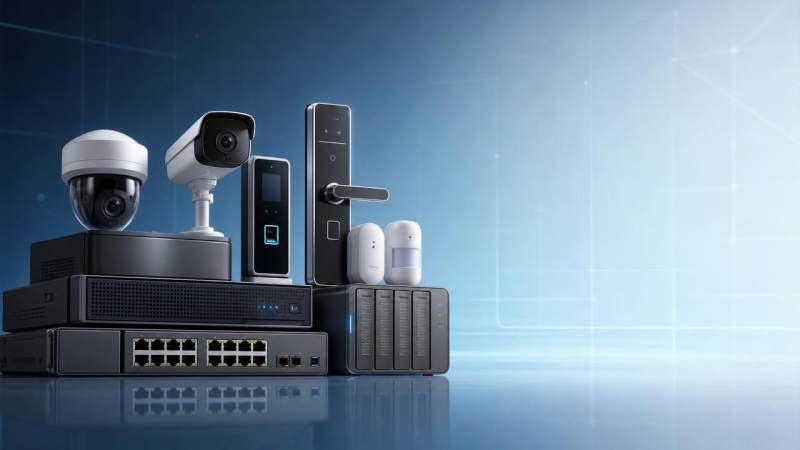
Choosing security hardware without checking compatibility can trigger installation delays, compliance risks, and costly replacements. For procurement teams navigating fast-changing standards, system integration is no longer optional—it is a core buying criterion. This guide highlights the most common compatibility issues in security hardware selection, helping you reduce project risk, protect budgets, and make smarter purchasing decisions in complex security environments.
In large-scale security projects, the purchase decision rarely fails because a device is low quality in isolation. More often, the problem appears when cameras, access controllers, locks, sensors, lighting controls, network switches, storage, and management software are expected to work as one system but do not share the same protocols, power profiles, compliance basis, or upgrade path.
For procurement professionals, this makes security hardware evaluation a cross-functional task involving technical fit, legal alignment, lifecycle cost, and deployment speed. In the 2026 environment of digital infrastructure renewal and urban safety upgrades, platforms such as GSIM help buyers connect global policy developments, optical environment requirements, and sourcing intelligence into a more reliable purchasing framework.
Why Compatibility Has Become a Core Procurement Risk
A decade ago, many buyers could source security hardware by category: one team ordered surveillance devices, another ordered locks, and another selected cabling or lighting. Today, that siloed approach creates avoidable risk because modern physical security systems typically depend on 4 tightly linked layers: field devices, network infrastructure, software platforms, and compliance documentation.
A compatibility failure may not show up in the quotation stage. It often appears 2 to 6 weeks later during installation, commissioning, or acceptance testing. At that point, the cost of correction is significantly higher because site labor, project scheduling, and change-order approvals are already in motion.
The most common hidden cost drivers
- Additional adapters, converters, or license modules not included in the initial bill of materials
- Re-cabling when power draw exceeds PoE capacity or voltage requirements mismatch
- Software integration fees when video, access control, and alarm platforms do not natively connect
- Delays of 7 to 21 days caused by replacing non-compliant devices for a regulated site
- Higher maintenance overhead when firmware updates must be managed across incompatible ecosystems
Why this matters in mixed security and optical environments
Security hardware decisions increasingly overlap with illumination and visibility design. Camera performance depends on lux levels, infrared behavior, glare control, and even emerging optical communication environments such as VLC-enabled infrastructure. In public safety zones, transit hubs, smart construction sites, and logistics facilities, hardware compatibility is no longer only about plugs and ports. It is also about whether devices can operate accurately under the intended optical conditions.
This is one reason intelligence portals like GSIM have strategic value for procurement teams: they bridge technical hardware choices with policy shifts, commercial demand patterns, and optical performance requirements that affect long-term system usability.
Early warning signs during supplier comparison
- Datasheets mention “supports integration” but do not specify protocols, versions, or tested platforms.
- Power requirements are stated broadly, such as “12V/PoE,” without actual wattage ranges.
- Compliance references are generic and do not match the installation region or use case.
- Lead times for accessories are longer than the core device by more than 10 business days.
- Firmware support windows are unclear or shorter than the project service cycle.
The 6 Compatibility Checks Every Procurement Team Should Complete
When selecting security hardware, procurement teams should use a structured review model rather than relying only on unit price and headline specifications. A 6-point check can reduce downstream disruption and improve vendor accountability, especially in multi-site or phased projects.
1. Protocol and software interoperability
Verify whether devices support the same communication standards and management environments. For surveillance, this may include ONVIF profile alignment, video codec support, event integration, and VMS compatibility. For access control, it includes credential formats, controller communication, alarm relay behavior, and API availability. “Compatible” should mean tested at the version level, not just theoretically connectable.
2. Power and electrical fit
Check voltage, current, PoE class, startup load, and backup power interaction. A camera heater, IR illuminator, or motorized access device can raise demand beyond what a standard switch port provides. If a device draws 18W to 25W but the available infrastructure supports only lower class delivery, the hardware may boot inconsistently or fail under peak conditions.
3. Mechanical and mounting compatibility
Security hardware often fails at the physical interface: bracket mismatch, enclosure depth limits, door thickness restrictions, weatherproofing gaps, or incompatible conduit entries. For outdoor and industrial deployments, IP ratings, vibration exposure, operating temperatures, and corrosion resistance should be checked before purchase approval.
The table below provides a practical screening framework procurement teams can use before issuing a final purchase order for security hardware across integrated projects.
The key takeaway is that the most expensive compatibility issue is usually not the device itself. It is the chain reaction: extra parts, extra labor, delayed handover, and reduced system reliability. A pre-award checklist can prevent a relatively small mismatch from turning into a multi-department problem.
4. Data, storage, and bandwidth alignment
High-resolution cameras, analytics functions, and longer retention policies can quickly overload storage assumptions. If one bidder sizes storage for 15 days while the operational requirement is 30 to 90 days, the hardware package is not truly comparable. Buyers should ask for expected bitrate ranges, compression assumptions, and failover behavior during network interruption.
5. Regulatory and site-specific compliance
Security hardware used in public projects, critical infrastructure, healthcare, education, or international campuses may face multiple layers of regulation. These can include surveillance signage obligations, data retention constraints, electrical safety rules, fire door hardware compatibility, or procurement localization requirements. A device that is technically functional may still be commercially unusable if it does not meet regional acceptance conditions.
6. Firmware lifecycle and serviceability
Compatibility is not frozen at delivery. It changes over 12, 24, or 36 months as systems receive patches and platform upgrades. Ask suppliers about firmware update frequency, backward compatibility, end-of-support timing, and whether updates can affect integration settings. This is especially important when procuring security hardware for distributed sites where field visits are costly.
Where Procurement Projects Most Often Go Wrong
Even experienced teams can make avoidable mistakes if tender documents are too general or if suppliers are evaluated mainly on price. In integrated security environments, three purchasing habits repeatedly create compatibility exposure.
Mistake 1: Buying by product category instead of by system role
A camera should not be evaluated only as a camera, nor a lock only as a lock. Each device plays a role in a wider workflow: detect, verify, control, record, alert, and audit. If a product cannot support the required workflow, it does not fit the project even if its standalone specifications look competitive.
Mistake 2: Accepting vague integration claims
Statements such as “supports third-party platforms” or “works with most systems” are not enough for procurement approval. Buyers should request version-specific compatibility matrices, interface documentation, and known limitations. If a supplier cannot define the exact conditions under which integration works, the project is carrying unresolved risk.
Mistake 3: Ignoring optical environment impacts
In smart campuses, roads, tunnels, warehouses, and construction zones, optical conditions directly influence security effectiveness. Poorly matched lighting and imaging hardware can reduce detection accuracy, increase false alarms, and weaken evidence quality. This is a critical issue for buyers sourcing security hardware alongside illumination upgrades or AI vision systems.
The matrix below compares common procurement oversights with their likely operational effect and a practical control measure.
This pattern shows why mature procurement practice treats accessories, software, and environmental conditions as part of the same buying package. A low unit price can lose its advantage quickly if supporting items arrive 14 days late or require emergency substitutions.
A Practical Evaluation Framework for Buyers
Procurement teams need a repeatable process that can be used across vendors, project sites, and internal stakeholders. A practical framework should combine technical verification with sourcing discipline, especially for mixed portfolios that include surveillance, access control, perimeter devices, and lighting-linked security components.
Step 1: Define the system boundary before comparing offers
List every device and interface included in the operating chain. For example, a “camera package” may actually involve camera body, lens, mount, junction box, switch port, storage policy, VMS license, analytic rule, and required scene illumination. Without this boundary definition, vendors may quote different scopes that appear comparable only on paper.
Step 2: Build a 5-column compatibility matrix
Use columns for device, interface requirement, environmental requirement, compliance requirement, and support requirement. This method makes it easier to compare 3 to 5 suppliers consistently and identify where one offer relies on assumptions rather than confirmed compatibility.
Suggested checklist items
- Supported protocols and tested software versions
- Input power, backup power, and surge conditions
- Mounting method, ingress protection, and operating temperature range
- Retention period, bandwidth estimate, and storage expansion path
- Regional compliance fit and installation documentation requirements
- Firmware support period, spare parts availability, and service response expectations
Step 3: Require proof, not only specification sheets
In high-value projects, ask for one or more of the following: lab validation records, sample configuration screenshots, pilot deployment references, acceptance test procedures, or a controlled proof-of-compatibility exercise. This does not require disclosing confidential customer names. It requires suppliers to show that integration claims are evidence-based.
Step 4: Align commercial terms with compatibility risk
Commercial structure matters. Buyers can reduce risk by linking payment milestones to functional acceptance, defining substitution rules, requiring notification for firmware changes, and separating optional integration costs from base hardware pricing. For projects with a 30 to 90 day implementation cycle, these terms can materially improve budget control.
How GSIM Supports Better Security Hardware Decisions
Procurement teams do not only need product catalogs. They need context: which standards are shifting, which security and optical technologies are converging, and which commercial trends may affect sourcing choices over the next 6 to 18 months. That is where GSIM delivers practical value as a decision-support platform.
Strategic intelligence for procurement planning
GSIM’s Strategic Intelligence Center helps buyers interpret global compliance developments for electronic surveillance and connected security environments. This matters when a project crosses jurisdictions or when tender requirements must anticipate policy changes rather than react to them after award.
Commercial insight beyond basic sourcing
By tracking procurement trends in smart construction, public safety upgrades, and integrated infrastructure, GSIM helps procurement personnel identify where compatibility expectations are rising. This includes the growing overlap between AI vision, optical design, and visible light communication environments that can reshape future hardware selection criteria.
A more transparent evaluation approach
GSIM’s mission aligns well with the needs of professional buyers: connecting global protection demand with precision manufacturing supply through a transparent, standards-aware knowledge system. For organizations seeking to reduce sourcing ambiguity, that kind of intelligence support can improve pre-qualification, specification writing, and vendor comparison quality.
Final Buying Guidance for Procurement Teams
The safest security hardware purchase is not always the lowest-cost line item. It is the option that fits the full operating environment: software, power, mounting, compliance, optical conditions, and future maintenance. When these factors are reviewed early, procurement teams can avoid the 3 most common losses in security projects: rework, delay, and hidden integration spending.
If your organization is evaluating surveillance systems, access control devices, integrated safety infrastructure, or security-and-illumination upgrades, a compatibility-first approach will improve both project resilience and commercial predictability. GSIM can help you translate market intelligence, standards awareness, and system-level thinking into better sourcing decisions.
To reduce procurement risk and shortlist security hardware with greater confidence, contact GSIM today, request a tailored evaluation framework, or explore more solution insights for your next integrated security project.
The VitalSync Intelligence Brief
Receive daily deep-dives into MedTech innovations and regulatory shifts.