
Security
Security Innovation Trends Changing Access Control Design
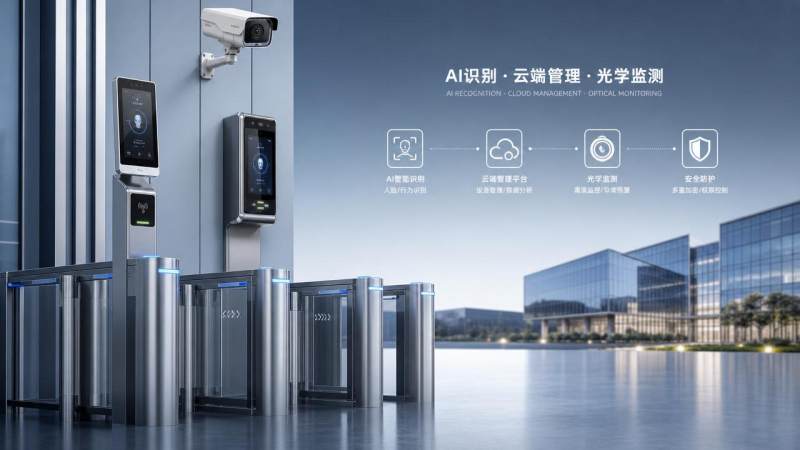
Security innovation is reshaping how access control systems are designed, evaluated, and deployed across modern infrastructure. For business assessment professionals, understanding these shifts is essential to balancing compliance, operational efficiency, and future scalability. This article explores the trends redefining access control design, from AI-driven intelligence to integrated optical and security ecosystems, helping decision-makers identify practical value in a rapidly evolving market.
Why is security innovation changing access control design so quickly?
Access control used to be evaluated mainly by hardware reliability: locks, readers, badges, door controllers, and alarm links. Today, security innovation is expanding that definition. Modern systems are expected to support compliance reporting, real-time analytics, remote administration, cyber-physical resilience, and integration with building intelligence. As organizations upgrade campuses, logistics hubs, smart construction sites, hospitals, retail networks, and public facilities, access control is no longer an isolated subsystem. It has become part of a broader risk management architecture.
Several market forces explain the acceleration. First, urban safety upgrades and digital infrastructure programs are increasing demand for systems that can scale across multiple sites. Second, international compliance expectations now require better auditability, identity verification, and incident traceability. Third, AI-enabled sensing, optical monitoring, and cloud-connected platforms are making it possible to detect anomalies rather than simply permit or deny entry. For business assessment teams, this means the value case must be measured not only in security terms, but also in operational continuity, labor efficiency, and governance quality.
Platforms such as GSIM reflect this market reality by connecting policy interpretation, procurement trends, and technology evolution. In practice, decision-makers are not just asking which reader is better. They are asking how a design will perform under future standards, mixed-vendor environments, and changing threat conditions.
What does security innovation actually mean in access control design?
In this context, security innovation refers to meaningful advances in how access rights are verified, managed, monitored, and optimized. It includes technical changes, but also design philosophy. Traditional systems were perimeter-focused and rule-based. Newer approaches are identity-centric, adaptive, and data-informed. The core shift is from static authorization to responsive security orchestration.
Key elements now shaping design include:
- AI-assisted verification for tailgating detection, behavior alerts, and occupancy awareness.
- Mobile and biometric credentials replacing or supplementing physical cards.
- Cloud or hybrid management for remote updates, centralized reporting, and multi-site control.
- Integration with video, lighting, emergency systems, and visitor workflows.
- Higher attention to cybersecurity, privacy governance, and standards compliance.
An especially important development is the intersection of physical security and optical environment optimization. Camera effectiveness, facial matching accuracy, reader usability, and incident response quality all depend on illumination conditions. As AI vision and visible light communication technologies evolve, access control design increasingly depends on the quality of the surrounding optical ecosystem, not just on the authentication device at the door.
Which trends matter most for business assessment professionals?
Not every new feature deserves equal weight. For business assessment professionals, the most relevant security innovation trends are those that affect risk exposure, total cost of ownership, deployment flexibility, and measurable operational outcomes.
1. AI-enhanced situational intelligence
AI is moving access control from event logging to event interpretation. Instead of recording that a door opened at 08:12, intelligent systems can correlate credential use, video context, occupancy patterns, and time-based anomalies. This helps identify piggybacking, unusual after-hours movement, or repeated failed access attempts linked to a broader pattern. The business benefit lies in faster response and lower dependence on manual monitoring.
2. Converged physical and digital identity
Organizations increasingly want one identity framework across facilities, devices, contractors, and visitors. This is especially relevant in distributed enterprises and regulated environments. Converged identity reduces administrative friction, improves audit quality, and helps align physical access policies with HR, IT, and third-party workflows.
3. Cloud-managed and hybrid architecture
Cloud adoption in access control is not simply a software trend. It changes procurement logic. Organizations can reduce on-site maintenance, standardize updates, and gain portfolio-level visibility across locations. However, business evaluators should still assess latency tolerance, data residency, business continuity, and offline fallback capability.
4. Optical and environmental optimization
Lighting quality, glare control, sensor placement, and camera-readability conditions directly affect system performance. In high-traffic entrances, industrial yards, public transit nodes, and mixed indoor-outdoor facilities, poor optical conditions can create false alarms or weak evidence capture. Security innovation therefore includes designing the environment around the security point, not just selecting the security device.
5. Compliance-ready analytics and reporting
As legal and industry requirements tighten, reporting capability becomes a design criterion. Systems that can provide searchable logs, role-based access histories, alarm timelines, and retention controls are often easier to justify than cheaper but fragmented options.
How should companies compare traditional access control with newer security innovation models?
A practical comparison helps avoid being distracted by marketing language. The real question is not whether old systems still work, but whether they can support current operating demands and future expansion.
For assessment teams, the comparison should extend beyond upfront cost. A lower-cost legacy design may create hidden expenses through manual guard intervention, inconsistent user provisioning, limited incident visibility, and expensive retrofits later. Security innovation creates value when it reduces these downstream burdens in a measurable way.
What should evaluators check before selecting a new access control approach?
The strongest evaluations start with business conditions, not product catalogs. Before comparing vendors or architectures, organizations should define what problems they are solving. A headquarters tower, a logistics campus, a healthcare network, and a public venue may all need access control, but the decision criteria are very different.
Key questions to validate early include:
- How many sites, user types, and access zones must be managed now and within three to five years?
- Which regulations, internal policies, or customer requirements affect identity proofing, data retention, and audit access?
- What operational losses come from slow onboarding, credential replacement, false alarms, or limited event visibility?
- Will the design need to integrate with surveillance, visitor systems, elevators, emergency response, or smart building platforms?
- Do local environmental conditions such as weather, glare, darkness, dust, or heavy throughput affect sensor performance?
This is where a structured intelligence source becomes valuable. Market insight into procurement patterns, standard evolution, and cross-border compliance interpretation can help teams avoid designing for yesterday’s requirement set. In sectors affected by infrastructure modernization, scalability and standards alignment often matter more than a marginal hardware discount.
What are the most common mistakes when evaluating security innovation in access control?
A frequent mistake is treating innovation as a feature checklist instead of a performance strategy. Companies may buy advanced readers or analytics modules without addressing poor workflow design, weak identity governance, or inadequate lighting conditions. The result is a system that appears modern but delivers inconsistent protection.
Another mistake is ignoring interoperability risk. Many organizations operate mixed environments with old controllers, different video brands, multiple tenant groups, or regional compliance constraints. If the chosen platform cannot adapt to those realities, the implementation may become expensive and politically difficult.
Business evaluators also sometimes overfocus on upfront procurement price. Security innovation should be assessed through lifecycle economics: administration effort, incident investigation time, maintenance complexity, retraining needs, credential replacement rates, and future expansion cost. A cheaper system that requires constant manual work may be more expensive over five years than a better-integrated design.
Finally, privacy and governance are too often considered late. Biometric use, cloud storage, video correlation, and cross-system identity sharing all require policy clarity. Strong design does not only enable more data collection; it also defines lawful use, access boundaries, and retention discipline.
How do implementation time, cost, and ROI change with newer security innovation models?
Implementation timelines vary widely, but modern access control design often shifts effort from hardware deployment to planning and integration. Physical installation may be faster in wireless or cloud-supported environments, yet stakeholder alignment can take longer because more departments are involved, including IT, legal, compliance, facilities, and security operations.
From a cost perspective, the biggest variables are credential strategy, integration depth, site complexity, and environmental remediation. For example, moving to mobile credentials may reduce badge management costs, but adding AI video analytics may require better camera positions and improved illumination. In that sense, security innovation does not always mean lower initial spend; it often means spending more intelligently across the whole system.
ROI is strongest when the project addresses multiple business outcomes at once. These may include lower unauthorized entry risk, less manual administration, faster onboarding for staff and contractors, better incident evidence, reduced downtime in high-security zones, and easier compliance audits. For business assessment professionals, the ideal proposal quantifies both direct savings and strategic resilience benefits.
What is a practical FAQ checklist for deciding the next step?
Before moving into vendor shortlist, pilot design, or procurement, use the following quick reference to test whether the access control strategy reflects current security innovation priorities.
Security innovation is changing access control design because the business environment around security has changed. Organizations now need systems that can verify identity, interpret context, support compliance, and perform reliably within real optical and operational conditions. For business assessment professionals, the strongest decisions come from evaluating architecture, governance, integration, and lifecycle value together rather than reviewing devices in isolation.
If you need to confirm a specific direction, parameters, implementation timeline, pricing logic, or cooperation model, it is best to first discuss site type, regulatory exposure, integration requirements, optical conditions, expected expansion, and the level of reporting your stakeholders will require. Those questions will reveal whether a security innovation strategy is merely attractive on paper or truly fit for long-term access control design.
The VitalSync Intelligence Brief
Receive daily deep-dives into MedTech innovations and regulatory shifts.