
Security
What causes delays and failures in security hardware integration
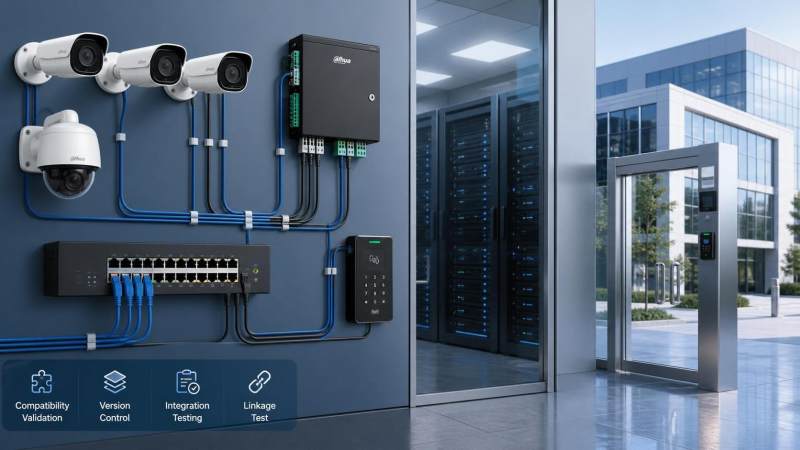
Delays and failures in security hardware integration rarely begin with a defective camera, reader, controller, or sensor. In most projects, the visible device problem is only the final symptom. The deeper causes usually sit upstream: incomplete design assumptions, weak interface definition, procurement decisions made without integration validation, changing compliance requirements, and fragmented accountability across IT, security, contractors, and operations.
For project managers and engineering leads, this matters because security hardware integration is not just an installation task. It is a coordination problem across physical infrastructure, software logic, network conditions, regulatory constraints, and site realities. A deployment may look straightforward on paper—access control, video surveillance, intercoms, intrusion alarms, emergency lighting, analytics—but once these systems must actually work together, hidden dependencies surface quickly.
That is why projects that appear technically mature still slip on schedule or underperform after handover. The issue is often not whether the hardware works, but whether the full system was specified, staged, tested, approved, and supported as one operational environment.
Integration fails early, even if the failure is discovered late
One of the most common management mistakes is treating integration as a final commissioning phase. In practice, failure is usually designed in much earlier. If subsystem interfaces are not defined at concept design or tender stage, teams begin making assumptions independently. The access control supplier assumes standard API support. The video management vendor assumes ONVIF compatibility will be enough. The network team assumes available bandwidth. The electrical contractor assumes power loads are stable. None of these assumptions are necessarily unreasonable on their own, but together they can produce a system that is technically installed and still functionally broken.
This is especially common in multi-building sites, transport nodes, smart campuses, logistics parks, public safety projects, and retrofit environments where legacy hardware must coexist with newer digital layers. The more stakeholders involved, the more likely integration risk will hide behind phrases like “standard protocol,” “future-ready,” or “third-party compatible.”
In project reality, those phrases are not proof. They are only prompts for further verification.
Compatibility is often narrower than vendors imply
Many delays in security hardware integration come from overestimating compatibility. A camera may support ONVIF, but not every event, metadata stream, PTZ command, or edge analytics function will map cleanly into the target video platform. An access control panel may expose software integration options, but only through a restricted SDK, firmware-specific driver, or licensed middleware. A biometric terminal may technically connect, yet fail to meet local privacy handling requirements or identity workflow expectations.
Project teams often discover too late that “integration supported” does not mean “all intended use cases supported.”
This gap matters most when the project relies on workflow automation rather than basic device operation. For example:
- a forced-door alarm should trigger nearby camera bookmarks and security operator pop-ups;
- a perimeter alert should activate lighting logic and event recording priorities;
- a visitor access event should sync with time-limited credentials and audit logging;
- an emergency egress condition should override normal lock behavior while preserving reporting.
If these workflows were not tested against the exact hardware, firmware, and software versions in scope, delays are almost inevitable. The issue is not only whether one device can send a signal to another, but whether the intended operational sequence works reliably under real conditions.
Version control is an underestimated project risk
Integration projects frequently fail because stakeholders believe they are approving a product category, when in fact integration depends on a very specific software and firmware combination. A controller validated in a factory test may behave differently after a firmware update. A video management platform may change API handling between releases. A driver that worked in pre-sales demonstrations may no longer be maintained in the deployment version.
For project managers, uncontrolled version drift creates three major problems. It weakens FAT and SAT relevance, causes rework between procurement and commissioning, and complicates liability when suppliers blame each other.
This becomes even more serious in long-cycle projects. In urban infrastructure, public procurement, and cross-border construction programs, hardware may be specified months before site activation. By the time devices are delivered, the approved integration matrix may no longer match what is commercially available. If substitute components enter without structured revalidation, the project inherits integration risk that no one formally owns.
Poor requirements definition creates expensive ambiguity
Another frequent cause of delay is writing procurement specifications around hardware counts instead of operational outcomes. A bill of materials can be accurate and still be insufficient. Knowing how many cameras, readers, panic buttons, speakers, or control cabinets are needed does not explain how the systems must behave together.
Integration requirements need to define:
- event logic and priority handling;
- alarm response paths;
- cybersecurity and credential management expectations;
- latency tolerance for critical actions;
- record retention and audit trail needs;
- fail-safe versus fail-secure behavior;
- manual override scenarios;
- responsibility boundaries between systems.
When these items are not captured early, contractors fill the gaps with assumptions, often to protect scope or cost. Later, when operators expect different behavior, integration becomes a variation claim, a schedule dispute, or an unresolved commissioning issue.
From a project execution perspective, this is one of the clearest warning signs: if the team cannot describe system behavior in scenario terms, the integration scope is probably not mature.
Legacy environments cause more friction than new-build teams expect
Retrofit and expansion projects are especially vulnerable. Existing sites often contain undocumented field wiring, obsolete controllers, unsupported firmware, proprietary protocols, and inconsistent naming conventions. Drawings may not reflect current conditions. Power quality may be unstable. Rack space, heat dissipation, grounding, and cable pathways may all be more constrained than the original design assumed.
In these environments, security hardware integration is not only a matter of connecting new devices. It is an exercise in risk containment. Every attempt to preserve legacy assets may save capex upfront while increasing engineering complexity, commissioning time, and future maintenance burden.
This does not mean legacy integration is the wrong decision. It means the project should evaluate total lifecycle impact, not just initial hardware reuse. In some cases, replacing a problematic subsystem is less disruptive than building custom bridges around it.
Network and power assumptions regularly break deployment schedules
Security devices increasingly depend on stable IP networks, segmented traffic policies, PoE budgets, time synchronization, and remote management access. Yet many security projects still treat network readiness as an external dependency that will somehow be available on time.
That is risky. Cameras may come online but underperform because bandwidth was sized for average traffic instead of peak event loads. Edge analytics may not function as expected because processing profiles were changed to preserve storage. Access controllers may lose event continuity during network failover. Centralized monitoring may be delayed because VPN, firewall, or certificate approval processes were not aligned with the commissioning calendar.
Power design can be equally disruptive. Backup runtimes, inrush current, cabinet thermal conditions, battery maintenance regimes, and grounding quality all affect reliability. Many “integration issues” are actually infrastructure issues showing up through security devices.
Project managers should resist the habit of separating physical installation completion from operational readiness. A mounted and powered device is not an integrated asset.
Compliance confusion can halt projects late in the cycle
In cross-border or regulated projects, compliance uncertainty is a major cause of integration delay. The problem is not only product certification. It may involve data retention rules, surveillance signage obligations, lawful intercept restrictions, encryption policies, wireless approval, cyber hardening requirements, or procurement conditions tied to public infrastructure standards.
Requirements vary significantly by jurisdiction and project type. A solution acceptable in one market may require redesign in another due to privacy law, government procurement restrictions, or sector-specific rules for transport, education, healthcare, or critical infrastructure. If these issues are addressed only after equipment selection, projects face redesign, recertification, customs delays, or software reconfiguration during commissioning.
Where standards or legal interpretation are uncertain, teams should document the issue as 【待核实】 rather than assuming later approval. In practice, early compliance clarification often protects schedule more than late technical troubleshooting.
Cross-team ownership is usually weaker than the org chart suggests
Security hardware integration sits across disciplines that report into different management lines. Security wants functionality. IT wants control and cybersecurity. Facilities wants maintainability. Construction wants practical completion. Procurement wants commercial closure. Operators want simplicity. These priorities are legitimate, but they often collide when no one owns the end-to-end operating model.
Many projects delay not because teams are uncooperative, but because decision rights are unclear. Who approves network exceptions? Who validates device naming and asset registration? Who decides whether a firmware change is acceptable? Who owns master time synchronization? Who signs off on integration test scripts? Who accepts degraded operation if one subsystem is delayed?
Without clear governance, issues circulate between vendors and internal teams until the commissioning window is consumed. For engineering leaders, this is often the point where a manageable technical problem becomes a commercial and reputational one.
Testing is too often device-based instead of scenario-based
One of the most expensive habits in integration projects is relying on point checks. The reader unlocks the door. The camera streams video. The alarm panel reports status. These tests confirm components work individually, but they do not prove that the system supports live operations.
Scenario-based testing is more demanding but far more useful. It asks what happens when real incidents occur: a network switch fails, a controller reboots, a door is held open, a UPS enters backup mode, a fire relay activates, a video server loses storage access, an operator acknowledges the wrong event, or a site shifts from day mode to emergency mode. These are the moments when weak integrations fail.
For complex sites, FAT should validate interface logic in a controlled environment, while SAT should validate behavior under site-specific conditions, including degraded modes. If testing only confirms best-case operation, the project is not actually reducing risk.
Supply chain variability now affects integration quality, not just delivery dates
In recent years, supply disruptions have changed how substitution risk appears in security projects. When original models become unavailable, teams may approve alternates that match headline specifications but differ in chipset, firmware path, enclosure design, certification status, or software support. Those differences may seem minor in procurement review and become serious in integration.
For project managers, the lesson is straightforward: substitute approval should not stop at dimensions and datasheets. It must include interface impact, licensing impact, certification impact, and test impact. Otherwise, a schedule-saving procurement decision may create a longer commissioning delay later.
How to reduce the chance of delay or failure
The most effective prevention step is to treat integration as a deliverable from day one, not a technical detail to resolve after equipment arrives. That means building an integration matrix early, locking approved versions where possible, defining operational scenarios in writing, and assigning explicit owners for interfaces, testing, and change control.
It also means challenging assumptions that are common in tenders but weak in execution:
- “open protocol” is not enough without function-level validation;
- “equivalent product” is not enough without integration review;
- “factory tested” is not enough without site scenario testing;
- “IT will handle the network” is not enough without readiness milestones;
- “legacy system support” is not enough without field condition verification.
Strong projects usually share a few disciplines. They freeze critical interfaces early. They keep a live dependency register. They involve operators before commissioning. They document fallback modes. They avoid late substitutions without requalification. And they separate “installation complete” from “system accepted.”
In security hardware integration, delays are rarely random. They follow patterns: hidden dependencies, loose specifications, fragmented ownership, and late discovery of site or compliance constraints. Once project teams start looking at integration through that lens, failures become easier to predict—and, more importantly, easier to prevent.
The VitalSync Intelligence Brief
Receive daily deep-dives into MedTech innovations and regulatory shifts.