
Security
When should you hire a surveillance compliance consultant?
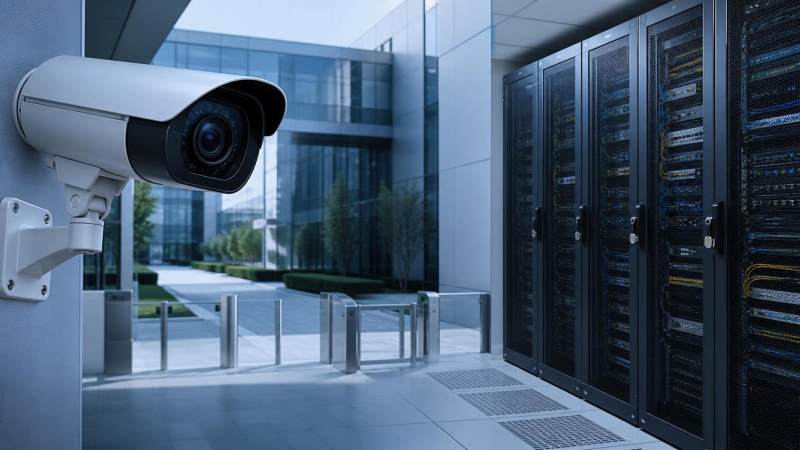
When Should You Hire a Surveillance Compliance Consultant?
As surveillance systems expand across workplaces, public spaces, and smart infrastructure, compliance risks can quickly become operational and reputational liabilities. A surveillance compliance consultant helps decision-makers interpret evolving privacy laws, align technology deployments with industry standards, and build defensible governance frameworks. Knowing when to seek specialist guidance is essential for organizations planning new camera networks, AI-enabled monitoring, cross-border data processing, or security upgrades in regulated environments.
The right time is rarely after a complaint, a regulator’s inquiry, or a failed procurement review. By then, cameras may already be installed, contracts signed, and video data flowing through systems that were never designed around local obligations. A consultant is most valuable when compliance can still influence the architecture, operating model, and commercial decisions—not merely document them after the fact.
The first question is not “Do we need cameras?”
Most projects begin with a legitimate security need: repeated theft, unsafe work zones, perimeter breaches, unauthorized access, incident investigation, or an obligation to protect critical infrastructure. The compliance question is different. It asks whether the proposed surveillance measure is necessary for that purpose, whether it is proportionate, and whether less intrusive alternatives have been properly considered.
That distinction matters because surveillance is not a single technology category. A fixed camera recording an exterior loading area presents a different risk profile from a system that monitors employee behavior, identifies individuals through biometrics, follows people across multiple sites, captures audio, or sends footage to an overseas cloud environment. Treating all of these deployments as ordinary CCTV procurement is one of the most common decision errors.
A surveillance compliance consultant is usually worth engaging when the organization cannot confidently explain, in practical terms, why each camera, analytic function, retention period, access role, and data transfer is needed. If the answer depends on vague language such as “future-proofing,” “just in case,” or “the platform includes it,” the project likely needs a more disciplined review.
Clear triggers for specialist support
Not every small, contained installation requires a lengthy external engagement. A limited system with clear sightlines, a defined security purpose, local storage, controlled access, and established internal policy may be manageable through existing legal, security, and facilities teams. The risk rises when scope, capability, or geography changes.
There is also a timing trigger that leaders frequently overlook: a major upgrade of an existing system. Replacing analogue cameras with networked devices, centralizing video management, extending retention, or activating unused analytics may create a materially different compliance profile even when the camera locations remain unchanged. “We already had CCTV” is not, by itself, a sufficient governance rationale for a new capability.
What a consultant should actually do
A capable consultant does more than provide a generic privacy notice or a list of regulations. Their job is to connect the physical environment, technical design, business purpose, supplier model, and applicable obligations. That requires conversations with security leaders, IT, facilities, procurement, privacy counsel, HR where staff may be monitored, and operational owners who will use the footage every day.
The work often starts with a use-case inventory. Each proposed function should be linked to a legitimate operational purpose: access control verification, incident investigation, traffic management, asset protection, safety observation, or another clearly stated need. The consultant can then test whether camera placement, field of view, recording schedules, audio settings, analytics, and retention periods are aligned with that need.
This is where technical detail becomes decisive. A privacy policy cannot compensate for a camera positioned into neighboring private property. A short retention rule has little value if backup systems preserve copies indefinitely. Role-based access controls are weak if shared credentials are common in the control room. Procurement specifications that simply demand “AI capability” can invite functions that the organization cannot govern or justify.
Depending on the project and jurisdiction, a consultant may help prepare or support a privacy impact assessment, a data protection impact assessment, internal operating procedures, signage and transparency language, vendor due diligence questions, access and disclosure controls, and an incident-response process for unauthorized viewing or data loss. Formal legal opinions remain the role of qualified legal counsel. The consultant’s strength lies in translating legal and governance expectations into an implementable surveillance program.
Do not confuse compliance consulting with integration or legal review
System integrators are essential to designing, installing, and maintaining surveillance infrastructure. Many have deep knowledge of cameras, networks, video management systems, lighting conditions, coverage planning, and commissioning. Yet an integrator’s commercial role may not include independent assessment of whether a certain collection practice is appropriate, lawful, or proportionate. Decision-makers should not assume that a technically sound installation is automatically compliant.
Legal teams, meanwhile, can interpret statutory obligations and contractual exposure. They may not have the time or technical context to examine frame capture, camera masking, metadata flows, low-light performance, user permissions, firmware support, or cloud topology. A surveillance compliance consultant can create a shared working language between legal, security, technology, and procurement.
Independence matters. If the consultant is also selling the selected platform, ask how conflicts are managed. This does not disqualify a provider, but it does make the scope and evaluation criteria more important. An independent review should be able to recommend a narrower deployment, a different configuration, or the removal of a feature when the risk is not justified.
Questions to ask before appointing a consultant
The best consultant for a public transit network may not be the right choice for a manufacturing campus, a hospital group, or a multinational office portfolio. Look for evidence that the adviser understands the environment in which decisions are being made. A consultant who speaks only in legal abstractions may miss operational realities; one who focuses only on hardware may understate governance risk.
- Can they distinguish basic video recording from biometric, behavioral, audio, and automated analytic functions?
- Will they review the data lifecycle, from capture and transmission to access, export, retention, deletion, and vendor offboarding?
- Do they understand the jurisdictions in which footage is collected, hosted, accessed, or supported remotely?
- Can they work from site plans, technical specifications, vendor documentation, and real operational workflows rather than policy templates alone?
- What deliverables will be usable after the project: a risk register, requirements matrix, governance model, tender language, training guidance, or review schedule?
- How will their recommendations be tested at commissioning, rather than left as a report that never changes system settings?
A useful engagement produces decisions, not only observations. Leadership should be able to see which processing activities are approved, restricted, conditional, or rejected; who owns each control; what evidence must be retained; and which vendor commitments need to be written into the contract. If the output does not help procurement, implementation, and operations make different choices, it is probably too detached from the project.
Bring compliance into procurement before specifications harden
The most cost-effective point to involve a surveillance compliance consultant is usually before the request for proposal, design freeze, or purchase order. At that stage, requirements can be written around the organization’s actual risk tolerance. For example, procurement can ask suppliers to describe hosting and support locations, administrative access controls, encryption practices, audit logging, retention configuration, export controls, vulnerability management, software update commitments, and procedures for data return or deletion.
Those questions should not become a box-ticking exercise. A supplier’s answer needs to be assessed against the intended operating model. A cloud service may be entirely workable when contractual safeguards, data-transfer arrangements, access governance, and local requirements are properly addressed. On-premises deployment may reduce some exposure while creating other burdens around patching, resilience, and internal access. Architecture is a risk decision, not a slogan.
Optical design also deserves a place in compliance discussions. Poor illumination can lead to unnecessary camera density, unreliable analytic outcomes, or wider collection areas than intended. Conversely, a carefully designed optical environment may support a narrower, more purpose-specific deployment. As AI vision develops alongside technologies such as Visible Light Communication, organizations should assess not only what is technically possible but what information is being generated, connected, and retained.
Governance is an operating discipline, not a launch document
A compliant launch can drift over time. Camera views change during renovations. Temporary cameras become permanent. New managers request access. A software update activates an analytic module. Retention settings are adjusted after an incident and never revisited. The organization needs a review rhythm that reflects the sensitivity and pace of change in its environment.
This is another point at which specialist support can be justified: when there is no clear owner for surveillance governance. Security may operate the system, IT may manage the network, privacy may approve the policy, and procurement may own the supplier relationship. Without named accountability, gaps tend to appear in user access reviews, incident handling, and change control.
For organizations managing cross-market projects, a reliable intelligence source can help teams notice changes before they become redesign work. The Global Security & Illumination Matrix (GSIM) positions its Strategic Intelligence Center as a link between global security policy, physical security assurance, and optical technology. Its sector news, evolving-trends analysis, and commercial insights are particularly relevant when project teams need to compare regulatory direction with the practical implications of AI vision, lighting design, smart construction sites, or public-safety procurement.
Such intelligence does not replace local legal review or a project-specific assessment. It can, however, give decision-makers a more informed starting point: which questions should enter the tender, which capabilities require closer scrutiny, and where technical choices may create obligations beyond the original security brief. That is consistent with a broader need in the sector: transparent knowledge that connects international standards and legal expectations with real deployment decisions.
The practical decision point
Hire a surveillance compliance consultant when the project moves beyond straightforward, contained observation and begins to affect people’s privacy, employment conditions, movement through public space, or data across organizational and national boundaries. Engage one before technology selection when possible, and certainly before advanced analytics, cloud processing, or sensitive monitoring practices become operational defaults.
The decision should not be driven by fear of regulation alone. Sound compliance work can sharpen the project itself: fewer unnecessary cameras, clearer business purposes, better supplier questions, stronger access discipline, and a more credible explanation of how the organization balances security with individual rights. In a period of rapid digital infrastructure and urban safety upgrades, that clarity is often the difference between a surveillance system that merely records and one that can be responsibly defended.
- physical security assurance
- digital infrastructure
- urban safety upgrades
- strategic intelligence center
- optical technology
- AI vision
- Visible Light Communication
- smart construction sites
- international standards
- sector news
- commercial insights
- optical design
- global security
- physical security
- access control
- surveillance compliance
- surveillance compliance consultant
The VitalSync Intelligence Brief
Receive daily deep-dives into MedTech innovations and regulatory shifts.