
Security
When security architecture creates more blind spots
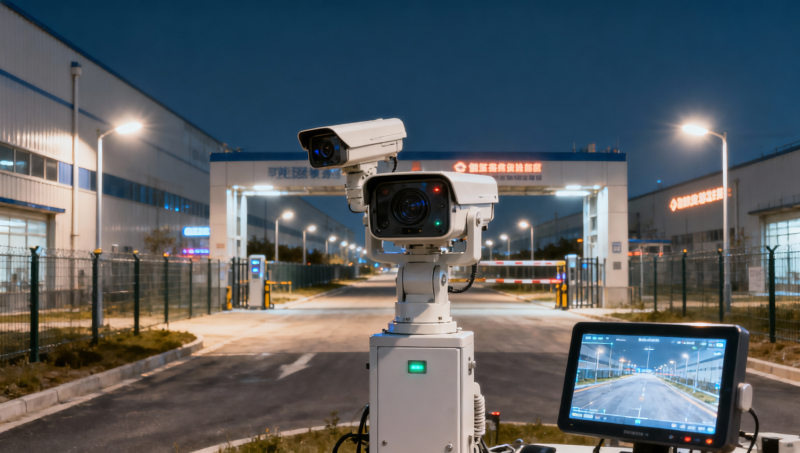
As digital transformation accelerates across critical infrastructure protection, many organizations discover that poorly aligned security architecture can create dangerous blind spots instead of resilience. From risk assessment and security policies to optical sensing, optical engineering, and integrated security systems, the challenge is no longer adding more tools, but building security solutions that strengthen digital security, operational visibility, and decision-making across complex environments.
This problem affects more than security teams. Operators need reliable visibility, technical evaluators need interoperable systems, procurement teams need measurable value, and decision-makers need governance that stands up to compliance, budget pressure, and evolving threat models. In 2026, when AI-enabled surveillance, smart construction sites, urban safety platforms, and connected lighting systems are converging, fragmented architecture can increase risk even when spending rises by 10% to 25% year over year.
For organizations navigating physical security assurance and optical environment optimization, the real question is not how many cameras, sensors, or platforms to deploy. The real question is whether the architecture links policy, optics, operations, and response into one defensible framework. That is where intelligence-led platforms such as GSIM help teams compare standards, assess deployment logic, and reduce hidden gaps before they become incidents, delays, or procurement mistakes.
Why More Security Layers Can Produce Less Visibility
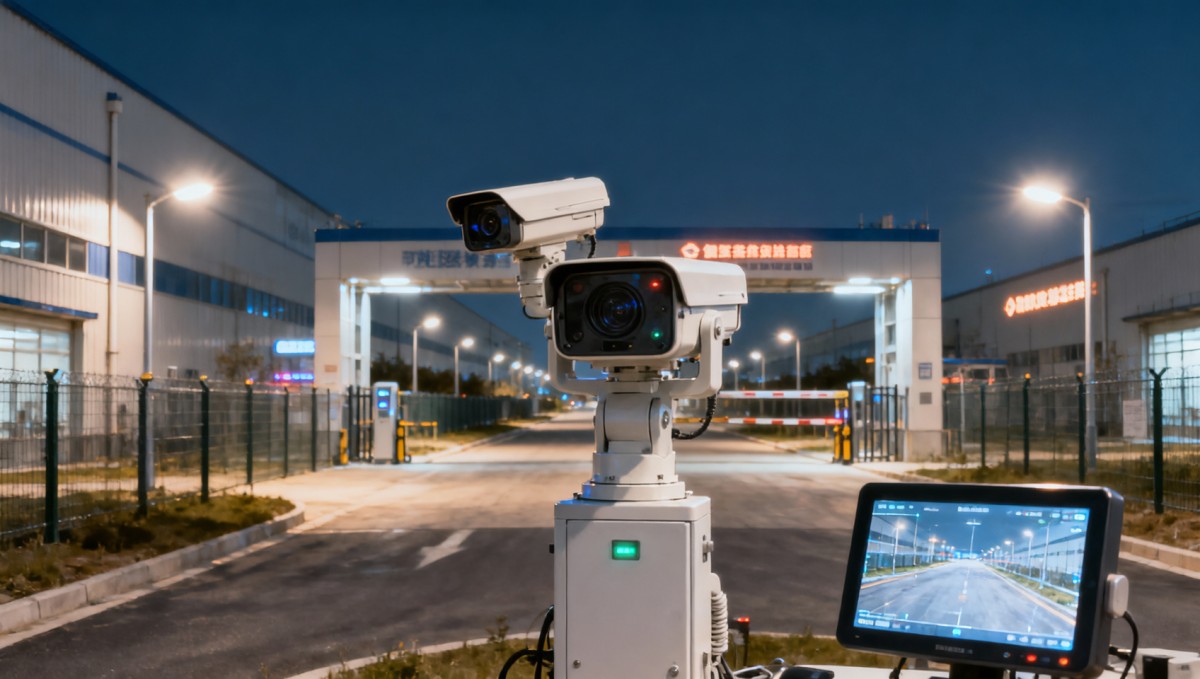
Many blind spots are architectural, not technological. An organization may run 4 to 7 separate systems for video surveillance, access control, perimeter intrusion, environmental monitoring, network alerts, and emergency communication. Each tool may perform well in isolation, yet if event correlation, camera placement, optical coverage, and response workflows are disconnected, the overall environment becomes harder to read and slower to manage.
Blind spots usually emerge in three forms: physical gaps, data gaps, and decision gaps. Physical gaps occur when sensor angles, illuminance levels, or line-of-sight conditions fail to cover key zones. Data gaps appear when platforms cannot normalize alarms or share metadata in real time. Decision gaps happen when teams receive too many alerts without clear prioritization, often stretching incident triage from 30 seconds to 5 minutes or more.
In critical infrastructure, transport hubs, logistics campuses, industrial parks, and public safety programs, these gaps are compounded by mixed legacy and new deployments. A camera may meet resolution requirements, but if the optical environment is unstable due to glare, low lux levels, backlighting, or poor infrared planning, image usability can drop sharply during the exact 6 to 10 hours when risks rise.
Common architectural causes of hidden exposure
- Overlapping systems with no shared event logic, leading to duplicate alarms and slow operator response.
- Camera and sensor placement designed around hardware availability instead of threat paths, crowd flow, or site geometry.
- Lighting upgrades that improve energy performance but reduce facial capture quality, plate recognition distance, or night contrast.
- Procurement based on unit price rather than lifecycle integration cost over 3 to 5 years.
A useful operating principle is simple: if one subsystem changes, at least 3 related layers should be reviewed at the same time. For example, replacing luminaires affects camera exposure, analytics performance, and operator monitoring thresholds. Expanding access control can alter evacuation routing, visitor logging, and investigative traceability. Security architecture fails when these dependencies are treated as separate purchases instead of one operational ecosystem.
The Overlooked Role of Optical Conditions in Security Performance
Security performance depends on optics as much as electronics. In many projects, stakeholders compare megapixels, storage days, and software licenses, but give insufficient attention to lux uniformity, glare control, spectral compatibility, viewing distance, and scene contrast. As a result, surveillance coverage appears complete on a drawing, yet image quality degrades in rain, fog, shadow transitions, reflective surfaces, or high-traffic night settings.
For users and technical evaluators, this matters because optical conditions directly affect recognition tasks. A camera that performs at 30 meters in balanced lighting may fail at 12 to 15 meters under uneven illumination. In public entries, logistics gates, rail platforms, and municipal corridors, these losses can undermine incident verification, license plate capture, crowd analysis, and post-event evidence retention.
GSIM’s intelligence value is especially relevant here because optical environment optimization must be assessed alongside compliance and system planning. A compliant surveillance program is not only about legal camera placement or data retention periods of 30, 60, or 90 days. It also requires sufficient visual usability to support lawful identification, operational review, and proportionate response.
Typical optical factors that influence security outcomes
The table below highlights how common optical conditions can create hidden risk even when the hardware list appears complete.
The key conclusion is that optical planning should be treated as a first-order security control, not a finishing task after hardware selection. For procurement and engineering teams, field validation across at least 3 environmental conditions often delivers better long-term outcomes than adding more devices to compensate for poor visual conditions.
What technical teams should validate before sign-off
- Define the task: detection, observation, recognition, or identification.
- Measure optical performance during at least 2 operating periods, such as day and night.
- Check whether lighting changes affect AI analytics, VLC components, or image compression.
- Confirm whether recordings remain operationally useful after 30 to 90 days of storage.
This discipline is increasingly important as AI vision and connected lighting start to converge. When vision systems rely on machine classification, even a modest drop in image consistency can cause false alarms, missed detections, and unnecessary human review. In high-volume environments, a 5% to 8% rise in false alert rates can materially increase staffing pressure and delay response coordination.
How to Audit Security Architecture Before Blind Spots Escalate
A useful audit does not start with a product catalog. It starts with operational intent, threat paths, compliance constraints, and site behavior. For project managers, consultants, distributors, and enterprise decision-makers, a structured review can often reveal whether the existing stack is underperforming because of configuration, placement, governance, or integration design. In many cases, the first 2 to 4 weeks of audit work prevent months of rework later.
The most effective architecture audit covers five dimensions: policy alignment, physical coverage, optical adequacy, system interoperability, and response workflow. If one of these dimensions is missing, the result may look complete on paper but remain fragile in operation. This is especially true for cross-site deployments where a headquarters standard is applied to facilities with very different traffic density, weather conditions, or perimeter complexity.
GSIM’s Strategic Intelligence Center supports this stage by helping teams connect international compliance rules for electronic surveillance with practical deployment considerations. That matters when buyers must compare solutions across regions, contractors, or public-private project frameworks. Standardizing assumptions early can reduce specification drift, bid inconsistency, and post-installation disputes.
Five-step audit model for multi-stakeholder teams
The following model is useful for end users, technical evaluators, procurement teams, and channel partners that need a repeatable decision process.
The strongest audit outcome is not a larger bill of materials. It is a smaller list of high-impact corrections. In many environments, fixing 6 to 10 high-risk gaps in coverage logic, lighting interaction, and workflow can improve practical visibility more than adding another standalone subsystem.
Frequent audit mistakes
- Assuming full camera count equals full coverage quality.
- Reviewing hardware specifications without validating operator response time.
- Separating lighting design, optical engineering, and surveillance analytics into different approval paths.
- Treating compliance as documentation only, instead of operational capability plus governance.
A disciplined audit should also include at least one live scenario test, such as unauthorized entry, after-hours vehicle approach, or crowded ingress during low visibility. Simulated checks completed in 15 to 45 minutes often reveal architectural weaknesses that static drawings never show.
Selecting Security Solutions That Reduce Blind Spots Instead of Shifting Them
Selection decisions should focus on system fitness, not just device features. For buyers and commercial evaluators, a solution should be judged by how well it supports the site’s actual security mission across design, deployment, and operation. A lower-cost component can create higher downstream cost if it increases integration effort, false alert review, maintenance visits, or forensic retrieval time over a 24 to 60 month period.
This is especially true in projects where AI vision, smart lighting, visible light communication, and compliance-sensitive surveillance are converging. A technically advanced component may still be the wrong choice if the local optical environment, network architecture, or legal controls cannot support it. Decision-makers should therefore build procurement criteria around measurable operational outcomes rather than marketing claims.
Distributors, integrators, and enterprise project leaders also need to think in terms of supportability. The best architecture is one that remains interpretable by future teams, scales across locations, and tolerates phased upgrades. If every expansion requires custom workarounds, the organization is only moving blind spots from one layer to another.
Core selection criteria for procurement and technical review
- Operational task fit: define whether the system must detect, verify, identify, count, or reconstruct events.
- Interoperability maturity: confirm integration with at least the site’s top 3 management platforms or protocols.
- Optical compatibility: validate performance under local lighting, reflection, weather, and scene depth conditions.
- Governance readiness: align with retention, access control, audit logging, and regional surveillance obligations.
- Lifecycle resilience: estimate maintenance intervals, firmware management, spare planning, and training needs.
A practical sourcing approach is to score each option across 4 weighted categories: risk reduction, integration effort, optical reliability, and service burden. Many procurement teams use a 100-point model, with 25 points assigned to each category, then adjust weights by site criticality. This method helps avoid overbuying advanced features that the operation will never use, while exposing hidden costs in under-specified bids.
Questions worth asking suppliers and solution partners
Ask how the proposed design performs in low-uniformity lighting, whether false alert management can be tuned by zone, and how long it takes to restore function after a subsystem fault. Ask for deployment assumptions, not just specifications. Also ask what changes if the site later adds AI analytics, VLC-enabled infrastructure, or stricter data access controls within the next 12 to 24 months.
This is where GSIM adds value as a decision-support source. By connecting sector news, compliance interpretation, trend forecasting, and commercial procurement insight, it helps teams evaluate the broader implications of a design choice. In a market shaped by urban safety upgrades and digital infrastructure renewal, informed comparison is often the difference between a scalable system and a fragmented one.
Implementation, Governance, and Continuous Improvement
Even a well-selected architecture can create new blind spots if implementation is rushed. Many failures happen during handover, not design. Devices are installed, but zoning logic is inconsistent, alarm thresholds are not tuned, operators are not trained, and maintenance ownership remains unclear. For most multi-site projects, the first 30 to 90 days after commissioning should be treated as a controlled optimization period rather than a finished state.
Governance matters because security architecture is a living framework. Physical layouts change, traffic patterns shift, regulations evolve, and lighting assets age. A deployment that is effective today may drift out of alignment within 12 months if no one reviews incident trends, false alarm density, evidence quality, and operator workload. Continuous assurance requires a review cadence, often quarterly for critical sites and semiannually for lower-risk facilities.
Organizations that manage this well combine engineering oversight with operational feedback. They track near-misses, not only confirmed incidents. They test response assumptions, not just device uptime. And they connect policy updates with technical changes so that compliance, optics, and security operations remain synchronized instead of working against each other.
Recommended post-deployment control points
- Review alarm quality and false positive patterns within the first 14, 30, and 60 days.
- Revalidate optical performance after lighting changes, seasonal shifts, or major site reconfiguration.
- Test incident retrieval workflows to confirm evidence can be located within operational target time.
- Audit access rights, retention settings, and system logs at defined governance intervals.
For channel partners and project owners, the most resilient delivery model is phased and measurable. Start with priority zones, validate assumptions, then expand using documented lessons from the first stage. A 3-phase rollout over 6 to 12 months often reduces rework compared with a single compressed deployment that leaves no time for tuning or user adaptation.
FAQ: high-intent questions from buyers and operators
How do we know if our security architecture has blind spots? If incident review shows repeated missed detections, unclear footage, duplicate alarms, or slow cross-system correlation, the architecture likely has hidden gaps. A targeted audit of 2 to 4 weeks can often identify the root cause.
Which matters more: more devices or better integration? In most complex environments, better integration and optical alignment produce more value than simply increasing device count. Additional hardware helps only when it closes a verified operational gap.
What should procurement prioritize first? Prioritize mission fit, interoperability, optical performance, and lifecycle support. Unit cost is relevant, but total operational value over 3 to 5 years is a more reliable decision benchmark.
How often should architecture be reviewed? High-criticality environments should review key performance indicators quarterly. Moderate-risk sites can usually work on a 6-month cycle, with extra checks after layout changes, policy updates, or incident spikes.
When security architecture creates more blind spots, the issue is rarely a lack of products. More often, it is a lack of alignment between risk, optics, systems, and governance. Organizations that connect these layers make better procurement decisions, improve operational visibility, and reduce hidden failure points before they become incidents or liabilities.
GSIM supports this work by linking global security intelligence, compliance interpretation, optical technology trends, and commercial insight into one decision-support framework. For researchers, evaluators, buyers, project leaders, and distribution partners, that means faster comparison, clearer standards, and more confidence in planning the next stage of security and illumination upgrades.
If you are reassessing surveillance strategy, optical environment design, or integrated security architecture for 2026 projects, now is the right time to review assumptions and close hidden gaps. Contact us to explore tailored guidance, request a customized solution path, or learn more about practical security and illumination strategies for complex environments.
- physical security assurance
- optical environment optimization
- digital infrastructure
- urban safety upgrades
- strategic intelligence center
- security policies
- optical technology
- electronic surveillance
- AI vision
- Visible Light Communication
- smart construction sites
- risk assessment
- security solutions
- digital security
- security intelligence
- sector news
- digital transformation
- optical engineering
- security systems
- critical infrastructure protection
- optical sensing
- security architecture
- global security
The VitalSync Intelligence Brief
Receive daily deep-dives into MedTech innovations and regulatory shifts.