
Security
How Global Protection Demands Are Changing Alarm Design
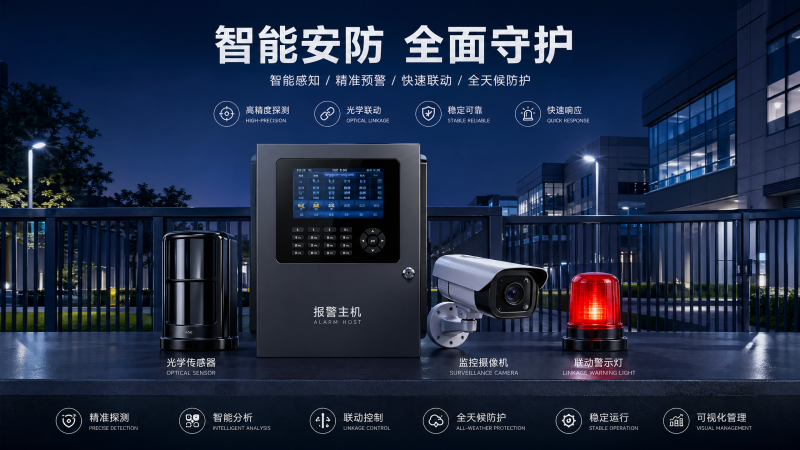
As global protection demands continue to evolve, alarm design is being reshaped by global security trends, risk foresight, and cutting-edge optical technology. From urban security solutions to public safety projects, today’s systems must deliver faster detection, smarter response, and greater compliance. This shift is driving a new era of optical intelligence and security forecasting, helping decision-makers align protection demands with performance, scalability, and long-term resilience.
For researchers, operators, evaluators, procurement teams, project managers, distributors, and executive decision-makers, the alarm system is no longer a standalone device that simply sounds when a circuit changes state. It is becoming a connected risk-management node that must integrate sensing, illumination, analytics, compliance logic, and response workflows across multiple environments.
In this context, platforms such as GSIM are increasingly relevant because alarm design now depends on more than hardware specifications. It depends on how global security policies, optical performance, AI-enabled detection, public safety requirements, and commercial deployment patterns are interpreted together. The result is a new design agenda: alarms must be faster, smarter, more interoperable, and more accountable over a 3–7 year operating cycle.
Why alarm design is shifting from isolated devices to intelligent protection systems
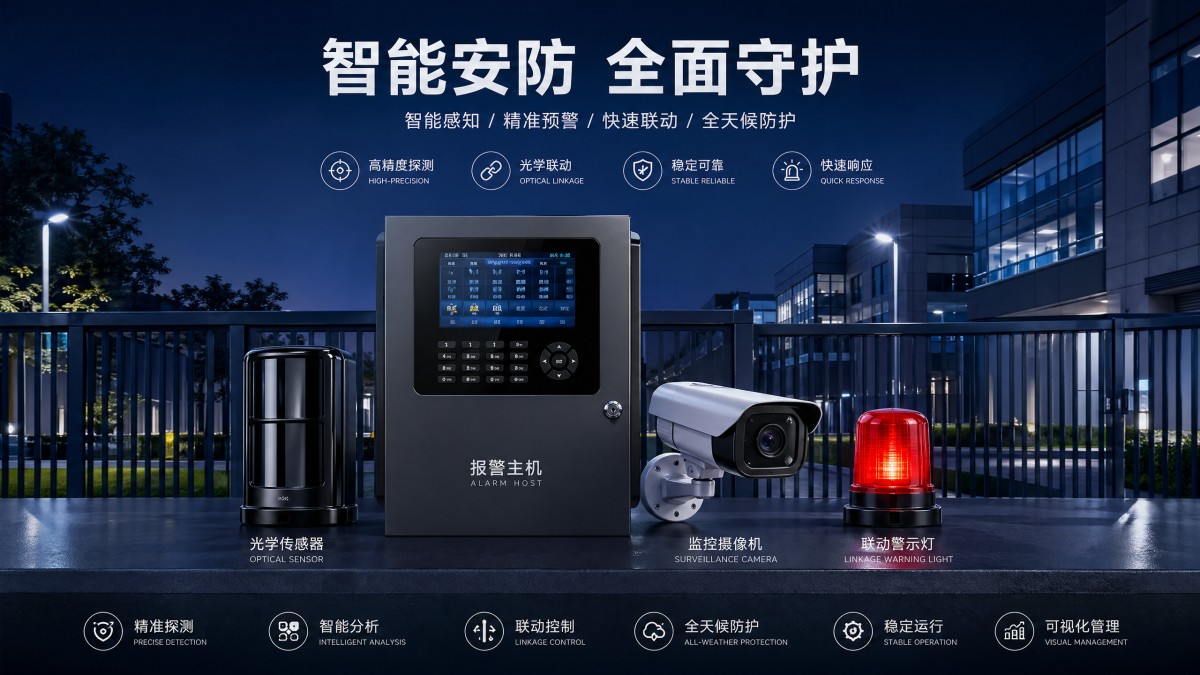
Traditional alarm design focused on core functions such as intrusion notification, fire signaling, tamper detection, or perimeter breach alerts. In many projects, the design brief was narrow: detect one event, trigger one output, and connect to one control point. That model is now under pressure because security environments have become denser, more digital, and more regulated across transport, smart buildings, utilities, logistics hubs, campuses, and public venues.
A modern alarm system may need to process 4–6 input categories at the same time, including motion, video analytics, access state, ambient light level, occupancy, and network health. This is especially important in environments where false positives are costly. A poorly tuned alarm in a public project can create response fatigue within 30–90 days, while an under-sensitive design can miss low-visibility threats during night operation or weather disruption.
Global protection demand is also expanding the meaning of performance. Buyers are no longer only asking whether the alarm activates. They are asking how quickly it detects, how reliably it verifies, whether it integrates with optical systems, and how it performs under compliance review. In many procurement frameworks, response latency, interoperability, and maintenance intervals now matter as much as siren volume or sensor range.
The new pressures shaping design requirements
Several forces are converging. First, urban safety upgrades are linking alarms with cameras, edge analytics, and emergency lighting. Second, digital infrastructure projects expect alarm data to feed command dashboards within 1–3 seconds. Third, cross-border projects increasingly require alignment with local surveillance rules, retention policies, and operational accountability. As a result, alarm design is becoming a systems engineering task rather than a component selection exercise.
Optical environment optimization is another major influence. Detection quality changes dramatically when illumination is unstable, glare is unmanaged, or nighttime visibility is poor. In mixed-use zones such as public plazas, construction sites, or transport nodes, alarm performance can vary by 20%–40% depending on how well sensing logic is coordinated with lighting conditions. This is one reason intelligent design now includes both security assurance and optical planning.
Key design expectations in current projects
- Detection and signaling should remain stable across day, night, and transition periods, not only in ideal indoor conditions.
- Alarm events should be verifiable through linked data such as video frames, access logs, or optical status indicators within a 5–15 second window.
- System architecture should support phased expansion, often from 1 site to 5 or more sites, without complete redesign.
- Maintenance planning should target predictable service cycles, commonly every 3, 6, or 12 months depending on site criticality.
How optical intelligence and AI are changing detection logic
Alarm systems are increasingly influenced by optical intelligence, which means the design process must account for visibility, contrast, illumination quality, image interpretation, and signal context. This does not only apply to camera-driven systems. Even conventional alarms benefit when optical conditions are measured and linked to event logic, because better scene understanding improves prioritization and reduces nuisance alerts.
AI-enabled detection adds another layer. Instead of treating every motion trigger or perimeter interruption as equal, a smarter design can assign confidence levels, correlate multiple inputs, and escalate only when thresholds are met. For example, a 2-stage logic model may require motion plus unauthorized access status before triggering a high-priority event. A 3-stage model may add optical verification or line-crossing analytics before dispatching response resources.
Visible Light Communication and related optical technologies are also becoming part of forward-looking infrastructure discussions. While not every site is ready for VLC-based integration, project planners are watching how lighting and data transmission may converge in smart environments. This matters because alarm design is moving closer to an integrated digital ecosystem where sensors, luminaires, network nodes, and emergency communication devices exchange contextual information.
Common alarm design modes and where they fit
The table below compares three common design approaches now seen across multi-sector projects. It helps technical evaluators and buyers understand how system complexity relates to performance, verification, and deployment value.
The practical takeaway is not that every project needs the most advanced model. It is that the design mode should match the risk profile, verification requirement, and expansion plan. A smart construction site may need integrated alarm plus temporary lighting analytics for 12–24 months, while a transport hub may justify AI-assisted logic from day one because event prioritization directly affects public safety response.
Selection criteria for optical-alarm integration
- Measure the ambient light range during operating hours, especially if the site shifts from below 10 lux at night to strong daylight glare.
- Define how many event classes are needed, such as intrusion, loitering, unauthorized entry, hazard area crossing, or equipment tampering.
- Set a verification path: local buzzer only, control room review, or automated dispatch workflow.
- Confirm whether the network supports edge processing, cloud review, or a hybrid architecture for the next 24–36 months.
Compliance, resilience, and procurement are now central to alarm design
One of the biggest changes in alarm design is the weight now given to compliance and governance. In international or multi-region projects, system planners must examine how alarms interact with surveillance law, privacy requirements, data retention rules, access accountability, and public safety operating procedures. This does not mean every alarm becomes a legal issue, but it does mean that system traceability and deployment context can no longer be ignored.
Resilience is equally important. A well-designed system should maintain critical functions during network delay, power instability, and partial subsystem failure. In many tenders, buyers now ask whether the alarm can continue local operation for 30–120 minutes during disruption, whether event logs are preserved, and whether restoration creates duplicate or missing alerts. These factors strongly influence total ownership cost over a 5-year period.
Procurement teams are also changing how they score alarm solutions. Price remains important, but it is often balanced against 4 additional dimensions: interoperability, maintenance burden, training demand, and compliance readiness. A lower upfront quote may become a higher lifecycle cost if it requires manual calibration every month, lacks event correlation, or cannot adapt to future optical upgrades.
A practical procurement matrix for alarm evaluation
The following matrix can help procurement officers, engineering teams, and business evaluators compare candidate systems in a structured way. It is especially useful when multiple vendors claim similar performance but offer different integration depth and service models.
This table shows why alarm design must be evaluated as an operational system rather than a unit price line item. For distributors and agents, this also changes selling strategy. The strongest proposals usually translate technical capability into measurable deployment outcomes: fewer nuisance alerts, faster event confirmation, lower training overhead, and smoother compliance reviews.
Frequent procurement mistakes
- Choosing based on sensor sensitivity alone without testing under the site’s real optical conditions.
- Ignoring integration cost until after purchase, which can extend delivery by 2–6 weeks.
- Overlooking operator training, even though response quality often changes significantly in the first 30 days after handover.
- Assuming compliance documentation can be added later instead of requiring it during specification review.
Implementation strategy: from site assessment to lifecycle optimization
Effective alarm design is rarely achieved by product substitution alone. It starts with site assessment, because protection demand differs by perimeter complexity, occupancy pattern, lighting profile, environmental interference, and escalation procedure. A warehouse, municipal corridor, transport platform, and high-traffic public square may all require alarms, but their design priorities are not the same.
A practical implementation model usually follows 5 stages: risk mapping, optical assessment, system architecture design, pilot validation, and phased rollout. In lower-risk sites, this can be completed within 2–4 weeks. In larger projects with multiple stakeholders and integrated control layers, the process may take 6–12 weeks before final acceptance. The key is to validate event logic before scaling, not after deployment complexity increases.
GSIM’s role in this environment is not limited to showcasing technologies. Its value lies in connecting policy interpretation, trend intelligence, and commercial insights so teams can make better design choices earlier. When project leaders understand both the security logic and the optical environment, they can avoid fragmented purchasing and design systems that remain relevant as infrastructure standards evolve.
Recommended implementation workflow
- Define the protection objective in measurable terms, such as perimeter breach detection, restricted-zone alerting, or after-hours access escalation.
- Survey the optical environment, including low-light zones, reflective surfaces, weather exposure, and transitional lighting periods.
- Specify the response logic, including local alarm, control room review, automated relay, or multi-step escalation within a defined time window.
- Run a pilot for 7–30 days to test false-alarm behavior, event verification quality, and maintenance practicality.
- Scale in phases, using feedback from operators, quality control teams, and security managers to refine thresholds and workflows.
FAQ for decision-makers and technical teams
How do we know whether an advanced alarm design is necessary? If the site has variable lighting, high human traffic, compliance pressure, or a need for event verification, a basic standalone design is often insufficient. A pilot test over at least 7 days usually reveals whether multi-input logic is justified.
What is a realistic delivery expectation? For standard integrated projects, hardware preparation and core configuration may take 2–4 weeks, while complex multi-site rollout can take 6–10 weeks depending on interface development, documentation, and acceptance workflow.
Which teams should be involved in specification review? At minimum, include security operations, technical evaluation, procurement, and the project owner. In regulated or public-facing environments, quality, legal, or compliance reviewers should also be involved before final sign-off.
What should distributors and agents focus on? Beyond price and inventory, focus on deployment fit, optical compatibility, integration support, and after-sales service intervals. These are often the factors that determine repeat business over the next 12–24 months.
Global protection demands are changing alarm design in a fundamental way. The shift is not simply toward louder warnings or more sensors, but toward intelligent systems that combine detection, optical awareness, compliance readiness, and scalable response. For buyers and project teams, the most effective solution is the one that fits the real environment, supports verifiable action, and remains manageable across its full operating lifecycle.
GSIM supports this transition by helping stakeholders connect security policy, optical technology, and procurement intelligence into a clearer decision path. Whether you are evaluating a new deployment, refining an existing system, or planning a multi-site upgrade, a better alarm design starts with better intelligence. Contact us to get a tailored solution, discuss product details, or explore more security and illumination strategies for your next project.
- optical environment optimization
- digital infrastructure
- urban safety upgrades
- security policies
- optical technology
- Visible Light Communication
- public safety projects
- security solutions
- optical systems
- urban security
- cutting-edge optical technology
- global protection demands
- commercial insights
- global security trends
- risk foresight
- urban security solutions
- protection demands
- global security
- security trends
- security forecasting
- optical intelligence
The VitalSync Intelligence Brief
Receive daily deep-dives into MedTech innovations and regulatory shifts.