
Security
How Urban Security Solutions Cut False Alarm Rates
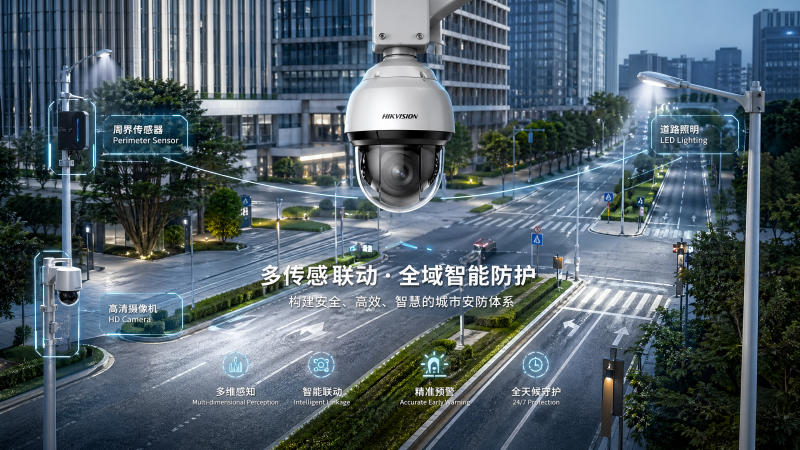
As cities modernize safety infrastructure, urban security solutions are being reshaped by optical intelligence, security forecasting, and cutting-edge optical technology. For decision-makers, operators, and project leaders, understanding global security trends and risk foresight is essential to reducing nuisance alerts, meeting protection demands, and improving outcomes in public safety projects with a more transparent knowledge system.
Why false alarms remain a major urban security problem
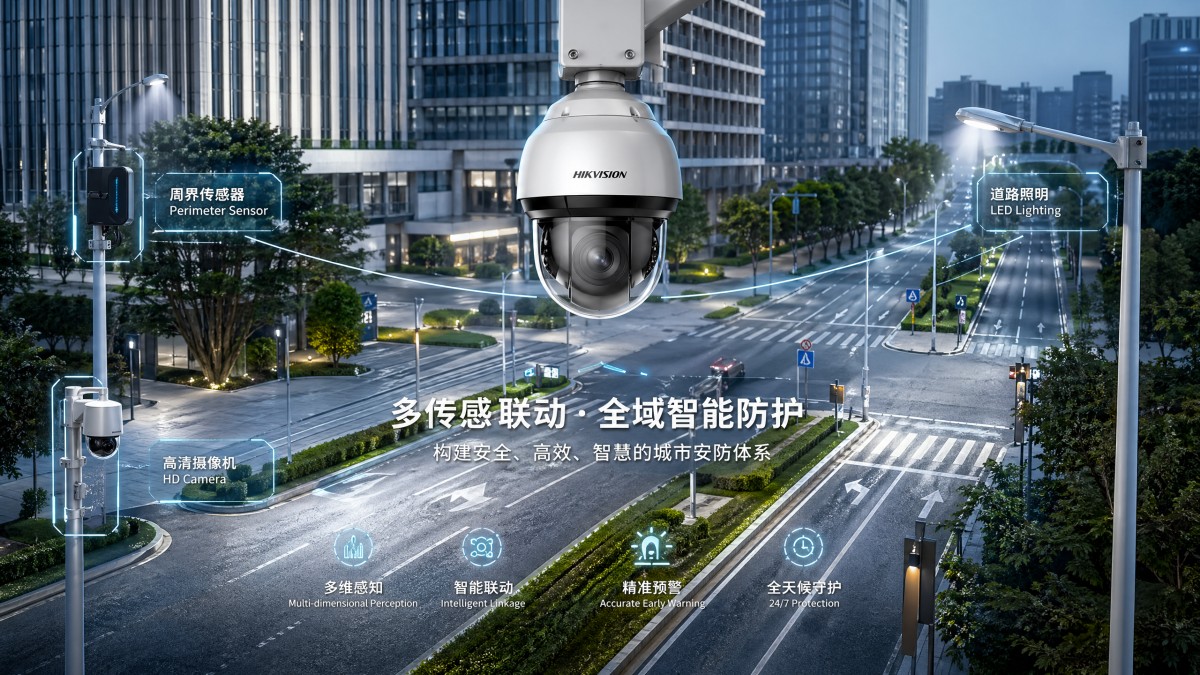
False alarms are not a minor inconvenience. In urban security environments, they consume operator attention, delay incident verification, increase patrol dispatch costs, and weaken trust in the overall protection system. For control rooms managing 24/7 surveillance, access control, perimeter sensing, and emergency response, even a moderate level of nuisance alerts can quickly turn into operational fatigue.
The problem usually starts with fragmented design. Cameras, motion sensors, lighting, analytics, and communication links are often procured in separate phases, by different teams, under different budget cycles. Over a 12–36 month deployment period, this creates inconsistent thresholds, uneven image quality, and weak event correlation. The result is simple: too many alerts with too little context.
For operators and safety managers, the most common sources of false alarms include lighting fluctuation, weather interference, poor camera placement, unstable firmware settings, and analytics trained for the wrong scene type. A smart construction site, transit hub, campus, logistics yard, and municipal intersection each require different tuning windows, typically reviewed every 30–90 days rather than set once and forgotten.
This is where GSIM becomes relevant beyond product browsing. Its Strategic Intelligence Center helps teams connect compliance requirements, optical environment optimization, and procurement trends into one decision path. Instead of viewing false alarm reduction as a device issue alone, GSIM frames it as a system issue involving policy, sensing conditions, AI vision maturity, and field implementation discipline.
What usually drives nuisance alerts in cities?
- Environmental triggers such as rain, fog, glare, headlight bloom, shadows, and seasonal vegetation movement that change scene behavior across day and night cycles.
- Improper optical planning, including mismatched illumination levels, poor contrast ratios, and lens choices that reduce reliable target separation at 15–50 meters.
- Single-source alert logic, where one device generates an alarm without cross-checking video, access events, or directional movement patterns.
- Weak maintenance routines, especially where calibration, cleaning, firmware review, and rule tuning are not built into monthly or quarterly operating procedures.
How urban security solutions actually cut false alarm rates
Urban security solutions reduce false alarms when they combine sensing, lighting, analytics, and workflow logic rather than relying on one technology layer. A camera alone cannot compensate for poor lighting. An AI model alone cannot overcome extreme backlight. An access control log alone cannot validate perimeter activity. Reduction happens when multiple signals are correlated within a defined response window, often 3–10 seconds for fast alerts and 15–60 seconds for verification-driven events.
The most effective approach is scene-based design. In a public square, systems must distinguish crowd movement from intrusion risk. On a smart construction site, they must separate authorized night work from unauthorized entry. At transport facilities, they must account for repetitive motion, reflective surfaces, and variable illumination. This means alarm rules should be built around operational behavior, not copied from another site type.
Optical environment optimization is especially important. Stable illumination, reduced glare, proper beam angles, and sufficient contrast help analytics interpret edges, motion, and object classes more reliably. This is one reason GSIM’s intelligence model matters: it links security assurance with optical conditions, helping evaluation teams compare not only electronic surveillance features but also the visual environment that determines whether those features work consistently.
Procurement teams should also note that false alarm reduction depends on workflow design. If every alert reaches the same queue with the same priority, response quality drops. A better design uses 3 layers of handling: automated filtering, operator verification, and escalation to field action. That structure reduces unnecessary dispatches while preserving rapid response for high-confidence events.
Core design principles for lower false alarms
The table below summarizes practical design choices that often improve alert quality across municipal, commercial, and public safety environments.
These controls are not exotic. They are practical steps that help operators, project managers, and technical evaluators move from hardware accumulation to measurable alarm quality improvement. In many projects, the biggest gains come from integration discipline rather than adding more devices.
A four-step implementation path
- Assess the site by day and night, including optical conditions, traffic flow, weather exposure, and existing alert volumes.
- Map alarm logic to operational use cases, such as restricted-area entry, loitering, perimeter crossing, or after-hours movement.
- Run a live tuning period of 2–6 weeks to adjust thresholds, ignore zones, confidence levels, and escalation timing.
- Review monthly in the first quarter, then quarterly, using false alarm categories rather than a single aggregate number.
Which urban scenarios need different alarm strategies?
Not all urban security solutions should be judged by the same detection logic. A municipal command center, a logistics gate, a subway approach, and a mixed-use commercial district face different movement profiles and risk tolerances. This matters for buyers because a system that performs well in one environment may create excessive nuisance alerts in another if scene assumptions are wrong.
For project leaders, the safest starting point is scenario segmentation. Divide the deployment into 3 categories: high-sensitivity zones, medium-traffic managed zones, and open public zones. Each category should have its own alarm confidence threshold, operator response rule, and validation method. Without this structure, a city may overreact to harmless activity in one area while missing a meaningful pattern in another.
GSIM supports this planning model by connecting market intelligence with field realities. Its Commercial Insights module helps procurement teams understand what global smart construction sites and public safety projects are prioritizing, while its trend analysis on AI vision and VLC helps technical teams anticipate where sensor fusion and communication efficiency can improve event verification.
The table below helps compare alarm strategy needs across common urban settings. It is useful for pre-sales planning, internal budgeting, and distributor discussions where one portfolio must serve multiple project types.
Scenario-based planning helps every stakeholder. Operators get cleaner queues. Technical evaluators get defensible test criteria. Procurement teams avoid overspending on features that do not match field conditions. Decision-makers gain a more realistic path to performance improvement without assuming one universal rule set will fit all locations.
Where operators usually need extra support
- Shift handover procedures should record alarm categories, rule changes, and known temporary conditions such as roadworks or maintenance lighting.
- Field teams should receive concise verification criteria, such as image sufficiency, access mismatch, dwell time, or repeated directional movement.
- Distributors and integrators should prepare scenario-specific presets instead of offering the same baseline configuration to every municipal client.
What should buyers and evaluators check before selecting a solution?
When reducing false alarm rates is a project objective, buying decisions should move beyond headline features. Procurement and evaluation teams need to ask whether the solution is auditable, tunable, and maintainable over time. A lower upfront device price can become expensive if the system requires constant manual intervention or causes excessive dispatches in the first 6–12 months.
A useful selection process focuses on 5 core dimensions: optical suitability, analytics adaptability, event correlation capability, compliance fit, and lifecycle service support. These dimensions matter across industries because urban security programs often involve public-facing environments, mixed contractors, and long refresh cycles. A technically impressive platform still fails if local teams cannot operate it consistently.
GSIM is valuable at this point because it helps bridge strategic intelligence and practical selection. Teams can use its latest sector news to monitor regulatory changes for electronic surveillance, review evolutionary trends around AI vision and VLC, and align sourcing decisions with global procurement signals rather than relying only on isolated vendor claims.
The checklist below can be used in RFQ preparation, distributor qualification, and cross-functional evaluation meetings. It is especially useful when safety managers, engineers, and commercial teams have different priorities and need a shared review framework.
Five key checks before purchase
- Confirm the optical environment: review illumination stability, glare risk, night visibility, and whether the scene changes across seasons or construction phases.
- Request tuning methodology: ask how the provider handles the first 2–4 weeks of live adjustment and how rule changes are documented.
- Validate integration depth: check whether alerts can be cross-referenced with access logs, scheduling systems, or other sensors within defined time windows.
- Review compliance relevance: ensure data handling, surveillance deployment, and retention settings can align with local or project-specific requirements.
- Assess service continuity: clarify maintenance intervals, firmware governance, operator training scope, and response expectations for commissioning support.
Common procurement mistakes
One common mistake is treating false alarm reduction as a promise that can be guaranteed before field adaptation. Real performance depends on scene behavior, calibration effort, and workflow discipline. Another mistake is buying advanced analytics without budgeting for lighting improvements. In practice, a modest upgrade in optical conditions can do more for alarm quality than adding one more software layer.
Teams also underestimate documentation. If settings changes, escalation logic, and acceptance criteria are not recorded, performance drifts over time. For projects with multiple stakeholders, a 3-stage sign-off process covering technical setup, operational validation, and post-launch review is often more useful than a one-time acceptance test.
Standards, future trends, and why GSIM is a practical decision partner
Urban security is moving toward systems that are more data-aware, policy-aware, and environment-aware. That means compliance and operational design must be considered together. Buyers should not assume one global rule set applies everywhere. Electronic surveillance obligations, retention expectations, and deployment boundaries often differ by jurisdiction, project ownership model, and public exposure level.
A sound project typically reviews 4 areas during planning: surveillance compliance, optical safety and lighting suitability, cybersecurity and device governance, and operational accountability. These are not abstract themes. They directly affect how alerts are generated, reviewed, stored, and escalated. Ignoring them can lead to rework, delayed approvals, or limited usability after installation.
Looking ahead to 2026 and beyond, the most meaningful trend is not simply more AI. It is better orchestration between AI vision, optical design, and communication efficiency. GSIM’s coverage of AI vision and Visible Light Communication points to a future where urban security solutions become faster at contextual verification, more adaptive in complex environments, and easier to align with smart infrastructure programs.
For distributors, project owners, and enterprise decision-makers, GSIM serves as a decision-support platform rather than a generic information site. It helps users compare standards, understand procurement patterns, monitor policy shifts, and identify where false alarm reduction depends on environment design rather than device marketing. That creates a more transparent path from information research to project action.
FAQ: practical questions before launching or upgrading
How long does it usually take to optimize false alarm performance?
For many urban security solutions, commissioning and initial stabilization take 2–6 weeks, depending on site complexity, weather variation, and integration depth. A more mature operating baseline often appears after the first 30–90 days, when teams have enough live events to refine thresholds and workflows.
Are false alarms mainly a hardware issue?
No. Hardware matters, but false alarms usually result from a combination of optical conditions, rule logic, installation geometry, maintenance quality, and operator process. That is why solutions with strong system design often outperform isolated high-spec devices deployed without contextual planning.
Which teams should be involved in solution evaluation?
At minimum, involve 4 roles: operations, technical evaluation, procurement, and security or quality management. For larger public safety projects, project owners and commercial reviewers should also join early, especially when compliance and long-term support obligations affect scope.
What makes GSIM useful during vendor comparison?
GSIM helps users compare urban security solutions through the lens of policy, optical intelligence, market direction, and practical deployment logic. That is useful when teams need support on parameter confirmation, product selection, delivery timing, compliance interpretation, or solution customization across different urban scenarios.
Why choose us
GSIM is built for professionals who need more than product lists. We help connect protection demand with manufacturing and project reality through sector news, compliance interpretation, trend forecasting, and commercial insight. If your team is comparing urban security solutions to cut false alarm rates, we can support the decision process with structured guidance rather than generic promotion.
You can consult us on practical topics such as optical parameter review, alarm strategy selection, delivery cycle expectations, scenario-based configuration, surveillance compliance considerations, sample or pilot evaluation planning, and quotation alignment across different project stages. This is especially useful for buyers, operators, technical assessors, and channel partners working under tight timelines or mixed stakeholder requirements.
If you are preparing a new deployment or upgrading an existing city security system, engage GSIM early in the evaluation cycle. A clearer view of risk, environment, standards, and procurement trends can help you reduce rework, improve alarm quality, and build a more credible basis for final investment decisions.
- optical environment optimization
- strategic intelligence center
- optical technology
- electronic surveillance
- AI vision
- Visible Light Communication
- procurement trends
- smart construction sites
- public safety projects
- knowledge system
- security solutions
- urban security
- cutting-edge optical technology
- sector news
- evolutionary trends
- commercial insights
- global security trends
- optical design
- risk foresight
- urban security solutions
- transparent knowledge system
- protection demands
- global security
- security trends
- security forecasting
- optical intelligence
The VitalSync Intelligence Brief
Receive daily deep-dives into MedTech innovations and regulatory shifts.