
Security
Security Analytics Metrics That Actually Help Prevent Losses
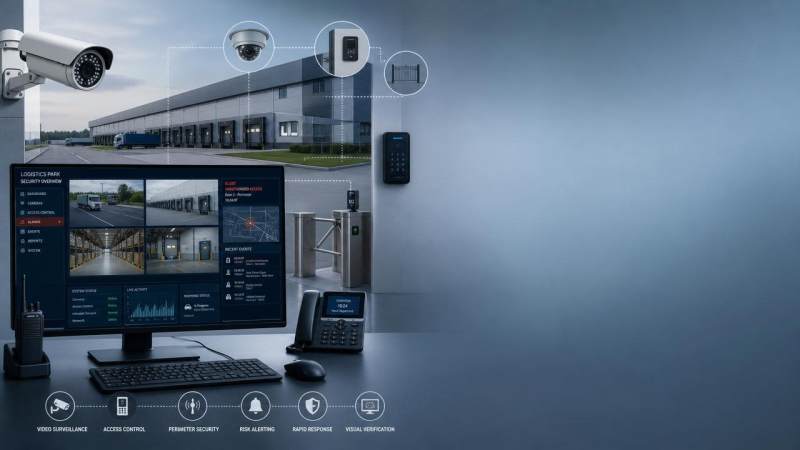
When losses stem from delayed response, weak visibility, or poor data priorities, security analytics becomes more than a dashboard—it becomes a decision tool. For quality control teams and security managers, the right metrics can reveal hidden vulnerabilities, improve incident prevention, and support smarter investments. This article explores which security analytics metrics truly matter and how they help reduce operational, compliance, and safety-related losses.
In global facilities, logistics hubs, smart construction sites, and public safety environments, not every metric deserves a seat in the control room. Teams often monitor dozens of indicators, yet still miss the few that predict loss events 24–72 hours before they escalate. Effective security analytics should support faster decisions, stronger compliance, and measurable risk reduction across physical security assurance and optical environment performance.
For readers working in quality control and security management, the challenge is practical: which metrics improve site resilience, which ones only add reporting noise, and how should those measures be implemented across a mixed infrastructure of cameras, access control, lighting systems, alarms, and incident workflows? In a market shaped by digital infrastructure upgrades in 2026, that distinction matters more than ever.
Why Security Analytics Metrics Fail in Real Operations
Many organizations invest in security analytics but struggle to reduce losses because they track outputs instead of risk signals. A control center may review 15 to 30 daily alerts per site, but if those alerts are not linked to response time, visibility gaps, or policy violations, they do little to prevent theft, downtime, injury, or compliance exposure.
The most common failure is overemphasis on event volume. A site may report 300 alarms per week, yet the better question is how many were verified within 5 minutes, how many were false, and how many occurred in zones with poor illumination or incomplete camera coverage. Security analytics becomes valuable only when the metrics point toward intervention, not just documentation.
Three reasons good dashboards still produce weak decisions
- Metrics are disconnected from financial loss categories such as shrinkage, compliance penalties, project delay, or asset damage.
- Data is not normalized across systems, so access logs, video events, and environmental lighting data cannot be compared in the same timeline.
- Thresholds are too generic, for example treating a 10-minute delay the same way in a warehouse perimeter and a critical equipment room.
What quality and security teams should measure instead
The best security analytics framework usually starts with 4 layers: detection quality, response efficiency, environmental visibility, and control effectiveness. These layers help teams move from broad surveillance activity to targeted loss prevention. They are especially relevant in facilities where optical conditions, legal compliance, and operational continuity intersect.
GSIM’s intelligence perspective is useful here because physical security performance is no longer separate from optical environment optimization. In many deployments, poor lighting uniformity, blind spots, and weak video clarity are directly tied to missed events. Security analytics should therefore connect security policy, sensor output, and environmental conditions in one decision model.
The Metrics That Actually Help Prevent Losses
Not all indicators are equal. For most multi-site operations, 7 to 10 core metrics provide more value than a dashboard with 40 variables. The goal is to identify measures that correlate with real loss reduction, whether the risk involves unauthorized entry, inventory shrinkage, vandalism, safety incidents, or audit failure.
1. Mean time to detect and mean time to respond
Mean time to detect, or MTTD, measures how quickly a security event is identified after it begins. Mean time to respond, or MTTR, measures how quickly action starts after detection. In many operational settings, reducing MTTD from 12 minutes to under 4 minutes can materially improve the chance of stopping a loss event before escalation.
For quality control and security managers, these two metrics should be segmented by zone type. A 3-minute delay in a loading dock may be manageable, but the same delay in a restricted materials room, substation, or command node may exceed acceptable risk tolerance. Security analytics should therefore use tiered thresholds, often in 3 levels: critical, controlled, and low-priority zones.
Recommended threshold logic
- Critical zones: detection under 2 minutes, response under 5 minutes
- Controlled zones: detection under 5 minutes, response under 10 minutes
- General zones: detection under 10 minutes, response under 15 minutes
2. False alarm rate and verified event rate
A system flooded by false positives weakens human attention and inflates operating cost. If a site receives 100 alerts and only 8 to 12 are actionable, the signal quality is poor. A strong security analytics program tracks false alarm rate alongside verified event rate, allowing teams to tune cameras, analytics rules, access policies, and lighting conditions.
In optical environments, false alarms often rise during low-light periods, reflective glare windows, or weather transitions. This is why security analytics should be reviewed against illumination consistency, lens cleanliness cycles, and scene complexity. A reduction of false alarm rate from 35% to below 15% can significantly improve operator efficiency without adding headcount.
The table below shows a practical metric set that quality and security leaders can use to prioritize intervention and budget allocation.
The key takeaway is that security analytics works best when speed metrics and signal quality metrics are reviewed together. Fast response is not enough if the alert stream is unreliable, and low false alarms are not enough if real incidents still go undetected for 8 to 10 minutes.
3. Coverage integrity and visibility score
Coverage integrity measures whether monitored areas are continuously visible within required standards. Visibility score goes further by testing whether the visual environment supports identification, verification, and auditability. This matters in facilities where camera placement is technically complete, but environmental conditions reduce usable evidence quality.
A practical visibility score can include 5 checks: lighting uniformity, image clarity, obstruction rate, night performance, and glare control. Security analytics should flag any zone that fails 2 or more conditions during a 7-day review cycle. For quality teams, this metric is especially useful because it translates optical conditions into operational risk rather than maintenance opinion.
4. Unauthorized access attempt rate
This metric tracks invalid credentials, forced door events, tailgating indicators, and out-of-schedule entries. It is one of the clearest leading indicators of policy drift or insider risk. A rising unauthorized access attempt rate over 2 to 3 consecutive weeks often signals process weakness, credential misuse, or insufficient perimeter discipline.
In combined security analytics environments, access attempts should be correlated with video verification and shift scheduling data. When logs are reviewed in isolation, teams miss patterns such as repeated attempts in a 20-minute window or badge activity paired with poor camera visibility near a service entrance.
5. Incident recurrence rate
A recurring event is often more expensive than a single severe incident because it indicates unresolved root causes. Incident recurrence rate measures how often the same issue returns within a defined period, usually 30, 60, or 90 days. This metric is highly relevant to quality control because it links corrective action quality with security performance.
If recurring incidents remain above 15% in a category such as perimeter breach, damaged sensors, or after-hours access exceptions, the organization likely has a process problem rather than a device problem. Security analytics should therefore connect recurrence rate to maintenance intervals, SOP adherence, contractor access rules, and evidence review quality.
How to Build a Practical Security Analytics Scorecard
A scorecard helps teams avoid metric overload and align daily monitoring with management decisions. For most B2B environments, a monthly scorecard with 8 core metrics, 3 escalation levels, and 1 site comparison view is enough to support budget, staffing, and corrective action planning. More complexity should only be added when teams can clearly act on it.
Step 1: Group metrics by loss category
Instead of grouping by technology stack, group by loss exposure. A useful model includes four categories: asset loss, operational disruption, compliance breach, and personnel safety. This ensures that security analytics remains decision-oriented. It also helps procurement teams compare whether new sensors, lighting upgrades, or software rules will address the highest-cost risks first.
Step 2: Assign thresholds and owners
Every metric should have a threshold, an owner, and a review frequency. For example, visibility score may be owned by facilities and security jointly, reviewed every 14 days, and escalated if any critical zone drops below defined image usability conditions for more than 48 hours. Metrics without ownership often become passive reports.
Step 3: Link analytics to action rules
A metric becomes operational only when it triggers a response. If MTTR exceeds 10 minutes twice in one week, does the team retrain operators, revise shift coverage, or reconfigure rules? If false alarms spike after dusk, does the team inspect scene lighting, analytics sensitivity, or camera angle? Security analytics should always end in a defined action path.
The following table shows a simple scorecard model that can be adapted across campuses, industrial sites, public safety networks, and smart infrastructure projects.
This kind of scorecard makes security analytics more useful in board discussions and operational reviews. It also creates a stronger basis for funding requests because each metric is linked to a clear loss category and a concrete intervention point.
Implementation Risks, Optical Factors, and Common Mistakes
Even strong metrics can fail if the input data is weak. Security analytics depends on system hygiene: synchronized timestamps, stable network uptime, calibrated cameras, access log integrity, and usable lighting conditions. If any of these foundations are compromised, the dashboard may look precise while the site remains exposed.
Mistake 1: Ignoring the optical environment
Many teams treat lighting as a facilities issue rather than a security variable. In reality, poor lux consistency, excessive backlight, and shadow-heavy layouts can lower detection quality and increase false events. In smart construction sites and public safety corridors, reviewing optical conditions every 30 days can improve analytics reliability without adding new devices.
Mistake 2: Measuring incidents without measuring recovery quality
A closed incident is not necessarily a resolved risk. Teams should track post-incident corrective completion within 7, 14, or 30 days depending on severity. If repeat failures continue after closure, security analytics should classify the issue as ineffective remediation rather than normal recurrence.
Mistake 3: Using one benchmark for every site
A data center edge room, an urban transit node, and a materials storage yard have different tolerances. Security analytics should be benchmarked by risk profile, operating hours, occupancy level, and compliance exposure. A single global threshold often hides underperformance in the highest-value zones.
A practical 5-point review checklist
- Validate whether critical zones have complete event, video, and access data for the last 30 days.
- Check whether alert thresholds differ by risk class and operating schedule.
- Review false alarm causes by lighting condition, weather pattern, or scene type.
- Verify whether response delays come from staffing, workflow, or technology bottlenecks.
- Confirm that every recurring incident has a documented corrective action owner.
How GSIM Supports Better Metric Selection and Smarter Security Decisions
As security ecosystems become more connected, the value of security analytics increasingly depends on context. GSIM’s role as a global intelligence portal is especially relevant for organizations that need more than equipment lists. Quality leaders and security managers need a structured way to connect regulatory interpretation, procurement direction, optical performance, and implementation priorities.
Through its Strategic Intelligence Center, GSIM helps decision-makers compare market developments, track policy implications for electronic surveillance, and understand how AI vision, Visible Light Communication, and physical security assurance may converge over the next 2 to 4 years. That wider view matters when setting metrics today that must still be useful after future upgrades.
For procurement and planning, this means security analytics should not be selected in isolation. The right metrics depend on the project environment, the lighting architecture, the monitoring workflow, and the compliance expectations of the region. A portal that combines strategic intelligence with practical procurement insight can help teams avoid costly overbuild, under-specification, or fragmented system design.
Who benefits most from this approach
- Quality control teams that need measurable evidence of corrective action effectiveness
- Security managers responsible for multi-site risk consistency and response performance
- Project leaders evaluating surveillance, lighting, and access control investments together
- Public infrastructure operators facing both compliance pressure and operational visibility gaps
The security analytics metrics that actually prevent losses are the ones tied to action: detection speed, response time, alert quality, visibility integrity, access exception patterns, and recurrence control. When these measures are organized around loss categories and supported by reliable optical and policy context, they become far more than reporting tools.
If your team is reviewing surveillance upgrades, smart site planning, or physical security performance standards, GSIM can help you evaluate which metrics matter most for your environment and how to apply them with clearer commercial and operational logic. Contact us to get a tailored framework, discuss project priorities, or learn more solutions for security analytics in modern infrastructure and safety programs.
The VitalSync Intelligence Brief
Receive daily deep-dives into MedTech innovations and regulatory shifts.