
Security
How Security Insights Improve Daily Incident Response
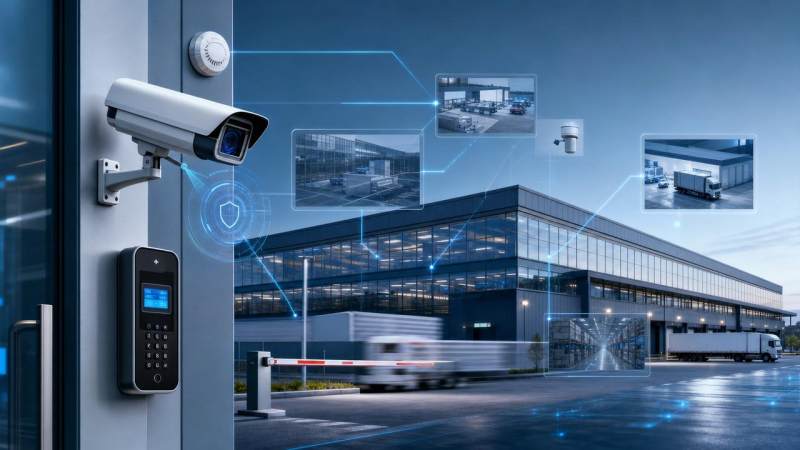
In fast-moving security operations, timely decisions depend on more than alerts alone. Security insights help users and operators detect patterns, prioritize threats, and respond with greater accuracy in daily workflows. As global safety standards and digital infrastructure continue to evolve, understanding how actionable intelligence supports incident response has become essential for improving coordination, reducing delays, and strengthening overall operational resilience.
What are security insights, and why do they matter in daily incident response?
Security insights are not just raw notifications from cameras, sensors, access control systems, or patrol logs. They are the practical conclusions drawn from those signals after context, trends, risk relevance, and operational history are considered. For users and operators, this difference is critical. An alert says something happened. Security insights explain what likely matters, how urgent it is, what it resembles, and what action should come next.
In daily incident response, teams rarely fail because of a total lack of data. More often, they struggle because too many isolated events arrive at once. Operators may see repeated door alarms, unusual movement, low-light video degradation, equipment faults, or policy exceptions across different sites. Without organized security insights, these events compete for attention and increase the chance of delayed escalation or misclassification.
This is why security insights have become more important in modern physical security assurance. They support faster triage, better communication between shifts, and stronger alignment with compliance requirements. Platforms such as GSIM, which connect security intelligence with optical environment optimization and global policy developments, show why incident response now depends on both operational visibility and strategic interpretation. In practice, that means users are better prepared to understand not only what is happening on-site, but also how evolving standards, surveillance law, and technology trends can affect response decisions.
How do security insights improve response speed without sacrificing accuracy?
One common concern in security operations is whether faster response always means more mistakes. In reality, well-developed security insights improve both speed and accuracy because they reduce guesswork. Instead of asking operators to interpret every signal from scratch, insights highlight probable severity, recurring behavior, affected assets, and recommended next steps.
For example, a single door-forced-open alert may not look serious by itself. But if security insights show that the same location also had badge read failures, reduced camera clarity due to poor illumination, and recent maintenance anomalies, the incident becomes more meaningful. The operator can escalate immediately rather than waiting for further confirmation. This shortens the time between detection and action.
Security insights also improve handoffs. During shift changes or multi-site monitoring, operators need concise summaries, not scattered logs. Insight-driven systems can surface patterns such as repeated perimeter breaches in similar weather conditions, suspicious movement in blind spots, or recurring false alarms linked to lighting instability. These summaries save time because the next user does not need to reconstruct the full history manually.
Another benefit is better prioritization. In environments such as smart construction sites, logistics yards, public facilities, campuses, and urban infrastructure projects, there may be dozens of open events at once. Security insights help rank them by operational impact, site sensitivity, time of occurrence, and evidence reliability. That allows teams to focus first on incidents with the highest risk to people, assets, or compliance exposure.
Which users and operating scenarios benefit most from security insights?
The short answer is that almost any operator working with time-sensitive security information can benefit, but the strongest impact appears in environments where incidents are frequent, distributed, or difficult to verify visually. Security insights are especially useful when operators must make fast decisions across mixed technologies and changing conditions.
Typical high-value scenarios include:
- Multi-site facility monitoring where operators manage different alarm sources and need consistent triage standards.
- Public safety operations where incident volume is high and situational context changes quickly.
- Smart construction and infrastructure environments where temporary layouts, contractor movement, and lighting conditions affect surveillance reliability.
- Industrial and logistics sites where perimeter breaches, equipment downtime, and access anomalies must be linked to operational continuity.
- Night-time or low-visibility locations where optical performance directly influences whether video evidence supports rapid decisions.
For front-line users, the practical value lies in clarity. They need to know whether an event is likely genuine, what nearby conditions may have contributed, and whether standard operating procedures should be adjusted. For supervisors, security insights support staffing decisions, escalation thresholds, and reporting quality. For procurement or planning teams, the same insights reveal whether recurring incident patterns are tied to technology gaps, training issues, or environmental design problems.
What should operators look for when judging whether security insights are actually useful?
Not all dashboards, reports, or analytics outputs are equally valuable. Some only repackage data without making response easier. When evaluating security insights, users should focus on operational usefulness rather than visual complexity. A practical insight should help answer a real response question: What happened, how serious is it, what evidence supports it, and what should we do next?
Several criteria matter:
- Context relevance: Does the system connect alarms with location, time, prior events, access records, and environmental conditions?
- Actionability: Can an operator use the insight immediately to verify, escalate, dispatch, or document?
- Evidence quality: Are the conclusions supported by reliable video, sensor, and event history, especially in challenging optical conditions?
- Noise reduction: Does it reduce false urgency and duplicate review work?
- Compliance awareness: Does it align with surveillance policy, retention rules, and regional operational standards?
GSIM’s industry perspective is especially relevant here because modern incident response is no longer only about hardware performance. Global security policies, AI vision trends, and optical communication developments increasingly shape what counts as trustworthy evidence and acceptable practice. Good security insights therefore combine technical interpretation with policy awareness.
Quick judgment table: what separates weak from strong security insights?
What are the most common mistakes teams make when using security insights?
A frequent mistake is assuming that more analytics automatically means better response. In reality, security insights only help if users trust them, understand them, and can act on them quickly. If the output is too abstract, too technical, or disconnected from standard operating procedures, it becomes another layer of friction.
Another mistake is ignoring the role of the optical environment. Many daily incidents are reviewed through video, yet image quality can vary because of glare, insufficient illumination, weather, reflective surfaces, or poor positioning. If teams rely on insights generated from weak visual input without accounting for those limitations, they may overestimate certainty. This is one reason GSIM’s focus on illumination optimization is important: better light conditions often lead to better interpretation, fewer false assumptions, and stronger incident verification.
Teams also make the error of separating operational response from policy awareness. Surveillance and evidence handling are increasingly shaped by regional rules, procurement standards, and governance expectations. Security insights that help identify an incident but ignore compliance implications can still create downstream risk. For example, if a site changes its monitoring technology or AI-assisted review process without understanding applicable standards, response efficiency may improve while legal exposure increases.
Finally, some organizations expect insights to replace human judgment completely. That is unrealistic. Effective daily incident response still depends on trained operators who understand site behavior, escalation logic, and exceptions. The real goal is not to remove people from the loop, but to give them a clearer operating picture.
How can a team start improving daily incident response with security insights?
The best starting point is not buying more tools at random. It is identifying where response delays, verification failures, and repeated false alarms already occur. Once those friction points are mapped, teams can decide what kind of security insights would have the greatest operational value.
A practical rollout often follows five steps. First, review incident logs to find repeated patterns: delayed acknowledgment, duplicate dispatch, weak handoff notes, or unresolved alarm clusters. Second, map those issues to data sources such as access control, video, environmental sensors, lighting performance, or patrol records. Third, define what the operator actually needs on screen in the first 30 to 60 seconds of review. Fourth, align insight outputs with response procedures so recommendations are usable in real time. Fifth, measure whether outcomes improve through lower response time, fewer misclassifications, and better reporting continuity.
This is also where external intelligence can add value. A platform like GSIM helps teams understand broader technology and policy developments that may influence local decisions. If AI vision is advancing in one direction, procurement patterns are shifting in another, and compliance expectations are tightening globally, then operational teams should not evaluate incident response tools in isolation. Security insights become stronger when supported by a knowledge system that connects standards, market direction, and field application.
How should users compare security insights across vendors, systems, or projects?
Comparison should focus on response outcomes, not feature volume. A system with more charts or AI labels is not necessarily more useful. Users should ask whether the solution improves triage in realistic scenarios, especially when data is incomplete or visual conditions are poor.
During evaluation, it helps to test several common cases: an access anomaly during a shift change, suspicious motion in low light, repeated perimeter alerts in bad weather, or activity near restricted equipment during maintenance. Then compare how each solution presents the issue, what supporting evidence appears, how clearly severity is ranked, and whether the operator can document the decision path easily.
Users should also compare how well the provider understands the relationship between physical security assurance and optical performance. In many environments, daily incident response quality is limited not by analytics logic alone but by the quality of the visual and environmental inputs. Solutions that consider both security monitoring and illumination conditions often provide more dependable security insights over time.
What should be confirmed before moving toward deployment, procurement, or deeper cooperation?
Before moving forward, teams should confirm several operational questions. Which incident types create the most business risk today? Which locations suffer from poor visibility or inconsistent evidence quality? Which response steps are currently manual and slow? What compliance or documentation rules apply across regions or facilities? And which metrics will prove that security insights are delivering value after implementation?
It is also wise to ask how the provider supports change over time. Security operations are affected by urban safety upgrades, digital infrastructure expansion, policy shifts, and emerging AI-enabled monitoring methods. A useful partner should not only deliver technology, but also help interpret trend changes, procurement direction, and standards evolution. That broader support is especially relevant for organizations operating across multiple jurisdictions or planning future upgrades.
In day-to-day terms, the value of security insights comes down to this: they help operators move from reacting to isolated alarms toward responding with informed judgment. That means fewer blind spots, better prioritization, clearer escalation, and stronger resilience under pressure. If you need to confirm a suitable direction, solution scope, implementation timeline, evaluation criteria, or cooperation model, the best next step is to discuss your incident types, site conditions, optical challenges, compliance requirements, and reporting expectations before choosing a final approach.
The VitalSync Intelligence Brief
Receive daily deep-dives into MedTech innovations and regulatory shifts.