
Security
Security Analytics for Faster Incident Detection and Response
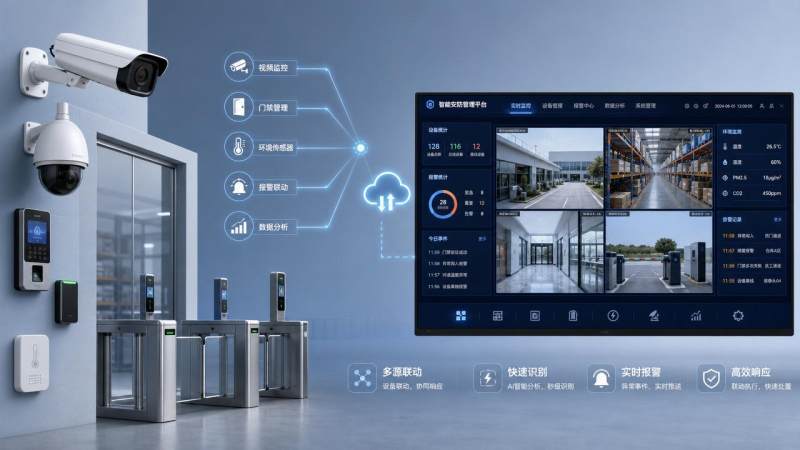
Security analytics is becoming essential for operators who need faster, more accurate incident detection and response in complex security environments. As digital infrastructure and urban safety systems evolve, GSIM helps bridge global compliance, physical security assurance, and optical intelligence, giving frontline users the insights needed to reduce risk, improve visibility, and act with greater confidence.
What does security analytics actually mean for operators?
For end users and operators, security analytics is not just another software label. It is the practical use of data from cameras, sensors, access control systems, alarms, lighting conditions, and operational logs to identify abnormal activity, prioritize risk, and support faster response. In a mixed environment such as a construction site, transport hub, campus, warehouse, or public facility, the real value comes from reducing noise and highlighting the events that matter.
Many operators face the same daily problem: too many alerts, not enough context, and limited time to judge whether a signal is routine, accidental, or dangerous. Security analytics helps by correlating events, time stamps, movement patterns, image quality, and environmental changes. Instead of treating each alarm as isolated, it creates a more usable operational picture.
GSIM adds another layer that is especially useful in global and cross-regional deployments. Its Strategic Intelligence Center connects security operations with compliance interpretation, optical environment optimization, and evolving procurement signals. That means operators do not only see an event; they can better understand whether their current deployment supports response quality, legal requirements, and long-term scalability.
- It improves detection accuracy by comparing multiple data points rather than relying on a single device trigger.
- It shortens decision time by ranking incidents according to risk, location, and operational impact.
- It supports post-incident review by preserving patterns, timelines, and system interactions in a structured form.
- It helps operators adapt to low-light, crowded, or changing environments where visual quality affects incident verification.
Why is faster incident detection harder than it looks?
In theory, more devices should improve awareness. In practice, more devices often create more blind spots in decision-making. Operators are asked to monitor wider perimeters, denser facilities, and more diverse user behavior. At the same time, they must work within budget, maintain uptime, and avoid unnecessary escalation. This is exactly where security analytics becomes a decision support layer rather than a simple monitoring feature.
A common issue is that detection speed depends on image clarity, lighting uniformity, alert logic, and workflow design. If a camera sees motion but the optical environment is poor, the operator may receive an alert without actionable evidence. If access control flags an exception but there is no event correlation with video or perimeter sensors, verification slows down. Security analytics only works well when data quality and operational context are both considered.
Typical obstacles in mixed security environments
- False alarms from weather, shadows, reflections, or poorly tuned motion settings.
- Fragmented systems where CCTV, access control, and incident logs are not linked.
- Insufficient lighting design, which reduces video usability during night operations or transition periods.
- Inconsistent compliance requirements across regions, especially for surveillance retention, privacy, and data handling.
- Operator fatigue caused by repetitive event review and low-priority notifications.
GSIM is relevant here because it does not treat physical security and optical conditions as separate topics. Its intelligence framework helps buyers and operators understand how policy, environmental performance, and monitoring technology interact. That is important when the goal is not simply adding more equipment, but making detection and response more dependable.
Which application scenarios benefit most from security analytics?
Security analytics delivers the strongest operational value in environments where incidents evolve quickly, visibility changes throughout the day, and multiple stakeholders depend on a common picture of risk. The table below shows how different scenarios use security analytics and what operators should focus on during deployment.
The key lesson is that security analytics should reflect the operating rhythm of the site. A public plaza and a bonded warehouse may both need incident detection, but their triggers, tolerances, and evidence requirements differ. GSIM’s Commercial Insights and sector intelligence are useful for identifying which deployment logic aligns with each scenario rather than applying a generic template.
What should operators compare before selecting a security analytics approach?
Choosing a security analytics solution is rarely about one feature. Operators need to compare how a system handles alert quality, environmental adaptation, integration, and operational workload. The next table supports a practical comparison between common approaches used across integrated security environments.
For many operators, the best path is not the most advanced label, but the best match between site complexity and response needs. GSIM helps users compare these options through policy interpretation, technology trend mapping, and procurement insight that connects technical ambition with operational feasibility.
How do lighting and optical conditions affect security analytics performance?
Security analytics is often discussed as a software issue, but operators know that image quality drives trust in alerts. Poor illumination, backlight, uneven lux levels, glare, and reflective surfaces can reduce the usefulness of video-based detection. In low-visibility areas, the system may still detect motion while failing to provide enough clarity for confident action. That slows response and increases manual review time.
This is one reason GSIM’s focus on optical environment optimization matters. By combining physical security assurance with lighting intelligence, it helps users evaluate whether the environment supports reliable analytics. In many projects, improving optical conditions produces better incident verification than simply adding more camera channels.
Practical checks before deployment
- Review day-to-night transitions, not just daytime image samples. Dusk and early morning often reveal the biggest detection gaps.
- Check whether critical zones have consistent lighting rather than isolated bright points and dark edges.
- Confirm that camera angle, lens selection, and illuminance levels support the intended analytic task, such as loitering detection or perimeter crossing.
- Test adverse conditions including rain, dust, vehicle headlights, and reflective safety materials where relevant.
- Measure operator review time during trial events. A technically successful alert that still takes too long to verify is not fully effective.
What should procurement teams and operators look for first?
Procurement often fails when teams buy for features rather than response outcomes. Operators should define the operational question first: what incident must be detected earlier, what evidence is needed, and what action should follow? Security analytics becomes more valuable when it is tied to clear workflows rather than a long checklist of functions.
The table below provides a practical evaluation matrix for buyers who need to compare security analytics options across performance, integration, and operational fit.
A strong procurement process should include a live test window, representative incident scenarios, and review by both technical and frontline staff. GSIM can support this stage by helping users interpret project trends, compare environment-related performance assumptions, and clarify which compliance or optical factors may affect the final selection.
How should security analytics be implemented without disrupting operations?
Implementation works best when it is phased. A rushed rollout often creates distrust because operators receive alerts before logic tuning is complete. Starting with one incident type or one critical zone allows teams to measure response time, alert precision, and user acceptance before expanding coverage.
Recommended rollout sequence
- Map the highest-risk scenarios, such as perimeter intrusion, unauthorized after-hours access, or crowd build-up near restricted areas.
- Audit source quality, including camera positioning, lighting consistency, access control event reliability, and sensor health.
- Define operator actions for each alert level so the system supports existing response structure instead of complicating it.
- Run a controlled pilot and record false alarm rate, verification time, and escalation outcomes.
- Tune thresholds, reporting views, and environment settings before wider rollout.
- Review compliance requirements at each stage, especially when surveillance data crosses jurisdictions or retention policies differ.
This measured approach reduces resistance and improves trust in security analytics. It also creates a clearer evidence trail for management, procurement, and compliance teams that need to justify broader investment.
What compliance and risk issues are often overlooked?
Operators usually focus on detection performance first, but the long-term success of security analytics also depends on lawful deployment, data governance, and transparent operating procedures. Surveillance rules differ by region, especially for retention periods, notice requirements, purpose limitation, and cross-border handling of recorded events. Ignoring these factors can delay projects or force redesign.
GSIM’s Strategic Intelligence Center is valuable because it helps interpret international compliance developments together with technical trends. That combination is especially useful for multinational programs, smart public projects, and digital infrastructure upgrades where hardware, software, and legal review move at different speeds.
- Do not assume that better analytics justifies broader surveillance scope without reviewing purpose and access rules.
- Do not overlook environmental recording quality, because poor evidence may weaken internal investigations even when alerts are generated.
- Do not separate procurement from compliance review. Requirements for storage, auditability, and operator permissions should be discussed early.
FAQ: practical questions operators ask about security analytics
How do I know whether security analytics will reduce false alarms at my site?
Start with a pilot in a known problem area. Measure how many alerts are generated per shift, how many require manual dismissal, and how many lead to action. If the system can correlate video, access events, and environmental context, false alarms usually become easier to suppress than in single-source monitoring. The result depends heavily on tuning and source quality, not just on software branding.
Is security analytics only useful for large smart city or critical infrastructure projects?
No. It is also useful in mid-sized campuses, logistics centers, construction sites, and public-facing facilities where operators need faster event verification. The scale of deployment can vary, but the core question stays the same: can the system help staff detect what matters sooner and respond with better evidence?
What is the biggest mistake during procurement?
The biggest mistake is buying analytics without defining the response workflow. If operators do not know who reviews the alert, what evidence is needed, and what action follows, even a technically capable system may underperform. A second common error is ignoring optical conditions and assuming every camera stream is equally suitable for analytic tasks.
How long does implementation usually take?
It depends on site complexity, integration depth, and compliance review. A focused pilot can begin relatively quickly if source systems are stable, while a multi-site deployment with cross-functional review may take longer. What matters more than raw speed is whether the rollout includes tuning, operator feedback, and scenario-based validation.
Why choose GSIM when evaluating security analytics?
GSIM is positioned for organizations that need more than product exposure. Its value lies in connecting physical security assurance, optical environment optimization, compliance interpretation, and market intelligence into one decision-support framework. For operators and users, that means clearer guidance on what affects incident detection in the real world, not just on paper.
If you are assessing security analytics for a site upgrade, smart construction program, public safety project, or distributed facility, GSIM can support key decision points before procurement moves too far. You can consult on parameter confirmation for monitoring conditions, solution selection for specific incident types, delivery timing considerations, customized deployment logic, applicable certification or compliance expectations, sample evaluation support, and quotation communication aligned with project scope.
That practical alignment is the reason many teams need an intelligence partner, not only a vendor directory. When incident detection must become faster, more accurate, and more defensible, security analytics works best when policy, optics, and operations are assessed together. GSIM’s mission remains clear: Visioning Risks, Illuminating the Future.
The VitalSync Intelligence Brief
Receive daily deep-dives into MedTech innovations and regulatory shifts.