
Security
Security Intelligence: How to Reduce False Alarms Faster
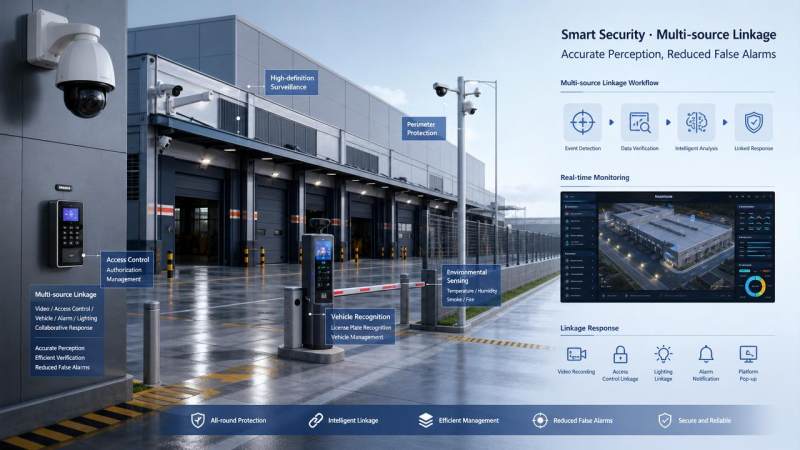
Why faster false alarm reduction now matters more than simple detection
Security intelligence now shapes how sites respond, not just what they detect.
In mixed-use campuses, logistics hubs, transit nodes, and public projects, alarms arrive from cameras, sensors, access points, and lighting controls.
The real cost appears when benign events trigger escalation, disrupt workflows, and weaken trust in the system.
That is why security intelligence must reduce false alarms faster while preserving evidentiary quality and compliance discipline.
GSIM frames this well through its Strategic Intelligence Center, where policy updates, optical technology trends, and project signals are viewed together.
In practice, that combination matters because alarm quality depends on more than device sensitivity.
It depends on scene lighting, traffic density, regional rules, maintenance habits, and how verification decisions are structured.
Actual environments rarely fail for the same reason
Different sites produce false alarms for different operational reasons.
A warehouse may struggle with dust, forklift glare, and repetitive door activity.
A municipal facility may face weather shifts, crowd surges, and stricter audit requirements.
A smart construction site often changes every week, so yesterday’s camera logic may misread today’s movement patterns.
This is where security intelligence becomes a decision framework rather than a dashboard.
Better results come from linking alarm events with optical conditions, site behavior, and local compliance thresholds.
More mature programs also compare incident data against wider sector patterns, especially when new AI vision models or VLC-enabled infrastructure are introduced.
A useful way to judge alarm quality before tuning systems
- Check whether false alarms cluster by time, weather, shift pattern, or lighting transition.
- Review whether verification relies on one sensor type or a layered event chain.
- Confirm whether the site follows current surveillance, privacy, and evidence retention rules.
- Measure how long operators need to dismiss non-threat events with confidence.
Busy logistics and industrial sites need context-rich verification
High-activity facilities rarely benefit from aggressive sensitivity alone.
Frequent vehicle movement, variable illumination, reflective packaging, and restricted zones create overlapping triggers.
Here, security intelligence works best when video analytics are paired with zone rules, access logs, and optical calibration history.
If a loading area alarm appears during approved dock cycles, the first question is not intrusion.
The first question is whether the event matches scheduled movement, badge authorization, and lighting behavior.
GSIM’s commercial insight perspective is relevant here because procurement choices often ignore how fast layouts and workflows change.
A camera with excellent specifications may still produce weak security intelligence if lens placement and night illumination are not reviewed together.
What usually deserves closer attention
- Transition zones between indoor and outdoor light levels.
- Temporary storage changes that alter motion paths.
- Unlabeled maintenance periods that resemble abnormal access.
- Old alarm logic that remains after process redesign.
Public-facing sites care as much about legitimacy as speed
Transit spaces, civic complexes, campuses, and healthcare environments face a different balance.
They still need rapid alarm verification, yet public exposure raises the cost of overreaction.
In these settings, security intelligence must support proportional response, clear incident traceability, and legally defensible review.
This is why policy interpretation matters alongside technology.
When regional electronic surveillance rules change, the alarm workflow may need revision even if hardware remains unchanged.
A common mistake is to treat every crowded environment as the same.
Crowd density in a transit hall behaves differently from visitor circulation in a hospital wing or public office.
The stronger approach is to define event confidence thresholds by behavior pattern, sightline quality, and escalation consequence.
Construction and upgrade projects shift the baseline constantly
Smart construction sites are among the hardest places to stabilize alarms.
Perimeters move, lighting rigs change, and temporary materials distort camera interpretation.
In this environment, security intelligence should be reviewed as a living control layer.
Static rules tend to produce rising noise after each construction phase.
GSIM’s trend tracking around AI vision and optical infrastructure is useful because site upgrades increasingly blend safety, visibility, and connectivity.
When VLC or adaptive lighting enters the design, alarm verification may improve, but only if calibration plans are updated with the site timeline.
The overlooked issue is often not sensor quality.
It is the absence of a reset routine after each environmental change.
Where false alarm programs often go wrong
One recurring error is judging security intelligence by detection volume.
More alerts do not mean more awareness when verification teams cannot separate noise from threat quickly.
Another weak practice is buying for headline parameters while ignoring optical environment quality, cleaning cycles, and software compatibility.
There is also a compliance blind spot.
Some sites refine analytics aggressively, then discover their evidence handling or surveillance logic no longer fits updated legal guidance.
More mature security intelligence programs avoid these traps by combining operational review with policy review.
- Do not treat similar facilities as identical if occupancy patterns differ.
- Do not tune analytics before checking light uniformity and blind spots.
- Do not judge cost only at purchase stage; include retraining and recalibration effort.
- Do not separate compliance updates from alarm workflow design.
A practical path to better scene fit and faster verification
A workable improvement plan starts with scene mapping, not feature lists.
Identify where alarms are frequent, where consequences are highest, and where optical conditions change most.
Then compare those points against response delay, maintenance burden, and legal handling rules.
Security intelligence becomes more valuable when event correlation rules are written around real site behavior.
In many facilities, the best gains come from modest adjustments.
Examples include revising active zones by time window, improving illumination consistency, and setting multi-source verification before escalation.
GSIM’s role is useful here as a reference layer.
Its mix of sector news, standards interpretation, and project insight helps benchmark whether a local alarm issue is isolated or part of a wider shift.
Next actions worth taking
- Map false alarms by location, time, light condition, and operational activity.
- Compare verification speed across sites with different occupancy and compliance demands.
- Set scene-specific thresholds instead of one universal sensitivity profile.
- Review whether optical upgrades, AI vision updates, or VLC plans change alarm behavior.
- Build a repeatable adaptation standard for layout changes, audits, and maintenance cycles.
Reducing false alarms faster is not a narrow technical exercise.
It is a scene-based security intelligence discipline that blends environment, policy, optics, and response logic.
When those elements are judged together, alarm systems become more credible, more efficient, and far easier to trust under pressure.
The VitalSync Intelligence Brief
Receive daily deep-dives into MedTech innovations and regulatory shifts.