
Security
Security systems that scale without costly rework
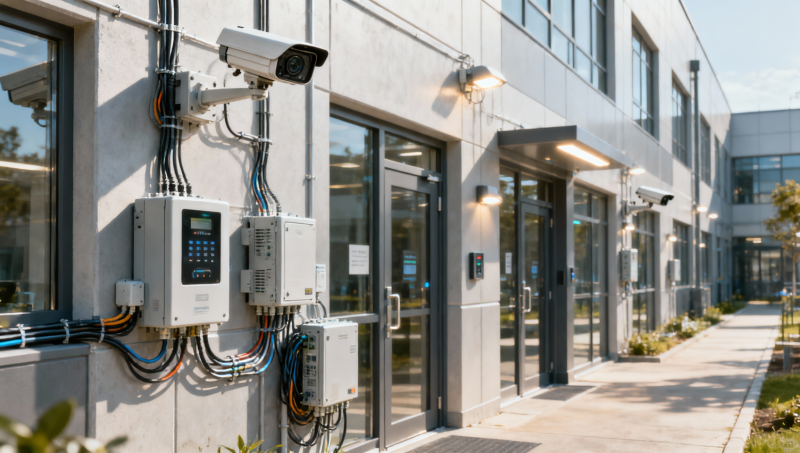
As digital transformation accelerates across industries, organizations need security systems that can grow with changing risk assessment demands, security policies, and operational complexity. From critical infrastructure protection to digital security and optical sensing integration, scalable security architecture helps buyers, engineers, and decision-makers avoid costly rework while selecting smarter security solutions grounded in optical engineering and long-term resilience.
When people search for security systems that scale without costly rework, they are usually not looking for abstract theory. They want to know how to design or buy a system that will still work when sites expand, compliance rules change, more cameras or sensors are added, and operations become more connected. The practical question is simple: how do you avoid replacing major parts of the system every time the business grows?
For most organizations, the answer is not “buy the biggest system today.” It is to choose a modular security architecture with interoperable components, flexible network capacity, standards-aware software, and room for optical, AI, and operational upgrades. Scalable security is less about overbuilding and more about making smart choices early so future change becomes an expansion project, not a reconstruction project.
What buyers and project teams really mean by a scalable security system
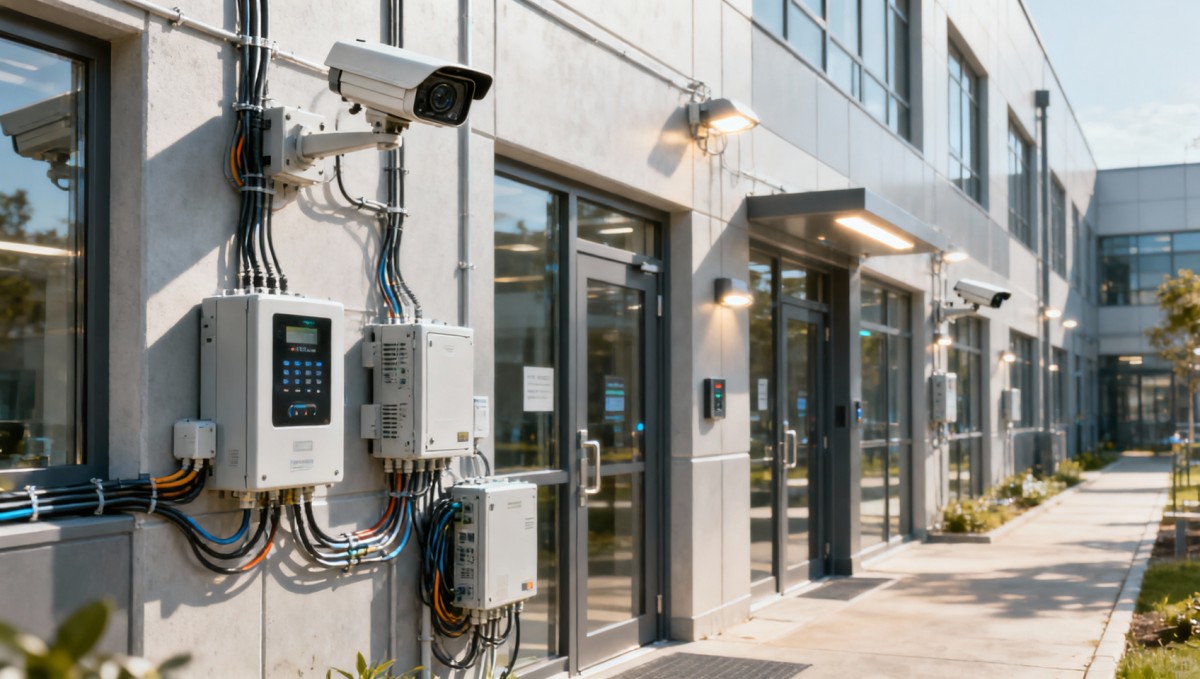
A scalable security system is one that can expand in coverage, function, and integration without forcing expensive redesign of core infrastructure. In practice, this means that new devices, locations, user groups, and policies can be added with limited disruption to operations, cabling, storage, software logic, and training procedures.
This matters across industries because the triggers for expansion are different, but the financial pain of rework is similar. A logistics site may need more perimeter visibility. A hospital may need stronger access segmentation. A manufacturing plant may add machine vision and optical sensing. A municipality may connect street lighting, public safety cameras, and incident response workflows. In each case, poor early design creates hidden costs later.
From a procurement and project management perspective, scalability should be defined in measurable terms. Can the system support phased deployment? Can it integrate devices from multiple vendors? Can network bandwidth, storage, and analytics grow predictably? Can compliance reporting adapt to new regulations? If the answer to these questions is unclear, the system may be technically functional today but financially fragile tomorrow.
Why costly rework happens in the first place
Costly rework usually begins with narrow scoping. Teams often design for the current site, the current threat model, and the current budget cycle, but not for the next three to five years of operational change. As a result, they choose hardware, software, or topologies that meet immediate needs but create lock-in when expansion begins.
Another common problem is treating security devices as isolated endpoints rather than as part of a larger digital and optical environment. Cameras, access control readers, sensors, intercoms, lighting controls, and command software increasingly share data paths and decision logic. If they are designed in silos, every future integration requires additional gateways, rewiring, configuration work, and specialist support.
Rework also happens when organizations underestimate policy and compliance change. Data retention rules, cyber-hardening requirements, AI governance, privacy obligations, and evidence management standards evolve quickly. A system that cannot adapt through software configuration, role-based controls, and documented interoperability may force expensive replacements even if the hardware is still physically operational.
The design principles that prevent expensive rebuilds
The first principle is modularity. Core components should be selected so that expansion happens by adding capacity, not replacing foundations. This applies to edge devices, storage layers, network switches, power distribution, management software, and monitoring dashboards. Modular design lets project teams align deployment with capital budgets while protecting the original investment.
The second principle is interoperability. Open or widely adopted protocols reduce dependency on a single product ecosystem and make it easier to introduce better devices later. For technical evaluators, this means checking not just whether systems “integrate,” but how deeply they integrate. Basic connection is not enough if metadata, events, authentication, health status, and analytics outputs cannot flow across platforms in a usable way.
The third principle is capacity planning with margin. Security systems often fail to scale because original designs do not leave room for higher resolution imaging, longer retention periods, AI-based analytics, or more edge processing. A future-ready design should consider bandwidth headroom, storage growth curves, processing requirements, and environmental factors such as lighting conditions that affect image quality and analytic performance.
How optical and illumination planning affects scalability
Many organizations think of scalable security only in software or network terms, but optical performance is a major factor. If illumination, camera placement, sensor range, and reflective surfaces are poorly planned, expanding the system often means correcting visual performance issues later through additional hardware, repositioning, or complete redesign of the monitored area.
Optical environment optimization is especially important when AI vision, low-light surveillance, license plate capture, and perimeter analytics are involved. Analytics engines depend on stable image quality, contrast, and predictable lighting conditions. If the first phase of deployment ignores this, later expansion into automated detection may require replacing cameras or adding compensating infrastructure that could have been designed correctly from the start.
This is where strategic planning creates long-term value. Security and illumination should be assessed together, especially in smart campuses, industrial sites, transport corridors, and public infrastructure. A coordinated design improves detection performance, reduces nuisance alerts, supports safer operations, and preserves flexibility for future optical sensing applications, including visible light communication and advanced machine vision use cases.
What decision-makers should evaluate before approving a system
Enterprise leaders and commercial evaluators should start by asking whether the proposed design supports business change, not just security coverage. A good system should be able to absorb acquisitions, site expansion, operational digitization, policy updates, and workforce changes without major architectural disruption. If a vendor cannot explain the expansion path clearly, risk is being transferred to the buyer.
Total cost of ownership is more useful than initial price when comparing options. Lower upfront pricing can become expensive if scaling requires proprietary licenses, forklift upgrades, intensive customization, or specialist maintenance. Decision-makers should request a phased cost model that shows what happens when the organization adds more devices, more users, more sites, longer retention, or more advanced analytics.
It is also wise to evaluate governance readiness. Scalable security systems need clear ownership of standards, cybersecurity controls, access permissions, update policies, and data lifecycle rules. The stronger the governance model, the less likely the organization will face operational confusion or compliance-driven rework when the system expands.
Questions engineers, operators, and procurement teams should ask vendors
Technical and operational teams should push beyond marketing claims. Ask how the system handles multi-site growth, hybrid deployments, and third-party integration. Request examples of deployments that expanded over time without replacing the original management layer. Ask what happens when storage, AI analytics, or edge devices from different generations coexist in the same environment.
Procurement teams should ask for lifecycle transparency. What is the software support policy? How often do hardware platforms change? Are firmware updates centrally manageable? Which features require separate licenses later? Can devices remain useful if the organization migrates parts of the architecture? These questions reveal whether the design encourages continuity or creates staged dependence.
Operators should ask practical usability questions. Can alarm workflows be modified without custom code? Can users be grouped by role and site? Are health alerts easy to interpret? Can the system support both centralized oversight and local autonomy? A system may be technically scalable on paper, but if day-to-day operation becomes too complex, expansion will still generate hidden labor cost and training burden.
A phased implementation model that supports growth
One of the best ways to avoid costly rework is to implement in structured phases. Phase one should establish the core architecture: network design, power resilience, device standards, management platform selection, and optical baseline. This phase should not try to solve every future use case, but it should deliberately keep those use cases possible.
Phase two can expand functional coverage based on operational priorities. This might include adding more sites, integrating access control, introducing thermal or specialty imaging, or connecting lighting and environmental sensors. Because the core architecture is already standardized, these additions become incremental rather than disruptive.
Phase three can focus on intelligence and optimization. At this stage, organizations often adopt AI-assisted detection, workflow automation, evidence search improvements, and advanced reporting. If earlier phases were designed for scale, these enhancements can be layered onto the system using existing data structures, compute paths, and governance policies instead of triggering major redesign.
Common warning signs that a system will not scale well
There are several red flags. One is a design that depends heavily on proprietary components without a clear interoperability roadmap. Another is vague language around future integration, where vendors promise compatibility but cannot specify supported protocols, event models, or API depth. Such ambiguity often leads to integration cost later.
Another warning sign is storage and bandwidth planning based only on present camera counts. Resolution increases, frame rate changes, retention policy shifts, and analytic workloads can all multiply infrastructure demand. If the proposal lacks growth assumptions and performance margins, the organization may soon outgrow what it just installed.
Finally, watch for weak documentation and unclear change management processes. Scalability is not just a technical property; it is an operational discipline. Without consistent naming, configuration standards, maintenance records, and upgrade procedures, even a good system becomes difficult to expand reliably across time, teams, and locations.
How scalable security supports resilience across industries
Although the use cases vary, the value of scalable security is universal. In industrial environments, it supports phased automation, worker safety, and perimeter integrity. In commercial buildings, it enables tenant growth, visitor management, and smarter facility operations. In public infrastructure, it supports multi-agency coordination, incident visibility, and modernization without repeated reconstruction.
For distributors, integrators, and channel partners, scalable design also creates stronger customer trust. Clients increasingly want proof that systems can adapt to policy shifts, digital infrastructure programs, and new optical technologies. Offering expansion-ready architecture is no longer a premium extra; it is becoming a baseline expectation in serious projects.
For organizations navigating the 2026 wave of digital infrastructure and urban safety upgrades, strategic intelligence matters as much as hardware selection. Decision-makers need visibility into compliance shifts, procurement trends, optical innovation, and the convergence of AI vision with broader security ecosystems. Systems that scale well are usually backed by better information, not just better equipment.
Conclusion: build for change, not just for installation day
The most important takeaway is that scalable security systems are planned, not improvised. They are built on modular architecture, interoperability, optical awareness, governance discipline, and realistic capacity planning. These choices reduce the chance that growth, regulation, or new technology will force expensive rework later.
For buyers, engineers, project leaders, and executives, the right question is not simply which system works today. It is which system can absorb tomorrow’s operational, technical, and compliance demands without undermining cost control. That is the difference between a system that is installed and a system that endures.
In a market shaped by fast-moving infrastructure modernization, AI-enabled sensing, and global security policy change, long-term value comes from informed design decisions. Organizations that align security architecture with future expansion, optical performance, and standards-based integration are far better positioned to protect assets, manage risk, and invest with confidence.
- optical environment optimization
- digital infrastructure
- urban safety upgrades
- security policies
- AI vision
- Visible Light Communication
- procurement trends
- risk assessment
- security solutions
- digital security
- digital transformation
- optical innovation
- optical engineering
- security systems
- critical infrastructure protection
- optical sensing
- security architecture
The VitalSync Intelligence Brief
Receive daily deep-dives into MedTech innovations and regulatory shifts.