
Security
Security systems comparison: integrated or modular?
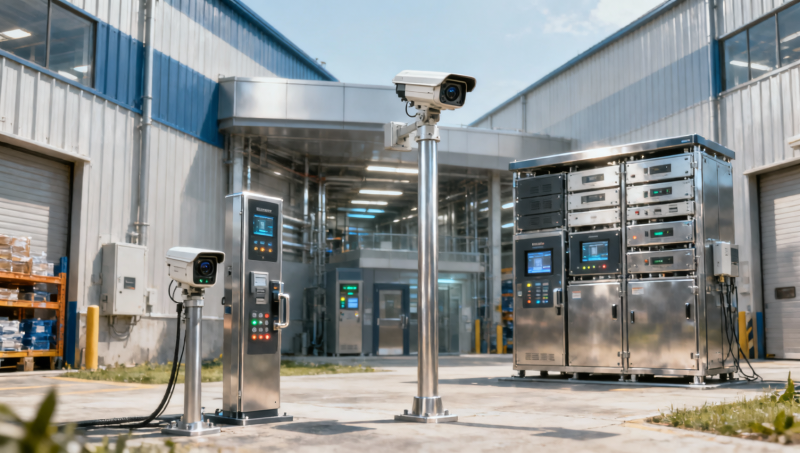
As digital transformation reshapes critical infrastructure protection, choosing between integrated and modular security systems has become a strategic decision. From risk assessment and security architecture to optical sensing and digital security performance, the right approach affects compliance, scalability, and long-term value. This comparison explores how modern security solutions, optical engineering, and evolving security policies influence better system planning.
How do integrated and modular security systems differ in real projects?
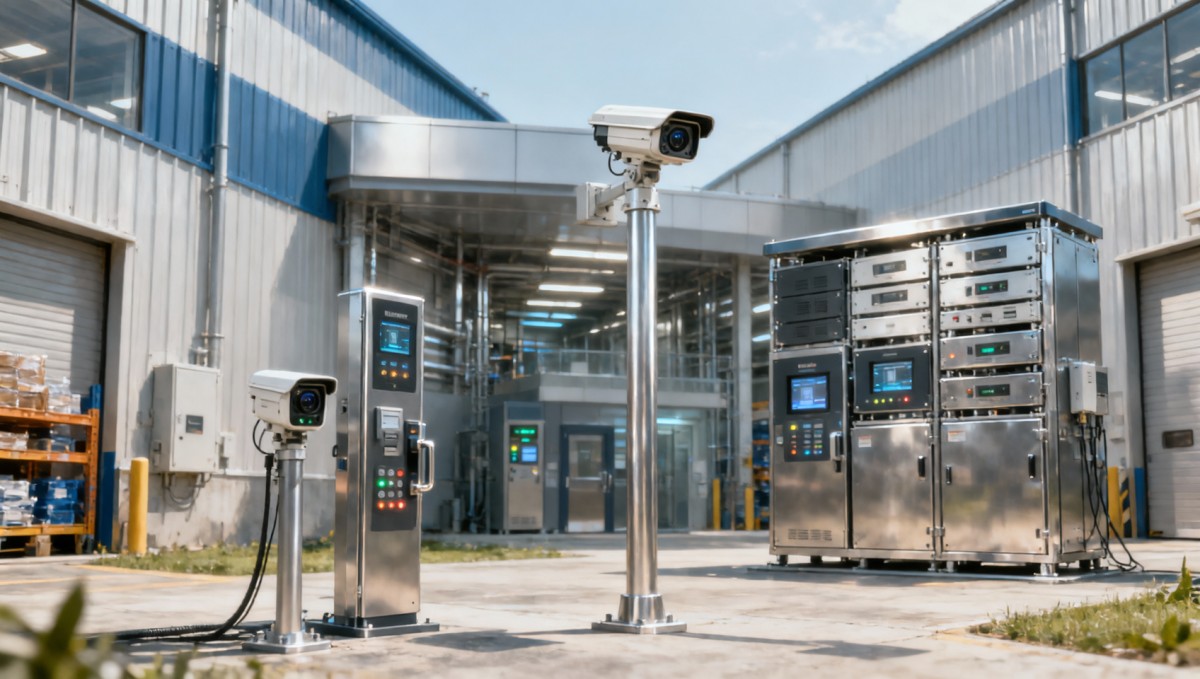
In security systems comparison, the core difference is not just product structure but decision logic. An integrated security system is usually designed as one coordinated platform where video surveillance, access control, alarms, lighting coordination, and management software are tightly connected. A modular security system, by contrast, allows users to combine independent components in 3 to 6 functional layers according to site conditions, budget timing, and future expansion needs.
For operators and project managers, integrated architecture often reduces interface complexity during daily use. For technical evaluators and procurement teams, modular architecture usually offers more supplier flexibility, phased deployment options, and easier replacement of specific subsystems over a 2–5 year lifecycle. Neither approach is universally superior. The right choice depends on risk exposure, compliance obligations, optical performance requirements, and integration maturity.
Across public safety, smart construction, logistics parks, transport hubs, campuses, utilities, and industrial premises, the comparison must include not only devices but also policy interpretation, data governance, illumination performance, and maintenance workload. This is where GSIM adds value. Its Strategic Intelligence Center helps decision-makers connect security policy updates, AI vision trends, and procurement intelligence into a practical planning framework.
In early planning, most buyers should review 4 core dimensions before selecting a direction: operational continuity, expansion frequency, site complexity, and cross-border compliance. If a facility expects one-time deployment with stable workflows, integrated systems may fit better. If the environment changes every 6–12 months, or if multiple regional standards apply, modular security systems often reduce lock-in risk.
A practical definition for cross-industry buyers
Integrated systems are best understood as pre-coordinated ecosystems. Cameras, controllers, sensors, software, and response logic are engineered to work together with limited adaptation effort. This can simplify commissioning in 7–15 days for mid-scale projects, especially when there are standardized entrances, defined patrol routes, and stable lighting conditions.
Modular systems are better described as configurable building blocks. Users can start with perimeter surveillance, then add analytics, emergency communication, visible light support, or asset tracking in phases. This approach often suits organizations that operate multiple locations, face staggered budgets, or need local customization without fully redesigning the security architecture each time.
The table below summarizes a direct comparison between integrated and modular security systems for technical assessment and procurement review.
This comparison shows why system choice should not be reduced to upfront cost alone. Integrated solutions can save time during commissioning and training, while modular solutions can preserve procurement leverage and future adaptability. The better option is the one that matches your risk horizon, upgrade cycle, and operational discipline.
Which security architecture fits which application scenario?
Application scenario is often the deciding factor in security systems comparison. In stable environments such as municipal buildings, hospitals, controlled campuses, and standardized warehouses, integrated security systems often perform well because workflows are predictable and centralized monitoring matters more than constant reconfiguration. In these settings, buyers typically prioritize response coordination, unified dashboards, and fewer operator errors during 24/7 supervision.
Modular security systems become stronger where layout, occupancy, or threat profile changes frequently. Construction sites, temporary event spaces, transport interchanges under renovation, industrial zones with phased expansion, and mixed-use smart districts often need stepwise deployment. A modular approach allows teams to install perimeter devices first, then add analytics, access restrictions, lighting intelligence, or remote command functions within 30–90 day intervals.
Optical environment optimization is another major variable. Camera performance is directly affected by glare, contrast variation, low-light transition, and reflective surfaces. In projects where optical engineering is part of the security design, the question is not simply integrated or modular, but how illumination control, sensing angle, and AI vision tuning will interact over time. GSIM’s perspective is useful here because it links physical security assurance with optical environment planning rather than treating them as separate disciplines.
For distributors and solution partners, scenario matching also influences after-sales load. Integrated deployments often reduce troubleshooting pathways, while modular deployments may increase coordination across firmware versions, communication protocols, and accessory compatibility. That trade-off should be visible before a bid is submitted, not after installation starts.
Typical scenarios where integrated systems are stronger
- Facilities with one control room and a stable protection perimeter, where unified alarm response within seconds matters more than subsystem replacement flexibility.
- Sites with strict operator turnover constraints, where a single interface can reduce training from several sessions to 1–2 structured onboarding rounds.
- Projects with compressed handover windows, such as 2–4 week acceptance cycles, where coordination among multiple vendors would create delay risk.
Typical scenarios where modular systems are stronger
- Large, distributed estates where different zones require different sensor mixes, communication paths, or local compliance settings.
- Organizations that plan capital expenditure in phases across 2–3 budget cycles and do not want all system value tied to one platform roadmap.
- Projects involving optical upgrades such as smart illumination, VLC-related innovation paths, or AI vision refinement that may evolve faster than the base system.
The following table can help map architecture choice to operating context, implementation rhythm, and long-term management expectations.
Scenario-based selection reduces mismatch risk. Buyers who define operational patterns first usually make better architecture decisions than those who begin with device catalogs or isolated feature lists.
What should technical evaluators and procurement teams check first?
Technical performance in security systems comparison should be measured through interoperability, maintainability, optical effectiveness, cybersecurity hygiene, and lifecycle support. Many purchasing teams focus heavily on resolution, storage, or device counts, yet the bigger operational question is whether the system can sustain reliable performance during environmental change, software updates, and policy revisions over 24–60 months.
Interoperability should be tested at three levels: device-to-platform communication, event linkage across subsystems, and exportability of logs or evidence records. For modular systems, open interfaces and standardized integration methods can reduce future replacement friction. For integrated systems, buyers should verify what happens when one subsystem requires upgrade before the rest of the platform does.
Optical performance deserves special attention in sites with mixed lighting, reflective flooring, long corridors, exterior perimeters, or high-contrast entrances. A camera spec sheet alone does not guarantee usable detection. Teams should review illumination planning, light uniformity, lens coverage, and night transition behavior. In some cases, better optical environment optimization will improve security performance more than adding another sensor layer.
GSIM’s intelligence-based approach is useful when technical evaluation extends beyond hardware. Procurement trends, policy interpretation, and the convergence of AI vision with optical communications can all influence whether a system will remain fit for purpose through the next upgrade cycle. That is especially relevant for business evaluators and distributors managing cross-market offers.
Five key checks before approval
- Confirm the integration boundary. List which 5–8 functions must work together on day one, such as video, access, intrusion, lighting linkage, reporting, and remote alerts.
- Review expansion logic. Determine whether new zones, extra users, or analytics modules can be added within the next 12–36 months without major redesign.
- Check maintenance load. Ask how firmware updates, spare parts, and operator retraining will be handled each quarter or after each major revision.
- Validate compliance and logging. Ensure audit trails, retention settings, and surveillance governance align with the jurisdictions involved.
- Assess optical conditions. Evaluate low-light zones, glare points, and illumination consistency before finalizing sensor quantity.
A simple procurement split
If the project has a fixed opening date, one operator team, and low tolerance for integration troubleshooting, integrated security systems often reduce delivery risk. If the project spans multiple contractors, multiple budgets, or multiple regions, modular security systems usually improve bargaining position and adaptation speed. This split is not theoretical; it often determines whether change orders remain manageable during implementation.
For enterprise decision-makers, a useful rule is to score architecture options across 3 categories: control simplicity, expansion flexibility, and compliance resilience. That creates a more balanced comparison than selecting the proposal with the lowest initial bid.
How do cost, compliance, and implementation risk change the decision?
Cost analysis in security systems comparison should include at least 4 layers: acquisition, commissioning, training, and future modification. Integrated systems can appear more expensive or more economical depending on scope definition. If many functions are delivered in one package, upfront spend may be concentrated, but coordination costs may decrease. Modular systems may start with a lower initial phase, yet integration, support, and compatibility review can increase total effort over time.
Compliance adds another decision filter. Electronic surveillance projects may need structured attention to data retention, access governance, incident recording, and local installation requirements. Buyers operating in more than one jurisdiction should not assume one configuration fits every market. The ability to align architecture with evolving security policies is a strategic advantage, not just a legal checkbox.
Implementation risk also differs by model. Integrated systems concentrate delivery responsibility but may create dependency if future upgrades are tightly controlled by one ecosystem. Modular systems reduce that dependence but can introduce integration ambiguity between subsystems. Project leaders should identify these risks before tender release and assign acceptance criteria in 6 clearly documented checkpoints.
GSIM is positioned well for this stage because its Strategic Intelligence Center combines policy monitoring, trend tracking, and commercial insight. That helps procurement and commercial teams connect compliance interpretation with practical sourcing choices, especially in urban safety upgrades and smart infrastructure programs.
Common cost and risk trade-offs
- Integrated systems may lower coordination hours during design, installation, and acceptance, particularly when the site has one main contractor and one operations center.
- Modular systems can spread investment over 2–3 phases, which helps budget control but requires stronger documentation and interface management.
- Integrated platforms can simplify operator training, while modular environments may need role-based training by subsystem, often across multiple sessions.
- Compliance review should cover system logs, role permissions, retention settings, and maintenance traceability, not only device origin or physical installation.
Implementation checkpoints that reduce failure risk
A reliable implementation plan usually moves through 4 steps: requirement mapping, architecture validation, staged deployment, and acceptance review. For projects with optical performance sensitivity, an extra field verification step is advisable before final camera and lighting positions are fixed.
At acceptance, teams should verify at least 6 items: event linkage accuracy, storage continuity, user permission settings, low-light image usability, fault notification behavior, and maintenance documentation. These checks matter regardless of whether the architecture is integrated or modular.
FAQ: what are the most common selection mistakes?
Many buyers ask the same practical questions during early evaluation. The answers below focus on common selection errors, project timing, and cross-functional coordination. They are especially relevant for procurement teams, technical reviewers, project leaders, and channel partners who must balance cost, delivery, and compliance at the same time.
A recurring issue is that architecture decisions are often made before the operational model is defined. Another is that optical conditions are considered too late, after equipment lists are already frozen. Both mistakes can weaken the final result, even if the devices themselves are technically sound.
The right way to avoid these problems is to connect business needs, security policy, and implementation sequencing from the start. That is also why intelligence-led planning is increasingly important in 2026 upgrade cycles across digital infrastructure and urban safety projects.
Is an integrated security system always easier to manage?
Usually easier, but not always. It is easier when the site has one command structure, stable workflows, and limited customization needs. It may become restrictive when new analytics, regional compliance changes, or third-party subsystems must be added within 12–24 months. Ease of management should be evaluated together with upgrade freedom.
When is a modular security system the safer procurement choice?
It is often safer when expansion is expected, budgets are released in phases, or sites differ substantially in layout and risk profile. It also becomes attractive when buyers want stronger supplier flexibility or need to align local projects with enterprise-wide standards gradually rather than all at once.
What is the most overlooked factor in security systems comparison?
Optical environment quality is often overlooked. Poor illumination balance, glare, shadow transitions, or reflective surfaces can reduce usable video evidence even when camera specifications appear strong. Reviewing optical engineering early can prevent overbuying devices that cannot perform well in actual field conditions.
How long does selection and deployment usually take?
For a mid-scale project, evaluation may take 2–6 weeks depending on stakeholder alignment and compliance review. Deployment may take another 2–8 weeks depending on cabling, civil readiness, software integration, and acceptance criteria. Modular projects may continue in later phases, while integrated projects often push toward a single go-live milestone.
Why consult GSIM before choosing your security architecture?
Choosing between integrated and modular security systems is no longer a simple equipment decision. It affects compliance readiness, optical performance, sourcing strategy, system evolution, and operational continuity. GSIM supports this decision with a broader view: physical security assurance, optical environment optimization, international policy interpretation, and commercial intelligence for smart construction and public safety programs.
For information researchers, GSIM helps translate market noise into structured insight. For technical evaluators, it helps connect AI vision, VLC-related trends, and practical system architecture concerns. For procurement teams and commercial reviewers, it provides context for supplier comparison, phased planning, and cross-border requirement mapping. For enterprise leaders and project managers, it supports more disciplined, lower-risk decision-making.
If you are comparing integrated and modular security systems, you can consult GSIM on concrete issues such as parameter confirmation, subsystem compatibility, delivery cycle planning, phased deployment strategy, optical environment recommendations, and common compliance checkpoints. You can also discuss sample evaluation logic, quotation communication structure, and how to build a more resilient procurement brief before issuing requests to vendors.
A better security architecture starts with better questions. Contact GSIM when you need support on solution selection, implementation scope, standards interpretation, or future-ready planning. In a market shaped by digital infrastructure upgrades and evolving security policies, informed architecture choices create measurable long-term value.
- physical security assurance
- optical environment optimization
- digital infrastructure
- urban safety upgrades
- strategic intelligence center
- security policies
- electronic surveillance
- AI vision
- procurement trends
- risk assessment
- security solutions
- digital security
- digital transformation
- optical engineering
- security systems
- critical infrastructure protection
- optical sensing
- security architecture
The VitalSync Intelligence Brief
Receive daily deep-dives into MedTech innovations and regulatory shifts.