
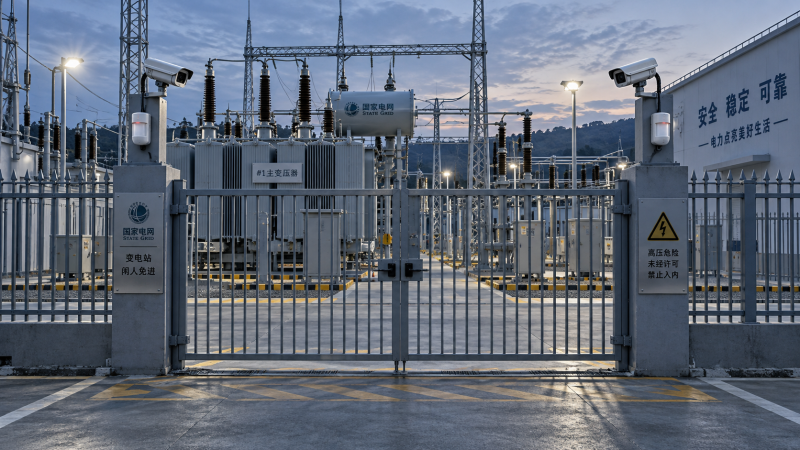
A substation intrusion can threaten grid reliability, personnel safety, and operational continuity. Effective protection requires barriers, verified detection, suitable illumination, and a coordinated response.
For quality control and security managers, the central question is whether protective measures work together under actual site conditions, including darkness, severe weather, and communications failures.
The strongest approach to utility infrastructure protection starts with site-specific consequences, then verifies that detection and response can occur before an intruder reaches critical equipment.
Drawing on GSIM’s focus on physical security assurance and optical environment optimization, this guide explains how to identify vulnerabilities, verify performance, and prioritize practical improvements.
Which substation intrusion risks deserve attention first?
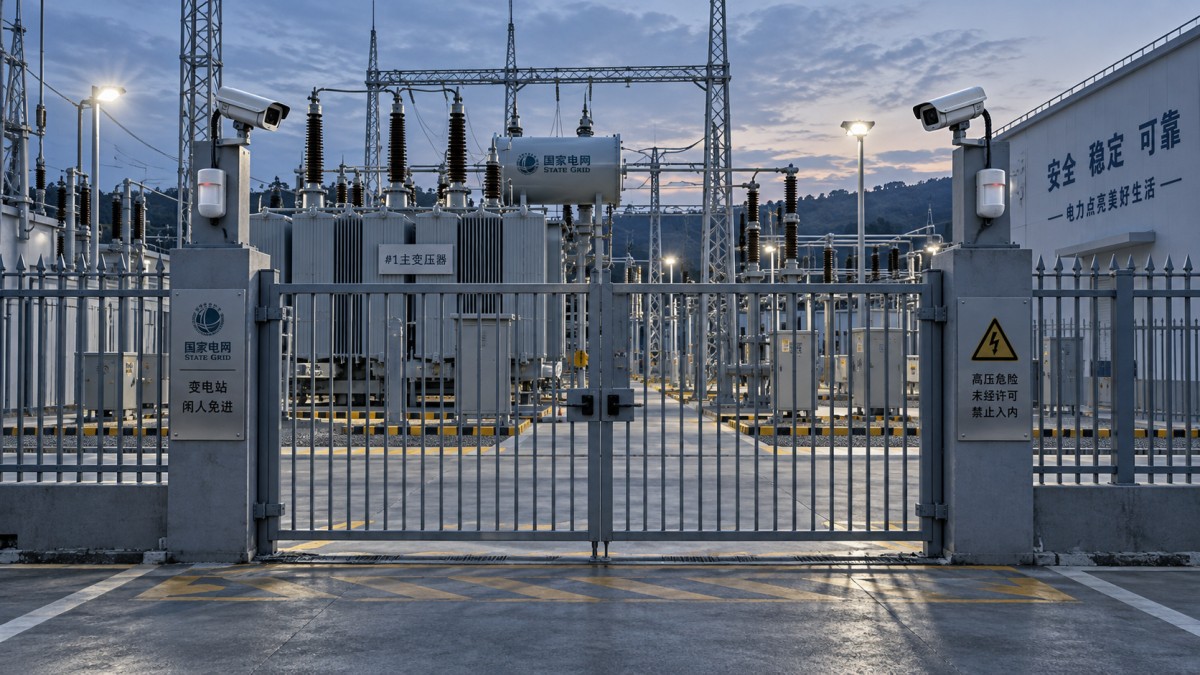
Begin by assessing what an intrusion could disrupt. Substations differ in network importance, equipment replacement times, operating arrangements, public exposure, and access to emergency support.
Review credible scenarios, including unauthorized entry, theft, vandalism, and deliberate damage. Include contractor access errors and unsecured gates because routine failures can create serious exposure.
Security managers should identify critical assets and operational consequences with engineering teams. Equipment sensitivity, redundancy, and restoration options determine which areas require the strongest protection.
Assess vulnerability alongside consequence. A high-impact site with poorly controlled access deserves priority, but repeated incidents at a smaller location may also justify immediate intervention.
Use a documented ranking method that considers consequence, likelihood, existing safeguards, and uncertainty. Record assumptions so reviewers understand why one improvement takes precedence over another.
Inspect the complete boundary and access arrangements during representative operating conditions. Include vegetation, drainage, maintenance activity, nearby development, and changes that could affect surveillance coverage.
The assessment should produce an actionable register: identified weakness, affected protection function, responsible owner, corrective action, completion date, and evidence required to close the finding.
How should barriers, detection, and response work together?
Layered protection succeeds when each measure supports a defined function. Access controls manage entry, barriers provide delay, sensors detect activity, and operators initiate an appropriate response.
A fence specification alone cannot establish security effectiveness. Its condition, foundations, gates, drainage crossings, surrounding environment, and maintenance practices all influence the protection it provides.
Evaluate gates as actively managed equipment. Check closure, locking, access authorization, emergency arrangements, and whether alarms distinguish legitimate access from an unresolved security condition.
Detection should provide useful warning before a person reaches sensitive equipment. Select technologies according to site conditions and validate coverage through authorized testing with operations personnel.
Cameras support assessment by helping operators determine what triggered an alarm. Their value depends on visibility, image quality, coverage, recording availability, and timely operator access.
Compare available warning and barrier delay with realistic assessment, dispatch, and arrival times. A system has limited protective value when intervention consistently follows potential damage.
Where response cannot arrive quickly enough, review additional delay, restricted internal access, operational resilience, or revised staffing arrangements. Document the remaining exposure for management consideration.
Will cameras and lighting perform when an incident occurs?
Nighttime surveillance performance depends on the entire optical environment. Camera specifications cannot compensate automatically for glare, uneven illumination, dirty lenses, poor positioning, or obstructed views.
Define the visual task for each camera: detecting presence, assessing behavior, recognizing relevant details, or supporting identification. Each task requires different image quality and coverage.
Measure lighting where the surveillance task occurs, including relevant vertical surfaces. Ground-level illuminance alone may not explain whether operators can interpret people or activity reliably.
Review uniformity, shadows, glare, and reflections alongside light levels. Bright fixtures can reduce useful visibility when they face cameras directly or create extreme scene contrast.
Infrared illumination can support low-light monitoring, but its effectiveness varies with distance, materials, weather, and camera settings. Test the installed arrangement under representative nighttime conditions.
Coordinate lighting changes with electrical safety, environmental requirements, neighboring properties, and maintenance access. The objective is reliable assessment with suitable illumination, rather than maximum brightness.
For GSIM’s optical environment perspective, the useful question is measurable: can authorized operators consistently interpret the required activity under expected conditions, including foreseeable lighting failures?
What should quality control teams verify before acceptance?
Convert procurement requirements into an acceptance plan before installation begins. Each requirement should identify a measurable outcome, test conditions, evidence format, and responsibility for approval.
Document required coverage, detection behavior, alarm delivery, image usability, environmental suitability, and recovery after interruptions. Avoid accepting broad claims that provide no defined verification method.
Inspect installation quality as well as equipment labels. Check mounting stability, cable protection, enclosure sealing, earthing arrangements where applicable, labeling, and access for safe maintenance.
Run authorized detection tests across agreed locations and representative conditions. Record successful detections, missed events, unwanted alarms, and whether operators receive enough information to assess them.
Evaluate nuisance alarms over a representative observation period. Repeated alarms from weather, vegetation, wildlife, or routine activity can overload operators and weaken confidence in alerts.
Test relevant failure scenarios, including power loss, network interruption, unavailable recording, and device faults. Verify fault notification, approved backup behavior, and recovery without unsafe intervention.
Retain configuration records, test results, exceptions, and corrective actions. Acceptance should establish a repeatable performance baseline that maintenance teams can use when investigating later deterioration.
Can operators turn an alarm into a safe, timely response?
An alarm becomes useful only when someone owns the next action. Define who receives it, who assesses it, and who authorizes escalation during every shift.
Provide operators with concise procedures covering alarm verification, communications, escalation, and evidence preservation. Include alternatives for unavailable cameras, failed communications, and an unresponsive primary contact.
Set response expectations according to risk and practical resources. Remote substations may require different arrangements from staffed facilities, particularly where travel times limit immediate intervention.
Coordinate security response with electrical operations. Responders must understand site hazards, access restrictions, and the need for authorized personnel when approaching or entering energized areas.
Exercise the complete process using approved scenarios. Measure detection, assessment, escalation, and response intervals separately so managers can identify where delays actually occur in practice.
Track missed events, unwanted alarm rates, operator assessment accuracy, device availability, and unresolved faults. Interpret these measures together because any single metric can conceal weaknesses.
After an incident or exercise, assign corrective actions and verify completion. Update procedures, training, and configurations where necessary, then confirm that the revised process performs effectively.
Which compliance obligations and technology risks affect the design?
Compliance requirements depend on jurisdiction, ownership, asset classification, and applicable utility obligations. Establish the relevant requirements before selecting equipment or promising a particular compliance outcome.
For some North American entities, NERC CIP-014 addresses physical security obligations for covered facilities. Applicability must be assessed; it does not automatically extend to every substation.
Other requirements may address electrical safety, surveillance privacy, data retention, environmental impacts, or local construction permissions. Assign responsibility for interpreting each requirement and maintaining supporting evidence.
Video management systems and networked security devices also need cybersecurity controls. Review supported updates, account permissions, remote access, logging, and integration with approved utility networks.
Assess how vendor access is authorized and monitored. Establish ownership of configurations, recordings, and credentials so maintenance or supplier changes do not interrupt essential security functions.
AI video analytics may improve alarm assessment, but accuracy depends on the scene and operating conditions. Validate performance locally and define how uncertain results are handled.
GSIM’s policy and technology intelligence can inform questions and comparisons. Site-specific compliance decisions still require applicable official requirements, qualified interpretation, and evidence from the installed system.
How can managers compare proposals and justify spending?
Compare proposals against the same site risks and acceptance criteria. Product counts and headline specifications provide limited insight unless suppliers explain the protective outcomes they support.
Ask suppliers to identify coverage assumptions, environmental limits, dependencies, maintenance needs, and integration responsibilities. Require a clear explanation of how proposed equipment supports operator decisions.
Evaluate total ownership cost, including installation, licensing, communications, inspections, cleaning, component replacement, training, and support. Low purchase prices can conceal substantial recurring costs or integration effort.
Connect each investment to a specific weakness. Examples include replacing an unreliable gate mechanism, improving nighttime assessment, reducing persistent nuisance alarms, or strengthening fault reporting.
Where financial estimates are appropriate, use transparent assumptions about disruption, repair costs, and operational consequences. Avoid presenting uncertain incident probabilities as precise predictions of savings.
Consider maintainability and supplier support alongside performance. A system that needs unavailable specialist skills or unsupported software may lose effectiveness before its expected service life ends.
The preferred proposal should demonstrate credible risk reduction, verifiable performance, sustainable operation, and manageable cost. Record unresolved limitations so purchasing decisions reflect the complete operating picture.
What should a practical improvement program include?
Start with a joint walkthrough involving security, quality control, operations, maintenance, and relevant technical specialists. Compare current conditions with drawings, procedures, fault records, and previous incidents.
Address immediate defects through approved processes, particularly failed access controls, unavailable detection, obstructed surveillance, and unresolved alarms. Coordinate work with operational constraints and electrical safety requirements.
Then establish baseline performance through representative testing. Measure what the current system can detect and assess before deciding whether configuration changes or new equipment are necessary.
Prioritize improvements by consequence, effectiveness, implementation effort, and dependencies. Scheduling lighting, communications, and camera changes together can reduce rework when their performance depends on shared conditions.
Assign an owner and acceptance evidence to every action. Completion should mean the intended function has been verified, rather than simply confirming that equipment was installed.
Set inspection and retesting intervals according to risk, manufacturer guidance, applicable requirements, and observed deterioration. Reassess after significant site changes, incidents, or modifications to operating arrangements.
Keep management reporting focused on outstanding exposure, recurring failures, corrective progress, and verified performance. This gives decision-makers a clearer basis for funding and accountability over time.
What does effective substation protection ultimately demonstrate?
Effective utility infrastructure protection demonstrates that unauthorized activity can be detected, assessed, and addressed within a site’s operating constraints, with remaining risks understood by responsible managers.
Quality control personnel provide confidence through measurable requirements, installation checks, and repeatable verification. Security managers connect those results to staffing, escalation, maintenance, and investment decisions.
The practical priority is to find where the protection process breaks down, then correct that weakness. More equipment helps only when it improves a verified outcome.
By combining risk-based planning, dependable illumination, tested detection, and coordinated response, utilities can make substations harder to compromise while sustaining a security program they can maintain.