
Security
How smart city surveillance analytics can reduce false alarms
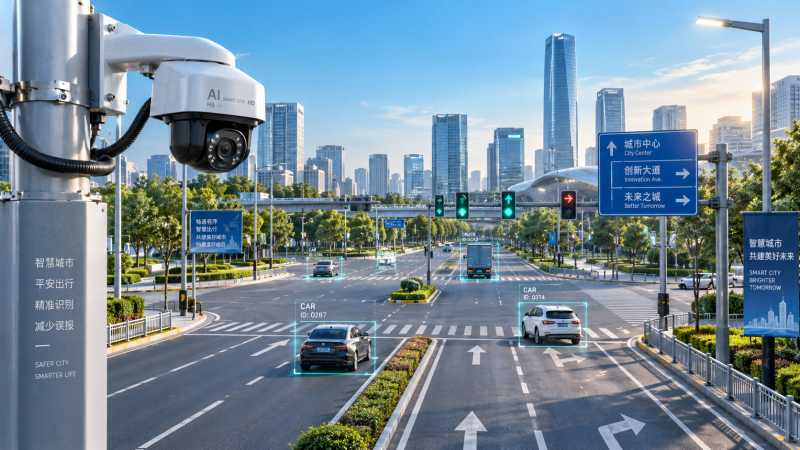
How Smart City Surveillance Analytics Can Reduce False Alarms
False alarms are one of the least visible but most expensive weaknesses in an urban surveillance program. A camera may repeatedly flag moving trees, reflections on wet pavement, vehicle headlights, maintenance crews, stray animals, or crowds behaving exactly as crowds normally do. Each alert appears small in isolation. Across hundreds or thousands of cameras, however, the noise can overwhelm monitoring teams, slow down escalation, and gradually weaken confidence in the system.
This is where smart city surveillance analytics becomes more than an AI feature on a specification sheet. Properly deployed, it helps a system interpret activity in context rather than reacting to every pixel change. The objective is not to make surveillance “silent.” A system that never alarms may simply be missing risk. The real objective is to reduce nuisance events while preserving sensitivity to incidents that genuinely require attention.
That balance depends on camera placement, lighting conditions, video quality, scene design, operating rules, and human review. Analytics can improve each of these decisions, but it cannot repair a poorly understood environment by itself.
Why conventional motion alerts create so much noise
Traditional video motion detection is blunt by design. It compares changes between frames and assumes that significant movement may deserve an alert. In a controlled indoor corridor, this can be adequate. In a city, it quickly becomes unreliable. Wind moves foliage. Rain creates reflections. A low sun throws long shadows across a restricted zone. A bus passes a camera and temporarily changes the entire scene.
The same issue appears on construction sites, transit interchanges, parking areas, public squares, utility corridors, and building perimeters. A rule such as “alert when movement enters this area” may sound reasonable until the area includes delivery traffic during the day, cleaning staff in the evening, and security patrols overnight.
False alarms often indicate that a rule was written around a map rather than around actual operations. Before adding more analytics, it is worth asking a practical question: what exactly should be unusual in this scene, at this time, and who is allowed to be there?
From movement detection to event interpretation
Modern video analytics can classify objects and apply rules to the objects themselves. Instead of detecting generic movement, the system may distinguish between a person, vehicle, bicycle, animal, or an uncertain object. It can then apply different logic: a pedestrian on a sidewalk may be expected; a vehicle entering a pedestrian-only service lane outside approved delivery hours may justify review.
This shift matters because it reduces alerts caused by irrelevant activity. It also gives operators more meaningful information. “Motion detected” forces a person to investigate from scratch. “Person entered a closed gate zone and remained for more than a defined period” provides an operational starting point.
Object classification is not infallible. Performance can degrade when subjects are distant, partially obscured, backlit, moving quickly, or viewed from an unsuitable angle. In practice, a quality-control process should track not only whether the system alarmed, but whether the camera provided enough usable visual evidence for the operator to confirm the event. A highly accurate model has limited value if the subject occupies only a few pixels or is hidden by glare.
The most effective alarm rules combine several conditions
Single-condition rules are easy to configure and easy to regret. Better results usually come from combining object type, direction, dwell time, time of day, location, and authorized activity. This is not about making every rule complicated. It is about preventing the system from treating normal activity as suspicious merely because it crosses a virtual line.
A restricted loading dock is a good example. During scheduled service periods, the system may only need to record events or create low-priority notifications. After hours, a vehicle that enters from an unusual direction, stops near a secure door, and remains stationary may justify a higher-priority alarm. The camera has not become “smarter” only because it recognizes a vehicle; it has become more useful because the rule reflects how the site works.
Lighting quality is part of alarm quality
Video analytics is often discussed as software, yet many false alarms originate in the optical environment. Poor illumination, direct glare, uneven brightness, reflective surfaces, and rapid shifts between bright and dark zones can all make detection less stable. A camera that sees silhouettes instead of identifiable forms will force analytics to make uncertain decisions.
This is particularly relevant at gates, road entrances, building facades, underpasses, and mixed indoor-outdoor transition zones. The answer is not automatically “add more light.” Excessive or poorly aimed lighting can cause glare, nuisance to nearby residents, or washed-out video. The better approach is to assess the scene as a visual system: camera angle, lens selection, exposure settings, illumination direction, reflective materials, and the expected movement path of people and vehicles.
Emerging discussions around AI vision and Visible Light Communication (VLC) also point to a broader principle: lighting infrastructure may increasingly support both visibility and connected urban operations. The feasibility of such integration depends on the project architecture, equipment compatibility, and local requirements. It should not be treated as a shortcut around basic camera and lighting design.
Use confidence scores carefully, not blindly
Many analytics platforms assign confidence levels to detections. Raising the threshold can reduce alarms, but it can also suppress borderline events that deserve review. Lowering it may capture more activity while flooding operators with weak alerts. There is no universally correct setting.
A sensible approach is to set thresholds by risk and scene quality. A high-value, low-traffic perimeter may justify a more sensitive rule with operator verification. A busy public-space camera may need stricter conditions before generating a dispatch-worthy alarm. Critical alerts can also be separated from review queues, so that uncertain detections do not compete with confirmed alarms for the same attention.
When tuning rules, teams should review both false positives and false negatives. Focusing only on reducing nuisance alarms creates a predictable failure mode: the dashboard looks cleaner, but meaningful events disappear. The quality question is not “How many alerts did we remove?” It is “Which alerts did we remove, and what risk did they represent?”
Alarm reduction needs an operating process, not a one-time configuration
Urban scenes change. A road layout is modified, a new construction project begins, seasonal foliage grows, temporary barriers appear, and operating schedules shift. Rules that worked six months ago may start producing noise without any software failure. Periodic review is therefore part of system maintenance.
A useful review cycle is straightforward:
- Sample alarms by camera, time window, and event type rather than looking only at total volumes.
- Identify recurring causes, such as foliage movement, headlight flare, a frequently used access route, or a camera with poor framing.
- Decide whether the remedy belongs in the rule, the camera position, the lighting design, the access-control process, or staff scheduling.
- Test changes during representative conditions, including night operation and poor weather where relevant.
- Document why thresholds and exclusions were changed, especially where auditability matters.
That last point is frequently overlooked. A tuned rule can become difficult to defend when the person who configured it leaves the project. Configuration records help teams understand whether an exclusion zone was introduced for a valid operational reason or simply to stop an annoying alert.
Integrate video with context, but keep the response proportionate
Video becomes more reliable when it is interpreted alongside other signals. Access-control events, gate status, intercom activity, environmental sensors, traffic-management data, and approved work schedules can help determine whether an event is expected. A door-opening event paired with a recognized access credential may require no response; the same door opening without a corresponding authorized event may deserve immediate attention.
Integration should be designed carefully. More data does not automatically mean better decisions. If systems are poorly synchronized, if timestamps are inconsistent, or if alerts are forwarded without a clear response procedure, integration can create confusion rather than clarity. Privacy, retention rules, access permissions, and local requirements for electronic surveillance should be considered before data sources are combined.
This is one reason intelligence resources matter alongside technology selection. GSIM’s Strategic Intelligence Center follows the intersection of global security policy, electronic-surveillance compliance considerations, optical technology, and procurement developments in public-safety and smart-construction environments. For project teams working across regions, that perspective can help frame the questions that need local verification: what data may be used, who may view it, how long it may be retained, and what operational evidence is required before action is taken.
Do not confuse fewer alerts with better surveillance
The most common mistake in false-alarm reduction is aggressive filtering. A team becomes tired of repeated alerts and disables a zone, raises thresholds too far, or limits detection to only the clearest events. The system becomes quieter, but the risk has merely been hidden.
A stronger approach preserves uncertainty where uncertainty is real. Low-confidence detections may be routed to a review queue. High-risk combinations can escalate faster. Known nuisance patterns can be suppressed only after they have been observed and documented. This produces a more honest operating model: not every event is urgent, but every event is handled according to evidence and context.
Smart city surveillance analytics reduces false alarms when it is treated as a continuous quality discipline. Start with the scene, define what abnormal behavior actually means, verify that cameras and lighting can support the intended decision, and tune rules against real operating conditions. The result is not a noiseless control room. It is a control room where alerts are more credible, operators have better evidence, and critical attention is less likely to be wasted on routine activity.
The VitalSync Intelligence Brief
Receive daily deep-dives into MedTech innovations and regulatory shifts.