
Security
Critical Infrastructure Protection Solutions Compared
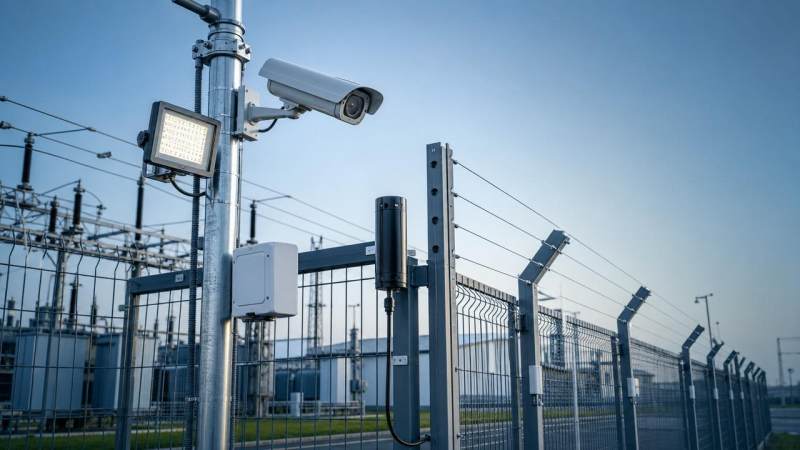
For procurement teams navigating rising security demands, comparing critical infrastructure protection solutions is no longer optional. From surveillance compliance and AI-enabled monitoring to lighting-integrated safety systems, the right choice affects resilience, cost control, and long-term performance. This guide helps buyers evaluate critical infrastructure protection solutions with a clearer view of standards, technology trends, and practical sourcing priorities.
Why a structured comparison matters
Critical assets now face blended threats, including intrusion, sabotage, cyber-physical disruption, and visibility failures during emergencies. A simple feature comparison often misses those combined operational risks.
A structured review makes critical infrastructure protection solutions easier to compare across compliance fit, optical performance, data quality, lifecycle cost, and integration readiness.
This approach also reflects current market direction. GSIM tracks how AI vision, electronic surveillance rules, and optical environment optimization increasingly shape security program outcomes.
Core points to verify before selecting critical infrastructure protection solutions
Use the following checks to compare vendors, systems, and deployment options with less ambiguity and stronger downstream control.
- Confirm whether the solution aligns with local surveillance laws, sector regulations, retention policies, and cross-border data restrictions before technical scoring begins.
- Check if detection performance remains stable under glare, low light, fog, vibration, dust, and mixed weather conditions common to exposed infrastructure zones.
- Verify integration with access control, perimeter sensors, command platforms, emergency lighting, and existing video systems without heavy custom middleware.
- Review AI analytics carefully, including false alarm rates, model retraining needs, edge processing capability, and transparency of event classification logic.
- Assess optical environment design, because illumination uniformity, contrast balance, and fixture placement directly affect camera accuracy and response speed.
- Measure network resilience through redundancy, failover design, local storage buffering, and offline operating capability during communication loss or power instability.
- Compare maintenance burden, including cleaning cycles, firmware updates, calibration frequency, replacement lead times, and remote diagnostics support quality.
- Request lifecycle cost analysis covering deployment, energy use, software licensing, training, compliance audits, and expected upgrade paths over several years.
- Examine vendor evidence, such as field references, test reports, standards alignment, and documented performance in comparable critical operating environments.
- Determine whether the solution supports phased expansion, so future sites, sensors, and analytics modules can be added without full architecture replacement.
A practical comparison framework
Not all critical infrastructure protection solutions perform equally across every decision area. A side-by-side matrix reduces subjective bias and clarifies trade-offs.
GSIM’s Strategic Intelligence Center highlights one recurring lesson: protection and illumination should be evaluated together, not as separate project lines.
How critical infrastructure protection solutions differ by application
Energy and utility sites
Substations, power plants, and water facilities require strong perimeter awareness and dependable operation in exposed conditions. Detection loss during storms or outages creates outsized consequences.
Focus on power redundancy, thermal or low-light visibility, and secure integration with site control protocols. Lighting should support safe maintenance while preserving camera contrast.
Transport hubs and logistics corridors
Airports, rail yards, ports, and cargo terminals need critical infrastructure protection solutions that manage high movement density without creating alert fatigue.
Important checks include zone-based analytics, vehicle and pedestrian separation, loading area illumination, and reliable evidence capture across broad operational windows.
Digital infrastructure and telecom facilities
Data centers and network exchange points depend on layered access, environmental stability, and precise audit trails. Even brief interruption can cascade across dependent services.
Review cabinet-to-perimeter coverage continuity, visitor verification workflows, and retention architecture. Optical conditions inside controlled rooms should minimize blind zones and reflection interference.
Public safety and civic infrastructure
Urban control rooms, government compounds, and public gathering assets need critical infrastructure protection solutions that balance security, transparency, and legal defensibility.
Prioritize policy-aligned surveillance, event traceability, and adaptable lighting for streets, entrances, and emergency routes where visibility directly affects response time.
Commonly overlooked risks during comparison
Many teams compare cameras, sensors, or software dashboards, but overlook the operating environment. Poor lighting geometry can undermine advanced analytics more than software limitations.
Another missed issue is compliance drift. A solution may fit current rules yet fail future expectations for privacy controls, evidence governance, or algorithm accountability.
Support assumptions also create risk. Global sites need clear service coverage, spare part access, multilingual documentation, and measurable response commitments.
Procurement teams should also question closed architectures. Some critical infrastructure protection solutions appear efficient initially but limit expansion and increase switching costs later.
Practical execution steps for a stronger sourcing process
- Define the protected asset, threat profile, and operational outcome first, then shortlist critical infrastructure protection solutions against those conditions.
- Create a weighted matrix using compliance, detection quality, optical performance, integration effort, resilience, and total ownership cost.
- Request proof from realistic scenarios, not only brochure claims. Site pilots, low-light tests, and failover demonstrations reveal practical gaps.
- Evaluate the lighting layer alongside surveillance hardware. This is essential for facilities where night operations, weather shifts, or large perimeters are routine.
- Map every integration dependency early, including storage, access control, command software, and network architecture across all protection zones.
- Document upgrade and support terms before award, especially for analytics licensing, firmware policy, and end-of-life component replacement.
FAQ on critical infrastructure protection solutions
What makes critical infrastructure protection solutions effective?
Effectiveness comes from layered detection, compliance readiness, optical reliability, and smooth integration with operational workflows and emergency response procedures.
Why should lighting be included in the evaluation?
Lighting affects visibility, image quality, safety movement, and analytics accuracy. In many sites, optical design is a core part of critical infrastructure protection solutions.
How can buyers compare vendors more objectively?
Use scenario-based scoring, field validation, standards review, and lifecycle cost analysis. Objective comparison depends on measurable proof, not feature volume.
Final takeaways and next actions
Choosing critical infrastructure protection solutions now requires a broader lens than hardware alone. Compliance, AI vision maturity, illumination quality, and long-term adaptability all matter.
A structured checklist helps reduce blind spots, compare suppliers fairly, and support resilient project outcomes across energy, transport, digital infrastructure, and civic environments.
GSIM’s mission is to connect global protection needs with precise, standards-aware decision support. Start with a comparison matrix, validate optical conditions, and demand operational proof before commitment.
The VitalSync Intelligence Brief
Receive daily deep-dives into MedTech innovations and regulatory shifts.