
Security
Urban Protection Systems: What Cities Need to Fix First
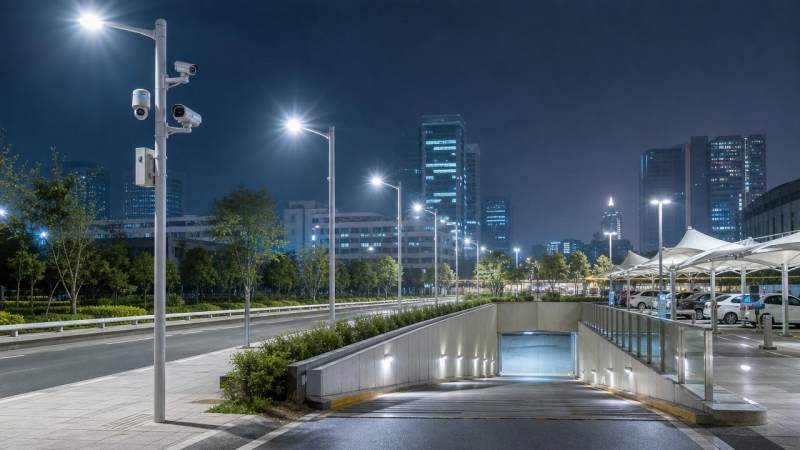
Urban protection is no longer just about adding cameras or brighter lights—it starts with fixing the weakest layers of city safety systems first. For business decision-makers navigating infrastructure upgrades, compliance pressures, and public risk, knowing where to act delivers faster returns and stronger resilience. This article explores the most urgent gaps cities must address to build smarter, safer, and more adaptive protection frameworks.
For municipal operators, infrastructure investors, campus planners, transport authorities, and security-led contractors, the challenge is rarely a lack of hardware. The real issue is fragmentation: disconnected surveillance, uneven lighting quality, outdated operating procedures, limited interoperability, and procurement models that prioritize installation over lifecycle performance.
That is why urban protection should be treated as a layered system with at least 4 linked dimensions: physical deterrence, optical visibility, digital monitoring, and response governance. If one layer underperforms, the entire security environment becomes less reliable. In 2026, when cities are accelerating digital infrastructure upgrades, the first fixes should focus on gaps that create the highest operational risk in the shortest time.
GSIM supports this decision process by connecting policy intelligence, optical environment analysis, and procurement insight. For enterprise decision-makers, this matters because public safety projects now require more than technical compliance; they demand measurable uptime, adaptable deployment, and cross-system coordination over 3 to 7 years of operation.
Where Urban Protection Fails First in Modern Cities
The first step in improving urban protection is identifying which failure points create the highest exposure. In most cities, weak points appear in 5 recurring areas: low-visibility zones, isolated monitoring systems, delayed incident response, compliance blind spots, and maintenance neglect. These are not theoretical issues; they directly affect project ROI, public confidence, and insurance or liability exposure.
1. Low-Visibility Zones Create Disproportionate Risk
Many cities still have corridors, parking areas, pedestrian underpasses, logistics perimeters, and construction interfaces with inconsistent illumination. In practical terms, lighting that drops below functional thresholds for recognition and monitoring can reduce the usefulness of video evidence and slow response decisions. Urban protection begins with optical clarity, not only camera density.
Decision-makers should review at least 3 lighting factors together: horizontal visibility, vertical facial recognition conditions, and glare control. A site may appear bright enough to the human eye while still producing weak machine vision output. This becomes more important where AI-assisted detection, perimeter analytics, or VLC-enabled smart infrastructure is planned.
Key signs of an optical risk gap
- Frequent shadow zones during 18:00–06:00 operating windows
- Overexposed entries caused by poor fixture placement
- Uneven lux distribution across roads, plazas, or industrial interfaces
- Camera images that degrade in rain, fog, or reflective surfaces
2. Surveillance Without Integration Limits Action
A city can deploy 500 cameras and still underperform if data remains isolated across departments. Urban protection weakens when transport, public works, law enforcement, and private site operators do not share usable event logic. Separate dashboards, incompatible storage formats, and inconsistent alert thresholds often create a 10–30 minute delay in incident validation.
This problem is especially serious in mixed-use districts where retail, transit, utilities, and residential assets overlap. A fragmented system may record events, but it struggles to support coordinated response. Buyers should therefore evaluate not just image quality or hardware price, but also API readiness, event escalation pathways, and retention compatibility.
3. Response Protocols Are Often Slower Than Detection
Detection technology has improved faster than field response design. In many urban protection projects, alerts are generated in seconds, but verification and dispatch still depend on manual checks, fragmented contact trees, or outdated standard operating procedures. That mismatch creates a false sense of security.
A practical target for many public-facing environments is a 3-stage workflow: automated detection, human verification within 60–180 seconds, and escalation to the responsible responder within 5 minutes where warranted. If a system cannot support these timing goals, new hardware alone will not close the risk gap.
The table below highlights the most common weak layers in urban protection and the operational consequence of leaving them unresolved.
The key takeaway is simple: urban protection usually fails first where visibility, interoperability, and accountability intersect. Cities that fix these layers early often improve system usefulness faster than those that begin with broad hardware expansion.
What Cities Should Fix First for Faster Security Gains
Not every deficiency needs a citywide rebuild. Decision-makers can gain stronger urban protection performance by prioritizing interventions that reduce operational friction within 30, 90, and 180 days. In most cases, the first round of upgrades should target areas where risk is concentrated and improvement can be verified through measurable service indicators.
Prioritize High-Exposure Sites Before Full-Scale Rollout
A practical deployment sequence starts with 3 to 5 high-exposure categories: transit interchanges, school perimeters, public plazas, logistics entrances, and temporary construction interfaces. These sites combine heavy footfall, variable lighting, and elevated incident complexity. Fixing them first gives cities a stronger operating baseline and a clearer procurement model for later phases.
Urban protection planning at this stage should use a risk matrix that scores each site by incident frequency, visual complexity, response time sensitivity, and compliance demands. This helps procurement teams avoid politically visible but operationally low-value spending.
Upgrade Lighting as a Security Infrastructure Layer
Lighting should no longer be treated as a separate public works item. In modern urban protection, illumination quality directly affects camera analytics, public perception, and nighttime usability. Upgrades should focus on uniformity, maintenance access, fixture durability, and compatibility with control systems rather than brightness alone.
For many municipal environments, review cycles every 12 months and targeted replacement programs every 3 to 5 years are more effective than waiting for visible failure. Where AI vision or sensor fusion is expected, optical performance should be tested in at least 2 environmental conditions, such as dry night and wet reflective night.
Standardize Operating Rules Across Public and Private Stakeholders
Urban protection becomes more resilient when security teams, contractors, utilities, and city departments work from the same rulebook. Standardization does not require total centralization, but it does require alignment around retention windows, access controls, maintenance intervals, and event escalation definitions.
A useful starting point is a 4-part operational standard: who can view data, how long footage is retained, which events trigger immediate escalation, and how faults are logged and repaired. These basics reduce confusion during audits and speed up vendor accountability.
The next table outlines a practical fix-first framework that enterprise and public-sector buyers can use when sequencing urban protection investment.
This approach helps organizations sequence capital more rationally. Instead of expanding urban protection in every direction at once, buyers can address the layers that most strongly affect safety output, compliance readiness, and long-term operating cost.
How Enterprise Decision-Makers Should Evaluate Urban Protection Investments
For business leaders, urban protection decisions are rarely made on technical merit alone. They must align budget cycles, public accountability, service-level expectations, and cross-vendor delivery risk. A strong evaluation model therefore combines technical assessment with governance and lifecycle planning.
Use a 4-Dimension Procurement Lens
An effective procurement review often covers 4 dimensions: operational fit, compliance fit, integration fit, and maintenance fit. If one dimension is skipped, project risk usually appears later as hidden cost or service degradation. Urban protection systems should be reviewed over a 36–84 month horizon rather than only on installation price.
- Operational fit: Does the system match the risk profile of the location?
- Compliance fit: Can deployment satisfy surveillance and data obligations?
- Integration fit: Will existing platforms exchange alerts and records efficiently?
- Maintenance fit: Are spares, inspections, and support responsibilities clear?
Ask for Evidence of Lifecycle Manageability
Urban protection projects often underperform because tender documents ask detailed questions about hardware but not enough about operations after handover. Buyers should request maintenance schedules, fault response windows, component replacement assumptions, and upgrade paths for analytics or optical control. A system that performs well in month 1 but loses reliability after 18 months is not a strong investment.
For example, periodic inspections may be needed every 3, 6, or 12 months depending on exposure, asset criticality, and environmental stress. Sites near coastal zones, heavy dust, or frequent vibration usually need more frequent checks than standard pedestrian corridors.
Common Buying Mistakes That Delay Results
Mistake 1: Buying visibility tools without visibility planning
Cities often add cameras before correcting lighting geometry or line-of-sight constraints. This weakens urban protection because the monitoring layer inherits flaws from the physical environment.
Mistake 2: Treating compliance as a final review step
When surveillance obligations are addressed late, deployments may require redesign, restricted coverage, or additional storage controls. Early policy review reduces rework and supports faster approval.
Mistake 3: Ignoring public-private coordination
Mixed-use districts depend on shared responsibility. If asset owners, security contractors, and municipal teams do not align on reporting thresholds and escalation ownership, incident handling becomes inconsistent even with good technology.
Implementation Roadmap for Smarter and More Adaptive City Protection
A successful urban protection program does not begin with mass procurement. It begins with structured diagnosis, staged deployment, and measurable review. Cities and enterprise partners can reduce delivery risk by using a phased roadmap that turns high-level security goals into practical operating improvements.
Phase 1: Diagnostic Mapping
During the first 2 to 6 weeks, assess high-risk locations, legacy systems, optical conditions, maintenance records, and policy constraints. This phase should produce a prioritized asset map rather than a generic upgrade wish list. GSIM-style intelligence support is especially useful here because legal requirements and optical technology trends increasingly shape what can be deployed and how quickly.
Phase 2: Controlled Pilot and Baseline Testing
A pilot should run long enough to observe at least 2 operational cycles, such as weekday and weekend use, or dry and wet weather conditions. In many projects, 30–60 days is sufficient to validate visibility quality, incident workflow, and maintenance practicality. Urban protection decisions made after a pilot are often more defensible than those based only on supplier demos.
Phase 3: Scaled Deployment With Governance Controls
Once pilot results are accepted, scale in waves rather than all at once. A 3-wave rollout can separate critical sites, secondary corridors, and lower-risk support areas. Each wave should include acceptance criteria for illumination quality, alert response timing, storage behavior, and maintenance documentation.
Phase 4: Continuous Optimization
Urban protection should be reviewed as a living system. Every 6 to 12 months, operators should revisit incident patterns, failure logs, and environmental changes such as new developments, traffic flow shifts, or added smart infrastructure. This is also where forward-looking tools like AI vision and VLC-related planning become relevant, particularly in cities building connected public spaces.
Cities do not become safer simply by owning more equipment. They improve when the weakest security layers are fixed first, when lighting and surveillance are designed as one operational environment, and when governance supports faster, more consistent response. That is the practical foundation of stronger urban protection.
For enterprise decision-makers, the most effective next step is to evaluate current exposure by site category, interoperability status, compliance readiness, and lifecycle support. GSIM helps connect these decisions with strategic intelligence, optical environment insight, and procurement-focused analysis so that upgrades are not only installed, but also sustainable and audit-ready.
If your organization is planning city safety upgrades, smart construction security, or public-space illumination optimization, now is the right time to assess where urban protection is weakest and what should be fixed first. Contact us to get a tailored framework, consult technical details, or explore more solutions for resilient, future-ready protection systems.
The VitalSync Intelligence Brief
Receive daily deep-dives into MedTech innovations and regulatory shifts.