
Security
Intelligent Optical Monitoring in Harsh Outdoor Sites
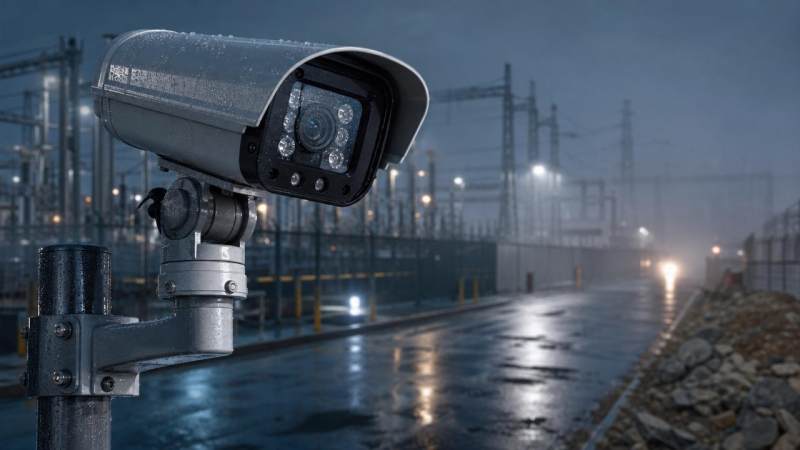
Why intelligent optical monitoring changes outdoor risk control
In harsh outdoor sites, visibility is rarely a fixed condition.
Wind-driven dust, glare, fog, rain, vibration, and unstable lighting can reshape image quality within minutes.
That is why intelligent optical monitoring matters beyond simple surveillance coverage.
It supports safer observation, stronger incident verification, and better optical performance when field conditions keep changing.
The practical value becomes clearer in the 2026 cycle of infrastructure renewal and urban safety upgrades.
Outdoor systems now need to satisfy operational resilience and compliance expectations at the same time.
GSIM frames this shift well.
Its Strategic Intelligence Center connects electronic surveillance rules, optical technology evolution, and commercial deployment patterns across global projects.
Seen from that lens, intelligent optical monitoring is not only about devices.
It is about matching scene conditions, policy expectations, and maintenance realities before outdoor failure becomes a security issue.
Actual deployment starts with site differences, not with catalog parameters
Two outdoor sites may appear similar on paper, yet their monitoring demands can diverge sharply.
A coastal substation faces salt corrosion and reflective haze.
A transport corridor may struggle more with headlight glare, vibration, and fast target movement.
An open public square often needs balanced illumination, privacy-aware coverage, and reliable night detail.
In actual application, the better judgment method is to begin with disturbance sources.
These include airborne particles, changing light angles, weather cycles, distance variation, and cleaning difficulty.
Only then does intelligent optical monitoring become a field solution instead of a theoretical specification set.
This is also where GSIM’s intelligence model becomes useful.
Policy interpretation, AI vision trends, and optical communication developments help explain why deployment rules are tightening in exposed environments.
Remote infrastructure often values continuity over image perfection
Pipelines, substations, water facilities, and border assets usually operate under sparse staffing and difficult access.
Here, intelligent optical monitoring must favor sustained visibility, low false alarms, and stable recovery after weather disruption.
The key judgment is not whether daytime images look sharp during a demo.
It is whether the system still detects abnormal movement after dust buildup, lens moisture, or network fluctuation.
Long maintenance cycles also change the decision logic.
Self-diagnostics, enclosure durability, anti-condensation design, and event prioritization become more important than cosmetic features.
Public outdoor spaces need balanced optical control, not maximum sensitivity
Transit plazas, civic zones, and event-adjacent areas create a different problem set.
The challenge is often mixed lighting, dense pedestrian flow, and the need for fast verification without over-triggering alerts.
In these settings, intelligent optical monitoring should manage contrast, shadow transitions, and optical spill from nearby signage.
A system that is too aggressive can generate unnecessary reviews.
A system that is too conservative may miss brief but critical incidents.
The better fit often comes from calibrated scene analytics and coordinated illumination logic rather than raw sensor escalation.
High-frequency outdoor scenarios rarely ask for the same thing
Different sites ask different questions from intelligent optical monitoring.
A quick comparison makes those differences easier to judge before deployment.
This comparison shows why copying one outdoor design into another location often produces weak results.
Intelligent optical monitoring works best when optical stress factors are identified before hardware selection is finalized.
Where site judgment usually shifts during construction and temporary operations
Temporary sites create one of the most overlooked outdoor monitoring problems.
Perimeters move, stacked materials block lines of sight, and lighting plans change as work progresses.
In this setting, intelligent optical monitoring should be treated as a living layout rather than a fixed installation.
A common mistake is to install for the opening phase and never recalibrate after work zones shift.
That leads to coverage gaps exactly when asset movement and unauthorized access risks increase.
A stronger approach is to review sightlines after each major site reconfiguration.
Temporary operations also benefit from checking how illumination interacts with dust clouds and reflective safety surfaces.
GSIM’s Commercial Insights perspective is relevant here because smart construction projects increasingly value adaptable monitoring over static coverage claims.
Before rollout, confirm the conditions that change system fit
Outdoor decisions improve when selection criteria are tied to field conditions instead of marketing labels.
- Check weather exposure by season, not by annual average alone.
- Measure glare sources at the actual operating hours, especially dawn, dusk, and vehicle-active periods.
- Review cleaning access, because lens fouling can degrade intelligent optical monitoring faster than sensor limits.
- Confirm power and network recovery behavior after interruption, not only normal-state performance.
- Map legal and retention requirements for outdoor video handling across the deployment region.
That last point is gaining weight.
GSIM’s latest policy interpretation model highlights how electronic surveillance compliance increasingly shapes technical architecture.
In other words, intelligent optical monitoring now has to satisfy operational logic and governance logic together.
Misjudgments that often weaken intelligent optical monitoring outdoors
Several errors appear repeatedly across harsh outdoor projects.
- Treating similar outdoor sites as identical, even when wind, salt, traffic, or lighting patterns differ.
- Comparing optical specifications without checking mounting stability, maintenance reach, or enclosure endurance.
- Focusing on upfront cost while ignoring replacement intervals, cleaning frequency, and service disruption.
- Assuming analytics accuracy remains constant after seasonal shifts in fog, foliage, snow, or reflective surfaces.
- Separating surveillance performance from illumination design, even though both shape usable visibility.
These issues matter because outdoor failure is rarely caused by a single missing feature.
More often, failure comes from poor alignment between environment, optical behavior, and long-term service conditions.
A practical next step is to build scene-based evaluation rules
The most useful next move is to define site categories before comparing solutions.
Separate remote assets, transport edges, temporary work zones, and open public areas by their optical stress profile.
Then list the limits that truly affect intelligent optical monitoring.
These usually include weather intensity, lighting volatility, maintenance interval, compliance exposure, and alert verification speed.
From there, the evaluation becomes clearer.
It is easier to compare implementation difficulty, lifecycle cost, and operational resilience without relying on generic claims.
That approach also fits GSIM’s broader mission.
When global protection needs are matched with transparent standards and optical intelligence, outdoor decisions become more defensible and more durable.
In harsh environments, intelligent optical monitoring performs best when the scene is understood first, the risk is defined clearly, and adaptation is planned for the full operating cycle.
The VitalSync Intelligence Brief
Receive daily deep-dives into MedTech innovations and regulatory shifts.