
Security
Urban Optical Networks: Hidden Security Risks
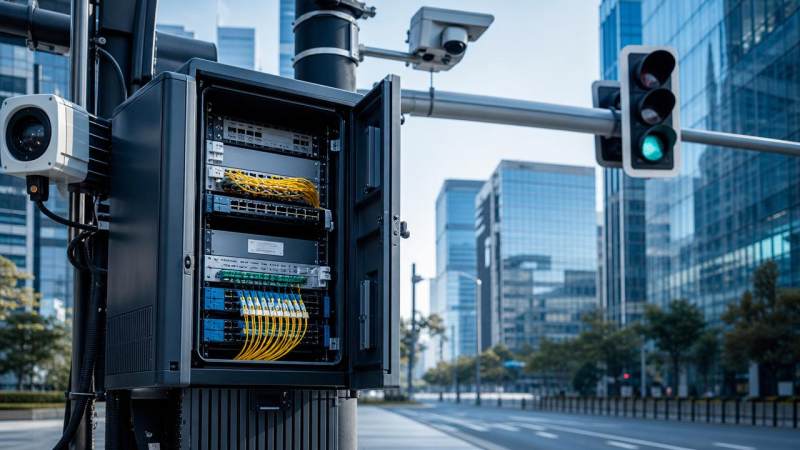
As cities accelerate digital upgrades, urban optical networks are becoming essential to surveillance, connectivity, and public safety. Yet behind their efficiency lies a growing layer of hidden security risks, from signal interception to infrastructure vulnerabilities. For information researchers tracking policy, technology, and procurement shifts, understanding these risks is key to evaluating smarter and safer urban systems.
In practical terms, urban optical networks now support more than broadband access. They carry video surveillance streams, building management traffic, emergency communications, traffic control data, and, in some deployments, smart lighting signals and Visible Light Communication pathways.
That convergence improves efficiency, but it also compresses risk into a smaller number of critical nodes. A single exposed cabinet, poorly segmented fiber ring, or unmanaged optical endpoint can affect 3 to 5 municipal functions at once.
For researchers, planners, and procurement teams, the question is no longer whether these networks matter. The real question is how to assess hidden weaknesses before they turn into service disruption, data leakage, or public safety blind spots.
Why Urban Optical Networks Have Become High-Value Infrastructure
Urban optical networks form the physical and logical backbone of connected districts. In a typical city block upgrade, one optical layer may support 4 core domains: CCTV backhaul, access control, environmental sensing, and street-level communications.
The security challenge grows because these systems are often deployed in phases over 2 to 6 years. Different vendors, legacy splices, mixed power designs, and inconsistent maintenance records can create risk gaps that are difficult to detect from a dashboard alone.
From telecom utility to public safety dependency
Older optical planning focused on bandwidth, attenuation, and uptime. Today, city operators also need to evaluate tamper resistance, cabinet hardening, route diversity, optical splitter exposure, and surveillance data segregation.
This shift matters because optical failure in an urban context is no longer only a service issue. If a network segment feeds 80 to 150 cameras across a transport corridor, even a 30-minute interruption can undermine incident visibility and response coordination.
Why hidden risks are often underestimated
- Fiber is often perceived as inherently secure, leading to weak physical inspection routines.
- Attention goes to endpoints and software, while splice boxes, splitters, and patch panels receive less scrutiny.
- Procurement teams may compare unit cost per port but overlook lifecycle security checks over 12 to 36 months.
- Cross-department ownership can leave no single team responsible for end-to-end optical risk governance.
This is where intelligence-led review becomes useful. Platforms such as GSIM help researchers connect policy requirements, optical infrastructure trends, and procurement implications instead of assessing each layer in isolation.
The Hidden Security Risks Inside Urban Optical Networks
The phrase urban optical networks often suggests speed and reliability. However, from a risk perspective, their weak points are distributed across field hardware, route design, maintenance access, and data handling processes.
1. Signal interception and passive tapping
Fiber is harder to tap than copper, but not impossible. Illegal bends, unauthorized couplers, and access to poorly protected distribution frames can enable interception with limited visible impact on traffic quality.
In urban environments, the highest-risk points are usually cabinets near roads, basements shared by multiple tenants, and patch locations visited by third-party contractors. A low-loss tap may introduce only a small attenuation change, sometimes under 1 to 3 dB.
What researchers should verify
- Whether critical routes are sealed, logged, and inspected every 30 to 90 days.
- Whether optical time-domain reflectometer testing is part of routine acceptance and post-repair validation.
- Whether high-value surveillance traffic is isolated from general municipal traffic by design.
2. Physical infrastructure exposure
Many city projects focus on digital functionality while underinvesting in field enclosure resilience. Cabinets rated for basic environmental protection may still be vulnerable to forced opening, informal access, water ingress, or vibration damage.
A network with excellent core switching can still fail if a curbside node serving 24 to 48 endpoints is left with weak locks, no intrusion alarm, and no synchronized maintenance log.
The table below highlights common hidden vulnerabilities in urban optical networks and the operational consequences researchers should map during due diligence.
The key takeaway is that many failures are not caused by advanced cyber intrusion alone. They often begin with ordinary design and maintenance oversights that become critical because urban optical networks now carry high-value public safety traffic.
3. Network convergence without segmentation
A common smart-city pattern is to aggregate CCTV, Wi-Fi backhaul, parking systems, emergency call points, and smart lighting onto shared fiber assets. This can reduce trenching costs by 15% to 30%, but it raises dependency risk.
If segmentation is weak, one compromised access point or unmanaged switch can expose adjacent systems. Researchers should examine whether separation exists only on paper or is enforced through actual topology, access control, and change management.
4. Maintenance-chain vulnerabilities
Urban optical networks are built and maintained by mixed teams: civil contractors, fiber technicians, lighting specialists, surveillance integrators, and municipal operators. Each handoff creates a trust boundary.
If access records are fragmented, it becomes difficult to confirm who opened a cabinet, who replaced a transceiver, or whether a patched route was retested after works. In high-density projects, even 1 undocumented intervention per month can distort fault history.
How to Assess Risk in Procurement and Project Planning
For information researchers and sourcing teams, the most effective approach is to convert abstract risk into procurement checkpoints. This makes hidden security issues visible before contract award, not after deployment.
Five evaluation dimensions for safer urban optical networks
- Physical protection: cabinet integrity, lock control, intrusion notification, route shielding.
- Topology resilience: ring design, route diversity, failover testing, critical-node redundancy.
- Operational traceability: maintenance logs, baseline measurements, repair verification workflow.
- Traffic governance: service segmentation, video path isolation, privilege management.
- Compliance fit: alignment with surveillance law, public procurement rules, and local infrastructure codes.
These five dimensions should be reviewed across the full lifecycle: pre-bid, design review, installation, commissioning, and the first 12 months of operation. A technically sound tender can still underperform if these checkpoints are skipped.
A practical due-diligence matrix
The following matrix can help researchers compare suppliers, integrators, or municipal project structures using operationally relevant criteria rather than generic promises.
What matters here is consistency. If a supplier offers high-capacity fiber and quality optics but cannot show repeatable inspection, test baselines, and access governance, the hidden risk profile remains elevated.
Questions that improve procurement accuracy
Before issuing a tender
Clarify whether the project supports only connectivity or also security-critical services. A network designed for general traffic may need different enclosure ratings, route redundancy, and inspection frequencies once surveillance or emergency systems are added.
During technical evaluation
Ask how the bidder isolates camera traffic, validates repairs, and records physical access. Request process details, not slogans. A 5-step maintenance workflow is more useful than a general claim of strong after-sales support.
After deployment
Confirm whether operational data is reviewed by more than one department. Joint reviews every quarter can reveal mismatches between security events, optical performance drift, and field maintenance activity.
Policy, Technology, and Market Signals Researchers Should Track
Urban optical networks do not evolve in a technical vacuum. Their risk profile is shaped by surveillance regulation, public procurement reform, smart-city architecture, and the expanding link between optical systems and AI-enabled monitoring.
The policy layer
Researchers should watch 3 policy areas closely: electronic surveillance compliance, infrastructure resilience obligations, and data governance rules affecting public video transmission. A design accepted in one region may require stricter physical controls in another.
Cross-border vendors also face documentation pressure. In many public projects, missing maintenance traceability or incomplete route records can delay acceptance by 2 to 8 weeks even if equipment delivery is on time.
The technology layer
Optical infrastructure is increasingly integrated with AI vision systems, adaptive lighting, and in some cases VLC-related experimentation. This expands the performance envelope but also introduces more interfaces, more software dependencies, and more endpoints to secure.
As GSIM’s Strategic Intelligence Center emphasizes, the important trend is not only faster networks, but tighter stitching between global security policy and optical deployment choices. That lens helps researchers identify risk earlier and compare projects more objectively.
The market and procurement layer
The market is shifting from equipment-only buying toward evidence-based solution evaluation. Buyers increasingly compare not just transceivers, cable types, and switching capacity, but also inspection routines, documentation maturity, and resilience design.
For public safety projects and smart construction sites, the most bankable proposals usually show 4 things clearly: deployment scope, security controls, maintenance workflow, and measurable acceptance criteria.
Operational Recommendations for Smarter and Safer Deployment
Reducing hidden risk in urban optical networks does not require unrealistic spending. It requires structured design choices, documented operations, and a better match between optical engineering and physical security management.
Priority actions for city operators and project teams
- Map critical services to physical routes so high-impact links are visible at asset level.
- Apply stronger protection to nodes serving surveillance, traffic control, and emergency systems.
- Create a baseline attenuation and failover record before final handover.
- Unify maintenance logging across contractors, operators, and security teams.
- Review route changes and access exceptions at least once every quarter.
Even these 5 actions can materially improve resilience. They help teams move from reactive repair to preventative control, which is critical when one optical segment may affect dozens of field devices.
Common mistakes to avoid
- Treating fiber security as a purely cyber issue.
- Accepting as-built documents without field verification.
- Using a single shared route for both routine services and emergency visibility.
- Ignoring maintenance-chain accountability after project completion.
When these mistakes accumulate, hidden vulnerabilities remain dormant until a fault, unauthorized access event, or procurement dispute exposes them under pressure.
Urban optical networks are now part of the security fabric of modern cities, not just a transport medium. Their hidden risks span signal interception, cabinet exposure, weak segmentation, and fragmented maintenance governance. For researchers and decision-makers, the most reliable path forward is to assess networks through technical, operational, and compliance lenses at the same time.
GSIM supports that process by connecting policy intelligence, optical technology trends, and procurement insight into one decision-ready view. If you are evaluating city surveillance infrastructure, smart construction deployments, or public safety connectivity projects, now is the time to examine the hidden security assumptions inside your optical layer.
To explore tailored risk assessment priorities, compare deployment options, or review sector-specific intelligence, contact GSIM today, request a customized solution, or learn more about practical frameworks for safer urban optical networks.
The VitalSync Intelligence Brief
Receive daily deep-dives into MedTech innovations and regulatory shifts.