Security
2026 Ningbo International Lighting Expo Opens May 13
The 22nd Ningbo International Lighting Exhibition (Lighting China Ningbo 2026) opens on May 13, 2026, with a new focus on smart security integration and UL/IEC dual-standard compliance. This development is particularly relevant for lighting manufacturers, security system integrators, export-oriented OEMs, and global procurement teams operating in North America and EU markets — where harmonized safety and interoperability standards are increasingly decisive in project bidding and channel acceptance.
Event Overview
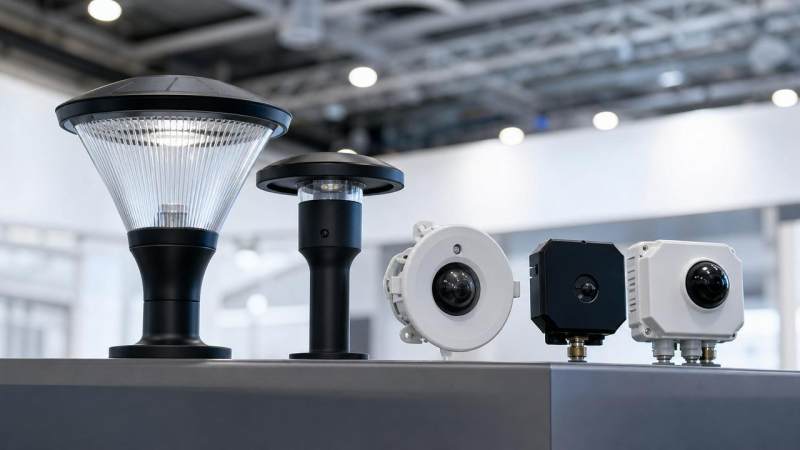
Lighting China Ningbo 2026 will be held from May 13 to 15, 2026. The exhibition features, for the first time, a dedicated ‘Smart Security Integration Zone’. It showcases motion sensors, smart nodes, and solar lighting systems engineered to comply simultaneously with UL 2043 (fire alarm communications), IEC 62676 (video surveillance systems), and IEC 62368-1 (audio/video, information, and communication technology equipment safety). A total of over 280 Chinese manufacturers are participating; 63% have completed factory audits under both UL and IEC certification frameworks.
Impact on Specific Industry Segments
Export-Oriented Lighting Manufacturers
These companies face growing pressure to deliver certified, interoperable products for integrated building projects. The presence of UL/IEC dual-audited suppliers at the show signals a shift toward pre-validated components — reducing time-to-market for overseas system integrators but raising the bar for domestic manufacturers lacking parallel certification capacity.
Security System Integrators (Especially in North America & EU)
Integrators sourcing lighting-as-part-of-security solutions now have access to more readily compliant hardware. The emphasis on UL 2043 + IEC 62676 co-compliance means fewer compatibility gaps between lighting control layers and video/fire alarm subsystems — potentially shortening commissioning timelines and lowering third-party verification costs on site.
OEM/ODM Suppliers Serving Global Brands
Suppliers whose clients require multi-market compliance must now treat UL and IEC not as separate certification tracks, but as interlocking requirements. The 63% dual-audit rate among exhibitors suggests rising industry capability — yet also highlights a gap for suppliers still operating under single-standard assumptions.
Distribution & Channel Partners (e.g., Regional Distributors, E-commerce Platforms)
Channel partners handling lighting or security SKUs may see increased demand for bundled, documentation-ready solutions. Product listings that clearly indicate UL 2043 + IEC 62676 + IEC 62368-1 alignment — rather than standalone certifications — are likely to gain preference in technical procurement workflows.
What Relevant Companies or Practitioners Should Focus On Now
Monitor official certification updates from UL Solutions and IEC Conformity Assessment Bodies
While the exhibition highlights triple-standard alignment, UL 2043 and IEC 62676 are administered by different bodies with distinct test protocols and update cycles. Practitioners should track any pending revisions — especially those affecting edge-device interoperability or cybersecurity add-ons.
Prioritize verification of ‘pre-integrated’ claims for motion sensors and smart nodes
Not all products labeled ‘UL/IEC compatible’ undergo full system-level testing. Buyers should request evidence of joint validation (e.g., test reports referencing coordinated signal timing, power-over-ethernet behavior, or fail-safe handshaking) — not just component-level pass/fail results.
Distinguish between factory audit status and product certification scope
The 63% figure refers to factories passing dual-system audits — not necessarily every listed product carrying all three certifications. Procurement teams should verify certificate numbers and scope limitations per SKU, particularly for solar-powered variants where battery management and surge immunity affect IEC 62368-1 evaluation.
Assess internal documentation readiness for cross-border tenders
Projects in the U.S. and EU increasingly require consolidated compliance dossiers. Companies should begin aligning technical files, test reports, and declaration of conformity templates across UL and IEC formats — even if full certification isn’t yet complete — to avoid delays during bid submission.
Editorial Perspective / Industry Observation
Observably, this edition of Lighting China Ningbo reflects a maturing convergence between lighting and security ecosystems — driven less by novelty and more by regulatory and commercial necessity. Analysis shows the emphasis on UL/IEC dual-audit readiness is not merely symbolic: it signals that certification infrastructure is becoming a prerequisite for entry into high-value integration contracts. From an industry perspective, the event functions more as a consolidation signal than a disruptive inflection point — confirming that interoperability-by-design is transitioning from optional differentiation to baseline expectation. Continued attention is warranted because adoption velocity varies significantly across regional markets and end-user verticals (e.g., smart campuses vs. industrial sites), and actual field deployment lags behind showroom readiness.
This development is best understood not as a sudden regulatory shift, but as an acceleration of an ongoing standardization trajectory — one where lighting vendors are increasingly evaluated as subsystem contributors rather than standalone hardware providers.
Conclusion
Lighting China Ningbo 2026 underscores a structural realignment: lighting products are no longer assessed solely on photometric or energy performance, but on their verifiable role within broader safety and security architectures. For stakeholders, the takeaway is pragmatic — certification alignment is becoming a foundational requirement, not a competitive differentiator. Current efforts are better directed toward verifying implementation depth (e.g., system-level validation, documentation coherence) than debating whether dual-standard compliance matters at all.
Source Attribution
Main source: Official announcement of Lighting China Ningbo 2026, including confirmed dates (May 13–15, 2026), zone naming (‘Smart Security Integration Zone’), cited standards (UL 2043, IEC 62676, IEC 62368-1), participant count (280+), and dual-audit statistic (63%).
Areas requiring ongoing observation: Actual field adoption rates of triple-standard-compliant solutions; evolution of UL/IEC mutual recognition arrangements; and tender language updates reflecting integrated system requirements in public infrastructure RFPs.
The VitalSync Intelligence Brief
Receive daily deep-dives into MedTech innovations and regulatory shifts.