
Security
Security Architecture for Digital Security: Build It Right Before Expansion
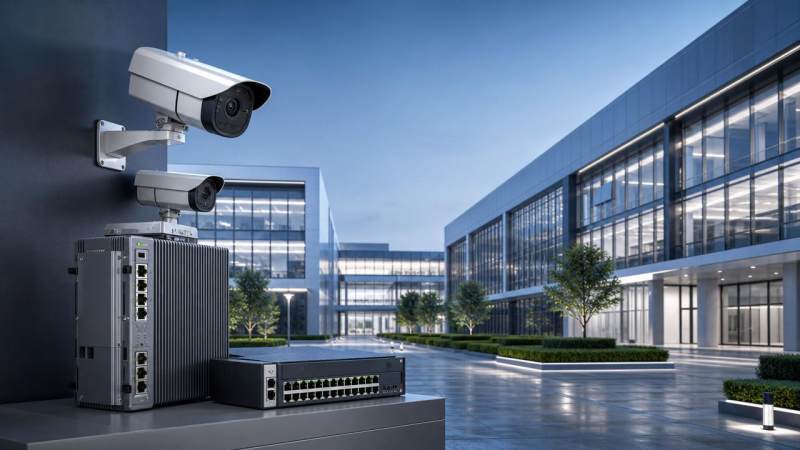
Before scaling surveillance networks, smart sites, or urban safety systems, security architecture for digital security must be built on clear standards, resilient design, and compliance-ready intelligence. For technical evaluators, the real challenge is not adding more tools, but creating a trusted framework that aligns physical protection, optical performance, and future expansion without increasing risk.
Why the market is rethinking security architecture for digital security now
In 2026, the security market is not simply getting bigger; it is becoming more interconnected, more regulated, and more performance-sensitive. Surveillance systems are increasingly tied to edge analytics, building controls, access management, lighting infrastructure, and public safety communication layers. This shift is changing how technical evaluators judge readiness. A design that once worked as a closed camera project may now fail when it must support AI vision, encrypted data exchange, remote maintenance, and cross-border compliance at the same time.
That is why security architecture for digital security is moving from a back-end technical concern to an early-stage strategic requirement. Buyers are no longer asking only whether devices meet baseline specifications. They are asking whether the overall architecture can absorb policy changes, integrate optical conditions, maintain evidentiary integrity, and scale without rebuilding the system from scratch. For platforms such as GSIM, this trend confirms the growing need for intelligence that connects standards, procurement realities, and technology evolution into one decision framework.
The strongest signal is that expansion itself has become a risk multiplier. Every additional sensor, gateway, lighting node, or analytics application creates more interfaces, more dependencies, and more potential points of failure. As a result, well-structured security architecture for digital security is no longer just a design preference. It is becoming the condition for safe growth.
The most important trend signals technical evaluators should watch
Several industry signals explain why architecture decisions now carry more weight than isolated product choices. First, regulatory scrutiny around electronic surveillance, data handling, and infrastructure resilience is increasing across regions. Second, optical performance is becoming a system-level issue rather than a camera-only issue, because lighting quality, glare control, night visibility, and environmental contrast directly affect AI interpretation and operator accuracy. Third, procurement teams are shifting toward lifecycle accountability, which means architecture must prove maintainability, interoperability, and compliance continuity over time.
At the same time, smart construction sites, transportation hubs, campuses, and urban projects are demanding mixed environments where physical and digital safeguards must work together. This is where security architecture for digital security gains practical meaning: it defines how identity, video, transmission, storage, illumination, and governance operate as one risk-managed system rather than a stack of independent tools.
What is driving this shift beyond normal technology upgrades
The first driver is the fusion of physical assurance with digital infrastructure. Access control, perimeter monitoring, incident recording, lighting management, and site communications are increasingly expected to share context. A technical evaluator can no longer review these layers in isolation because one weak interface can compromise the entire chain of trust.
The second driver is legal and contractual exposure. Once video and sensor data are used for compliance evidence, worker safety, public risk management, or critical site investigations, design flaws become governance problems. In this environment, security architecture for digital security must support retention logic, authentication, segmentation, resilience, and policy traceability from the beginning.
The third driver is optical intelligence. As GSIM’s perspective suggests, the future of security is not only about stronger devices but also about better information conditions. AI vision systems are highly sensitive to shadow transitions, backlight, insufficient illumination, and scene inconsistency. That means architecture decisions must include visible environment optimization, not merely network topology. A technically elegant design that ignores optical realities may underperform in the field.
The fourth driver is procurement maturity. Buyers in integrated projects are under pressure to justify return on investment, cybersecurity posture, and standards alignment over the full operating life. As a result, architecture is becoming a procurement language. It is the point where engineering, legal review, risk management, and vendor selection meet.
How these changes affect different stakeholders across the project chain
Not every stakeholder feels the shift in the same way. However, almost all of them are being pushed toward earlier architectural evaluation and clearer operating assumptions. For technical evaluators, this means the review process must expand from specifications to dependency mapping and long-term system behavior.
Why optical conditions are becoming part of security architecture decisions
A major change in the market is the recognition that physical security outcomes depend on optical quality as much as on digital controls. In older project models, illumination was often treated as a separate utility concern. Today, that separation creates blind spots. AI-supported detection, facial verification, perimeter monitoring, and event reconstruction all depend on usable visual input. If the environment produces glare, contrast loss, excessive shadows, or inconsistent night visibility, the digital system inherits degraded intelligence.
This is one reason security architecture for digital security should be reviewed alongside optical environment optimization. Technical evaluators should ask whether lighting plans match scene intent, whether camera placement supports true operational angles, and whether environmental conditions remain stable across weather, seasonal changes, and occupancy shifts. The goal is not to create a brighter site at any cost, but to create a controlled visual environment that supports reliable decisions.
GSIM’s dual focus on security assurance and illumination intelligence is especially relevant here. Future-ready systems will increasingly be judged on whether they can align sensing accuracy, energy logic, policy compliance, and operational clarity in one architecture.
What a scalable architecture now needs to prove before expansion
For expansion-stage projects, the central question is no longer “Can the system grow?” but “Can it grow without degrading trust?” A strong security architecture for digital security should demonstrate at least five things. First, it must show segmentation between critical functions so that one failure or intrusion does not compromise the entire environment. Second, it should support standards-aware integration rather than proprietary lock-in that limits future adaptation. Third, it must preserve evidence quality and control access consistently across sites and upgrades.
Fourth, it should account for maintenance and patching realities. Many architectures look stable on paper but become fragile when firmware diversity, remote diagnostics, and third-party service access are introduced. Fifth, it needs a clear expansion model. That means understanding where additional cameras, sensors, gateways, or lighting controllers will create bottlenecks in bandwidth, storage, governance, or incident workflows.
Technical evaluators should therefore move beyond product-by-product acceptance. They should test assumptions about latency, retention, role permissions, illumination dependencies, and failure recovery. In trend terms, architecture quality is increasingly being judged by behavior under change, not just by performance at installation.
A practical decision framework for technical evaluators
To respond to the current market direction, evaluators can use a structured judgment model. This helps distinguish a system that appears advanced from one that is genuinely expansion-ready.
What to monitor over the next planning cycle
Over the next planning cycle, several signals deserve close monitoring. Watch for tighter links between surveillance law, data residency expectations, and infrastructure certification. Follow how AI vision procurement increasingly requires demonstrable environmental performance rather than generic resolution claims. Track whether public and commercial buyers begin demanding clearer architecture documentation at tender stage, especially in smart site and urban safety projects.
It is also important to monitor where visible light communication, edge intelligence, and networked lighting begin to influence security design. These areas may not replace core architectures immediately, but they can reshape how sites manage data pathways, occupancy awareness, and incident signaling. For organizations using GSIM as a strategic intelligence source, these are not abstract trends. They are practical indicators of where design assumptions may soon become outdated.
FAQ: key judgment questions around security architecture for digital security
Is security architecture for digital security only relevant for large urban projects?
No. The same architecture logic matters in campuses, logistics facilities, smart construction sites, industrial estates, and multi-building commercial properties. The more a site relies on integrated monitoring and future expansion, the more important architecture becomes.
Why is optical performance included in architecture discussions?
Because system trust depends on the quality of the visual environment. Cameras and analytics cannot compensate indefinitely for poor illumination, unstable contrast, or scene design weaknesses. Architecture must support both digital control and visual usability.
What is the biggest evaluation mistake during expansion?
Treating expansion as a quantity problem instead of a dependency problem. Adding more endpoints without reviewing segmentation, governance, optical consistency, and lifecycle maintenance often creates hidden security debt.
A clearer path forward for resilient growth
The current direction of the market is clear: growth in surveillance and urban safety infrastructure is being matched by higher expectations for resilience, transparency, and standards alignment. In that environment, security architecture for digital security is not a design formality. It is the framework that determines whether expansion creates confidence or complexity.
For technical evaluators, the most useful next step is to test every planned expansion against a few practical questions. Does the architecture still hold under policy change? Does the optical environment support reliable interpretation? Can new devices be integrated without weakening governance? Is the upgrade path documented and maintainable? If organizations want to understand how these trends may affect their own projects, these are the questions worth confirming first.
The VitalSync Intelligence Brief
Receive daily deep-dives into MedTech innovations and regulatory shifts.