
Security
China Releases AI Terminal Intelligence Grading Standard
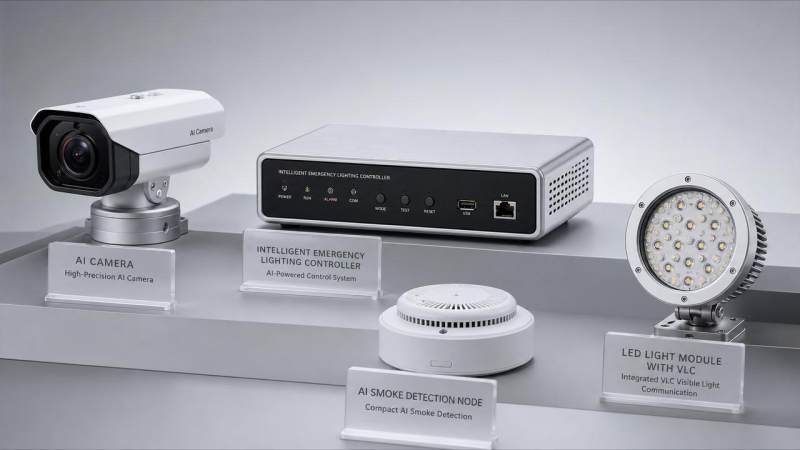
On May 8, 2026, China’s Ministry of Industry and Information Technology (MIIT), the State Administration for Market Regulation (SAMR), and the Ministry of Commerce jointly issued the national guideline Artificial Intelligence Terminal Intelligence Grading (GB/Z 177—2026). This standard introduces the first mandatory intelligence grading framework for AI-enabled security and lighting devices—including AI cameras, smart emergency lighting controllers, AI smoke-detection nodes, and VLC (visible light communication) luminaires—and establishes compulsory requirements on on-device computing power, local inference capability, and privacy protection. Exporters of AI-integrated安防 and lighting equipment targeting Belt and Road Initiative (BRI) and RCEP markets must now align product design, testing, and certification with this new grading system.
Event Overview
On May 8, 2026, MIIT, SAMR, and MOFCOM jointly published GB/Z 177—2026, titled Artificial Intelligence Terminal Intelligence Grading. The document formally incorporates AI cameras, smart emergency lighting controllers, AI smoke-detection nodes, and VLC-enabled luminaires into a tiered intelligence classification system. It specifies mandatory technical indicators related to computational capability, on-device inference performance, and data privacy safeguards. The standard applies to type approval and conformity assessment procedures for AI-enhanced security and lighting products exported to BRI and RCEP countries.
Industries Affected
Direct Exporters of AI-Integrated Security and Lighting Equipment
These enterprises are directly subject to the new conformity assessment requirements. Their products must now undergo type testing and documentation review against the intelligence grading criteria before market entry in BRI and RCEP jurisdictions. Impact manifests in extended pre-market validation timelines, potential redesign needs for local inference modules, and additional documentation for privacy-by-design features.
Contract Manufacturers and OEMs Producing AI-Enabled Devices
OEMs supplying AI cameras or smart lighting controllers face revised technical specifications from brand owners. Because GB/Z 177—2026 mandates minimum on-device compute and local inference capabilities, manufacturers may need to upgrade hardware platforms (e.g., integrate NPU accelerators), revise firmware architecture, and adjust factory-level test protocols to meet grading thresholds.
Component Suppliers for AI Edge Hardware
Suppliers of SoCs, AI accelerators, secure elements, and low-power inference chips may experience shifting demand signals. The standard’s emphasis on local inference and privacy-preserving processing implies increased relevance for components supporting on-device model execution and encrypted data handling—though actual procurement impact depends on downstream adoption velocity and grading tier requirements.
Certification and Testing Service Providers
Laboratories and third-party certification bodies must now incorporate GB/Z 177—2026 grading assessments into their service portfolios. This includes developing test methods for on-device inference latency, model accuracy under constrained environments, and verification of privacy controls (e.g., data anonymization during edge processing). Alignment with international standards remains pending clarification.
Key Focus Areas and Practical Responses for Enterprises
Monitor official implementation guidance and interpretation documents
The standard is currently published as a Guideline (GB/Z), not a mandatory Standard (GB). Enterprises should track whether and when it transitions to enforceable status—or whether sector-specific enforcement notices (e.g., for export clearance) are issued by customs or certification authorities.
Identify priority product categories and target markets requiring immediate alignment
AI cameras and smart emergency lighting controllers are explicitly named in the standard and are widely deployed across BRI infrastructure projects. Exporters targeting ASEAN, Central Asia, or Middle Eastern markets under RCEP or bilateral trade frameworks should prioritize grading compliance for these items ahead of others.
Distinguish between policy signal and operational requirement
As of May 2026, GB/Z 177—2026 sets technical benchmarks but does not yet define enforcement mechanisms, transition periods, or grading tier thresholds (e.g., Level 1 vs. Level 3). Enterprises should treat current issuance as a preparatory signal—not an immediate compliance deadline—while verifying whether specific overseas buyers or import agencies have already adopted its criteria voluntarily.
Review and update internal technical documentation, supply chain specs, and test plans
Manufacturers should audit existing product datasheets, firmware release notes, and factory test reports for coverage of local inference capability, memory-bound inference performance, and privacy-related design features. Where gaps exist, initiate cross-functional reviews involving hardware, firmware, and regulatory affairs teams to map necessary updates.
Editorial Perspective / Industry Observation
Observably, GB/Z 177—2026 functions primarily as a technical framing instrument—not an immediate regulatory barrier. Its publication signals China’s intent to shape global expectations around AI device intelligence, particularly in infrastructure-adjacent sectors like security and lighting. Analysis shows that its influence will unfold gradually: initial impact is likely through buyer-driven specifications and voluntary certification schemes rather than formal import bans. From an industry perspective, this standard more closely resembles a strategic coordination tool among domestic regulators than an enforcement-ready mandate—at least in the near term. Continuous monitoring is warranted, especially for updates tied to export licensing procedures or harmonization efforts with IEC or ISO AI device standards.
Overall, GB/Z 177—2026 marks a formal step toward embedding AI capability assessment into the regulatory lifecycle of physical infrastructure devices. It does not yet impose binding export restrictions, but it establishes a reference framework that may inform future technical barriers, procurement policies, and regional standardization initiatives. Enterprises are advised to treat it as an early-stage technical benchmark—neither urgent nor optional, but increasingly material for medium-term product planning and market access strategy.
Source: Joint announcement by the Ministry of Industry and Information Technology (MIIT), State Administration for Market Regulation (SAMR), and Ministry of Commerce (MOFCOM), published May 8, 2026. Note: Implementation timeline, grading tier definitions, and enforcement linkage to customs or certification processes remain subject to further official clarification and are under observation.
The VitalSync Intelligence Brief
Receive daily deep-dives into MedTech innovations and regulatory shifts.