
Security
Digital Infrastructure Security Best Practices
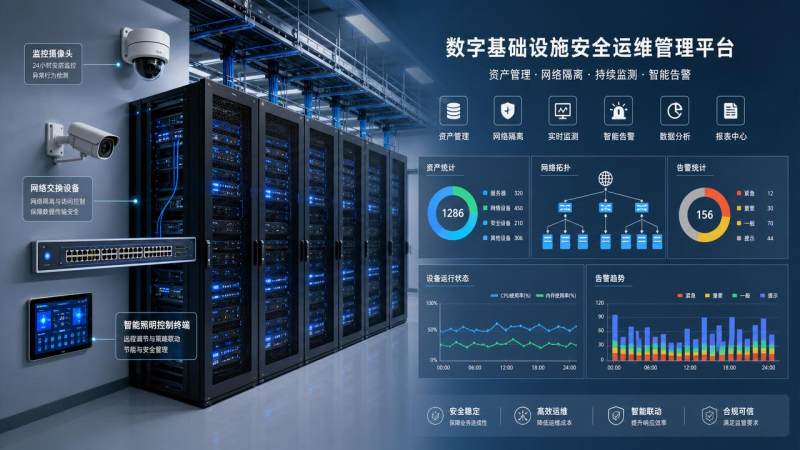
As cities, campuses, and critical facilities accelerate digital upgrades, understanding digital infrastructure security best practices is no longer optional for operators. From surveillance networks and connected lighting to AI-enabled monitoring systems, every layer of infrastructure demands resilient, standards-aligned protection. This guide outlines practical measures to reduce risk, improve operational visibility, and support safer, smarter environments in a rapidly evolving global security landscape.
For operators, the challenge is rarely a single device failure. It is the interaction between cameras, access control, lighting controls, edge processors, wireless links, storage, and remote management tools. A weak password, an unsegmented network, or a delayed firmware update can expose an entire site within hours.
This is where practical digital infrastructure security best practices matter most. In complex operational environments, security must support uptime, compliance, visibility, and maintainability at the same time. GSIM helps operators connect policy requirements, physical security priorities, and optical technology decisions into one actionable framework.
Why Digital Infrastructure Security Matters for Operators
Operators work closest to day-to-day risk. They manage alarms, inspect devices, verify video availability, and respond to faults. In many facilities, more than 4 core systems now share data paths: surveillance, building automation, connected lighting, and analytics platforms.
When these systems are integrated without clear controls, one misconfigured endpoint can interrupt recording retention, delay alerts by 30 to 90 seconds, or create blind spots across multiple zones. Digital infrastructure security best practices reduce these operational gaps before they become incidents.
Common Exposure Points in Modern Sites
The most common failures are not always advanced attacks. Operators often encounter default credentials left unchanged, devices running firmware older than 12 months, unrestricted remote access, and unmanaged third-party maintenance accounts. Each issue increases attack surface and complicates incident response.
- Shared administrator accounts across multiple systems
- Flat networks with no segmentation between OT and IT assets
- Video retention systems with no storage health verification
- Lighting and sensor devices added without asset registration
- Remote access sessions lacking time limits or approval logs
Operational Consequences of Weak Controls
Weak controls affect more than cybersecurity teams. Operators may lose live views, receive false alarms, or fail to retrieve evidence during a 7-day, 30-day, or 90-day retention window. In regulated spaces, that can trigger audit findings, insurance disputes, or costly revalidation work.
GSIM’s Strategic Intelligence Center is relevant here because operators need both technical guidance and policy context. Security decisions around surveillance, AI vision, and connected optical systems must align with legal requirements, maintenance realities, and procurement constraints in different regions.
Core Digital Infrastructure Security Best Practices to Implement First
Not every site can modernize all controls at once. A practical rollout usually starts with 5 priority areas: asset visibility, identity control, network segmentation, patch governance, and continuous monitoring. These five layers address the majority of operator-managed risks without requiring a full redesign.
1. Build a Reliable Asset Inventory
You cannot protect what you cannot see. Every camera, NVR, switch, controller, luminaire gateway, sensor, workstation, and edge node should be recorded with model, firmware, IP address, owner, location, and support status. Review this inventory every 30 to 60 days.
At minimum, operators should classify assets into 3 groups: mission-critical, business-supporting, and non-critical. This makes patch timing, backup frequency, and incident escalation much easier to manage across large campuses or distributed facilities.
2. Enforce Identity and Access Discipline
Strong access control remains one of the most effective digital infrastructure security best practices. Replace default passwords immediately, require unique user accounts, and apply role-based privileges. Operators should not share elevated credentials, even during shift changes or emergency maintenance.
For remote access, enforce multi-factor authentication, session logging, and approval workflows. A practical baseline is to disable dormant accounts after 30 days and review all third-party accounts once per quarter. This reduces unmanaged entry points without slowing legitimate service work.
3. Segment Networks by Function and Risk
Cameras, access panels, lighting controllers, and office devices should not all sit on one flat network. Create separate zones for security devices, building systems, management workstations, and guest or contractor traffic. Where possible, isolate internet-facing services behind controlled gateways.
Segmentation limits lateral movement if one endpoint is compromised. Even a simple 4-zone design can improve containment and troubleshooting speed. It also helps operators identify abnormal traffic patterns, such as a lighting gateway unexpectedly attempting outbound connections.
The table below shows a practical baseline operators can use when prioritizing controls across mixed infrastructure environments.
The key lesson is that mature protection does not begin with advanced tools alone. It begins with repeatable operating discipline. Sites that maintain a current inventory, segmented traffic paths, and controlled user access are usually better prepared for both faults and cyber incidents.
4. Patch and Firmware Governance Must Be Scheduled
Operators often postpone updates because downtime windows are hard to secure. Yet unmanaged firmware is one of the most persistent risks in surveillance and optical control networks. Create a maintenance calendar with 3 bands: urgent, standard, and deferred updates based on exposure and operational impact.
For critical systems, test updates in a staging environment first when available. Then apply changes during approved windows, document rollback steps, and verify camera streams, event triggers, and storage integrity within 24 hours after patching.
5. Monitor System Health Continuously
Continuous monitoring is another central part of digital infrastructure security best practices. It should include device online status, failed login attempts, bandwidth anomalies, storage capacity thresholds, time synchronization, and remote session records. Operators need visibility that is both real-time and easy to act on.
A practical threshold model may include alerts when storage falls below 20%, CPU remains above 85% for 15 minutes, or a critical device misses heartbeats for more than 2 polling intervals. These are not universal values, but they form a useful baseline.
Applying Best Practices Across Surveillance, Lighting, and AI-Enabled Systems
Operators in modern facilities rarely manage standalone hardware. They manage integrated ecosystems. Surveillance devices may feed analytics engines, lighting systems may respond to occupancy data, and edge processors may support both safety and energy workflows. Security controls must reflect that convergence.
Surveillance Networks
For IP video systems, secure stream encryption, time synchronization, retention validation, and administrator accountability should be treated as baseline. Verify recording continuity at least once every 7 days and test evidence retrieval from both recent and archived periods.
If cameras support analytics, review whether inference workloads affect frame rates or bandwidth during peak activity. A 10% to 20% rise in resource demand can be manageable, but only if operators track system headroom and response latency.
Connected Lighting and Optical Environments
Connected lighting is often underestimated in security planning. Yet gateways, sensors, and control software may expose management interfaces or feed occupancy and environmental data into broader platforms. Protect these systems with segmented communications, secure commissioning, and documented change control.
As GSIM emphasizes, optical environment optimization is not separate from security assurance. Illumination quality affects image clarity, incident interpretation, and AI detection reliability. Poorly managed lighting changes can reduce analytic accuracy or create avoidable blind zones.
AI Vision and Emerging VLC Environments
As AI vision and Visible Light Communication evolve, operators need to assess both function and governance. Questions should include where data is processed, how long outputs are retained, whether models can be updated securely, and how false positives are escalated within 5 to 15 minutes.
Emerging deployments should be introduced in phases. A common model is 3 stages: pilot validation, controlled expansion, and full operational handover. This reduces disruption and gives operators time to tune rules, permissions, and maintenance procedures.
The following comparison helps operators align security controls to different infrastructure layers without treating every system the same way.
The comparison shows why digital infrastructure security best practices must be adapted by system role. Surveillance, lighting, and AI layers share common controls, but each requires different operational checks and different failure indicators.
Implementation Workflow for Safer and Smarter Operations
A strong plan needs more than policies on paper. Operators need a workflow they can execute during normal operations, maintenance windows, and incident conditions. In most facilities, a 5-step process is realistic and sustainable.
Step 1: Assess and Map the Current Environment
Document assets, connections, dependencies, and remote access paths. Identify which systems are critical to life safety, security evidence, or regulatory obligations. This stage often takes 1 to 3 weeks depending on site complexity and number of integrated subsystems.
Step 2: Prioritize High-Impact Gaps
Rank issues by risk and operational effect. Default credentials, unsupported devices, open remote ports, and unmonitored storage usually belong in the first remediation wave. Lower-priority items can follow once core exposure is reduced.
Step 3: Standardize Operating Procedures
Create clear procedures for account creation, patch approval, log review, evidence export, lighting changes, and vendor access. Good procedures reduce shift-to-shift inconsistency and help new operators become effective within 2 to 4 weeks.
Minimum procedure set
- Access request and revocation workflow
- Firmware update and rollback checklist
- Daily alarm and health-status review
- Incident logging and escalation matrix
- Third-party maintenance approval and closure record
Step 4: Train Operators on Real Scenarios
Training should be scenario-based rather than generic. Run tabletop or live simulations for camera outages, suspicious remote logins, storage failure, analytics drift, and unauthorized lighting configuration changes. Even 2 drills per quarter can improve response confidence significantly.
Step 5: Review, Report, and Improve
Security is not a one-time deployment. Review exceptions, downtime events, failed updates, and recurring alarms every month. Quarterly reviews should include procurement feedback, device lifecycle concerns, and alignment with regional policy changes affecting surveillance or data handling.
Procurement, Lifecycle, and Service Considerations
Operators are often asked to support purchasing decisions even if they do not own the budget. Their input is critical because maintainability, update support, optical performance, and integration behavior directly affect daily operations. Security should be a buying criterion, not a post-install fix.
What to Ask Before Purchase
Before selecting devices or platforms, ask how updates are delivered, how long products are supported, what logs are available, whether credentials can be centrally managed, and how the system behaves during network loss. These are practical questions that reduce long-term operational burden.
A device with strong image quality but poor update governance may create more risk than value over a 5- to 7-year service life. The same applies to connected lighting controllers or AI edge nodes that cannot be patched without service interruption.
Operator-Focused Evaluation Criteria
Use a structured scorecard with at least 4 dimensions: security controls, operational usability, integration fit, and lifecycle support. This helps procurement teams compare solutions beyond initial cost and gives operators a stronger voice in deployment planning.
- Security: MFA support, audit logs, encryption, account roles
- Operations: health dashboards, alert clarity, recovery workflow
- Integration: compatibility with VMS, BMS, and lighting platforms
- Lifecycle: firmware cadence, support duration, spare parts availability
Where GSIM Adds Practical Value
GSIM supports operators and decision teams by connecting global compliance interpretation, commercial insight, and evolving optical-security trends. That is particularly useful when infrastructure upgrades involve multiple stakeholders, cross-border sourcing, or new technologies such as AI vision and VLC.
Instead of treating security hardware and lighting systems as isolated products, GSIM frames them within operational readiness, standards awareness, and deployment risk. For operators, this improves decision quality before installation and reduces avoidable friction after commissioning.
Digital infrastructure security best practices are most effective when they are operational, measurable, and aligned with the realities of integrated sites. Asset visibility, access discipline, segmentation, patch governance, and continuous monitoring give operators a strong starting point. When these controls are supported by informed procurement and standards-aware planning, facilities become safer, more resilient, and easier to manage.
If your team is evaluating surveillance upgrades, connected lighting deployments, or AI-enabled security environments, GSIM can help you interpret risks, compare options, and build a more practical roadmap. Contact us today to get a tailored solution, discuss product details, or explore more security and illumination strategies for your operation.
The VitalSync Intelligence Brief
Receive daily deep-dives into MedTech innovations and regulatory shifts.