
Security
CPSC Rule Tightens Entry for LED Industrial Lighting
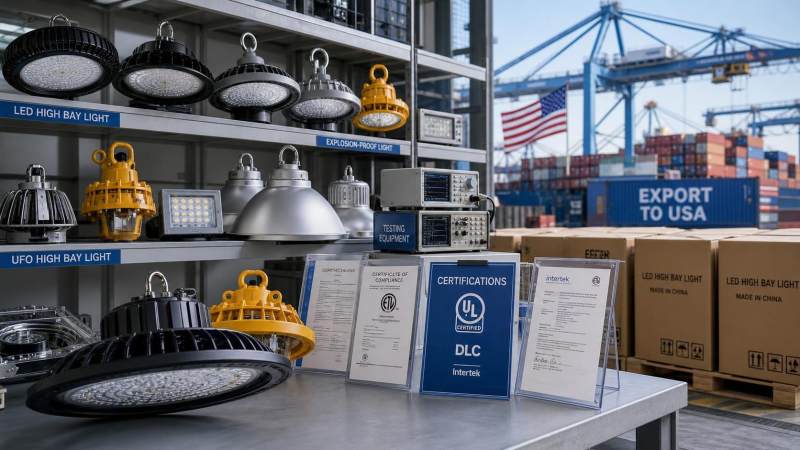
On July 27, 2026, the U.S. Consumer Product Safety Commission (CPSC) put a new compliance requirement into effect for imported LED industrial lighting products entering the U.S. market. The change covers products such as industrial luminaires, high-bay lighting, and explosion-proof lighting, and it is drawing attention from exporters, manufacturers, importers, and supply-chain service providers because market access, customs timing, and compliance cost are now more directly tied to certification status.
What the New Requirement Covers
According to the information provided, all LED industrial lighting equipment imported into the United States from July 27, 2026 must comply with UL 1598, 5th Edition. The requirement adds mandatory photobiological safety testing under IEC/TR 62471-2 and enhanced electromagnetic compatibility testing under EMC Class B. The information provided also states that products without the required certification may be denied entry by CBP or face recall risk.
Where the Impact Will Be Felt First
Export-facing manufacturers will face a stricter market-entry threshold
From an industry perspective, manufacturers and exporters shipping LED industrial lighting to the United States are likely to feel the impact first because the rule is tied directly to product entry. The main pressure points are product qualification, test preparation, certification completion, and shipment release timing. What deserves closer attention is whether current product files and certification arrangements already align with UL 1598, 5th Edition and the newly required photobiological safety and EMC testing items.
Importers and trading companies will need to watch clearance risk more closely
For importers and direct trading companies, the issue is not only whether a product can be sold, but whether it can enter the market without delay. Analysis shows that the rule raises the practical importance of documentation readiness and certification traceability during customs handling. The business effect may appear in shipment scheduling, delivery commitments, and the management of non-compliant inventory already moving through the pipeline.
Supply-chain and logistics service providers may see more compliance-sensitive coordination
Observably, service providers involved in shipping, customs coordination, and delivery planning may also be affected because certification status now has a closer link to border outcomes. The key business concern is whether supporting documents, shipment timing, and client communication are coordinated early enough to avoid detention, rejection, or downstream disputes over delivery responsibility.
Downstream buyers will have to pay closer attention to supplier readiness
For procurement teams and end-use project buyers, the rule matters because product availability and delivery timing may become less predictable if suppliers are not fully prepared. The immediate area to monitor is supplier qualification, especially for product categories named in the information provided, including industrial, high-bay, and explosion-proof LED lighting.
Practical Points Companies Should Review Now
Check which product lines fall within the affected scope
The information provided makes clear that the requirement applies to LED industrial lighting equipment entering the U.S. market, including industrial luminaires, high-bay products, and explosion-proof lighting. Companies should therefore identify which active export models, pending orders, and planned shipments are within that scope and whether their existing compliance path matches the new entry condition.
Separate standard compliance from shipment readiness
Analysis shows that meeting a standard in principle and being ready for customs in practice are not the same thing. What deserves closer attention is whether certification documents, test records, and shipment-related paperwork can support a smooth import process. This distinction matters because the information provided links non-certification not only to product compliance risk, but also to border rejection and recall exposure.
Review delivery schedules and customer communication
For companies with U.S.-bound orders, the practical issue is timing. Observably, any gap between certification completion and shipment planning may affect delivery commitments. Exporters, importers, and service providers should pay attention to contract schedules, customer notice requirements, and internal escalation procedures where a product's certification status is still being confirmed.
Track whether follow-up clarification changes operational detail
Although the rule has taken effect based on the information provided, companies should continue monitoring whether subsequent official wording, implementation clarification, or related compliance interpretation changes how the requirement is applied in day-to-day operations. This is especially relevant where business teams need to distinguish between the headline rule and the exact documentary or procedural expectations that affect shipment execution.
How This Should Be Read at This Stage
Analysis shows that this is more than a routine standards update because the requirement is described as directly affecting U.S. market access for imported LED industrial lighting. At the same time, it is more appropriate to understand this as a concrete compliance threshold rather than a broad industry forecast. The confirmed fact is the effective requirement and its direct consequences for non-certified products; the broader commercial effect on cost, lead time, and supplier selection still needs continued observation in actual trade flows.
What the Signal Means for the Market
From an industry perspective, the immediate significance of this development lies in compliance execution, not in abstract policy discussion. The rule indicates that photobiological safety and enhanced EMC performance are now part of the practical entry condition for the affected LED industrial lighting products. It is more appropriate to understand this as a near-term operational change with longer-term implications for export discipline, documentation control, and supplier screening, while keeping room for continued observation of how implementation develops.
Basis of This Article and What Still Needs Verification
This article is based on the user-provided news title, event date, and event summary. For developments of this kind, common source categories usually include official notices, company disclosures, industry association updates, authoritative media coverage, and standard-setting documents. A specific official source link was not provided in the input, so the precise official reference still requires ongoing verification. Areas that merit continued follow-up include any later official clarification, implementation detail affecting customs handling, and any further explanation relevant to affected LED industrial lighting categories.
The VitalSync Intelligence Brief
Receive daily deep-dives into MedTech innovations and regulatory shifts.