
Security
1071 New Chinese National Standards Effective May 1, 2026
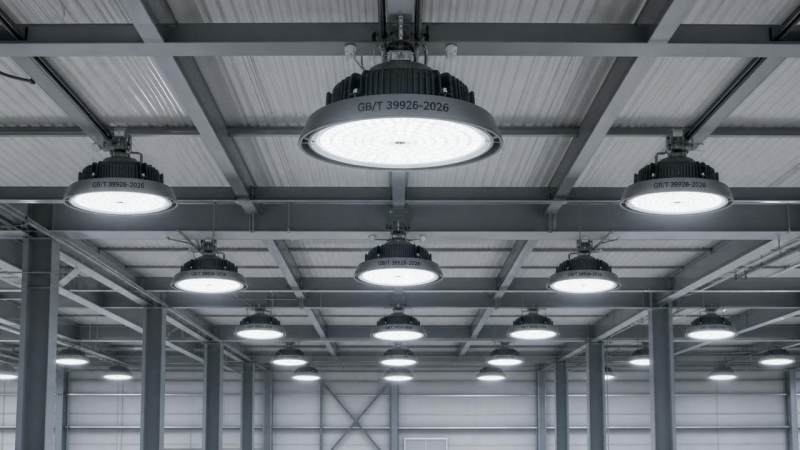
Starting May 1, 2026, 1071 newly issued Chinese national standards—including GB/T 39926-2026 on photobiological safety for LED industrial luminaires—enter mandatory implementation. This development directly affects manufacturers and exporters of LED industrial lighting and fire protection equipment, particularly those supplying to EU markets where compliance with GB/T 39926-2026 is now referenced in CE conformity assessments under EN 62471, EMC, LVD, and RoHS. The timing and technical scope signal a tightening of pre-market regulatory alignment between China and key export destinations.
Event Overview
According to an official announcement by the State Administration for Market Regulation (SAMR), GB/T 39926-2026, Photobiological Safety Requirements for LED Industrial Lighting Luminaires, becomes compulsory on May 1, 2026. The standard introduces three new mandatory factory inspection items: blue light hazard classification (RG0/RG1), retinal thermal hazard thresholds, and flicker index (Pst LM). It has been formally adopted as a reference basis for coordinated CE-EMC+LVD+RoHS+EN 62471 evaluation. Exporters failing to complete type testing and update technical documentation in accordance with this standard risk invalidation of existing CE certificates and disqualification from overseas public procurement tenders.
Industries Affected by the Standard
LED Industrial Luminaire Manufacturers
These producers are directly subject to the new mandatory test requirements. Non-compliance means inability to issue valid factory inspection reports or obtain updated product certifications required for domestic sale and export clearance. Impact manifests in extended time-to-market, increased testing costs, and potential redesign of optical and driver components to meet RG0/RG1 and Pst LM limits.
Fire Protection Equipment Integrators Using LED Lighting Components
Companies embedding LED industrial lamps into fire alarm systems, emergency lighting units, or explosion-proof enclosures must now verify that all integrated lighting modules comply with GB/T 39926-2026. This triggers revalidation of system-level certifications and may require supplier qualification updates across component supply chains.
Export-Oriented Trading Companies Handling LED or Fire Safety Goods
Trading firms acting as exporters or authorized representatives for CE marking bear legal responsibility for technical file completeness. Under current CE framework rules, reliance on non-updated or non-conforming GB/T documentation may compromise the validity of their declaration of conformity—and thus jeopardize customs clearance and project bidding eligibility in EU member states.
Third-Party Testing and Certification Service Providers
Laboratories accredited for GB/T or EN 62471 testing face immediate demand for expanded capability in measuring Pst LM and retinal thermal hazard parameters. Their capacity to issue technically aligned reports—cross-referenced between GB/T 39926-2026 and EN 62471—will influence client retention and market positioning among export-focused clients.
Key Considerations and Recommended Actions for Stakeholders
Monitor official SAMR and CNCA guidance on transitional arrangements
While the standard takes effect May 1, 2026, no public notice confirms whether grace periods apply for products manufactured before that date but exported afterward. Stakeholders should track SAMR and China National Certification and Accreditation Administration (CNCA) updates regarding enforcement timelines and documentation grandfathering provisions.
Prioritize verification for high-risk export categories and EU-facing SKUs
Products destined for EU public infrastructure projects—or those already certified under EN 62471—require urgent gap analysis against GB/T 39926-2026’s specific metrics (e.g., Pst LM threshold, spectral weighting for retinal thermal hazard). Focused review of these SKUs minimizes disruption to active tenders and certification renewals.
Distinguish between regulatory reference and formal harmonization
GB/T 39926-2026 is cited as a reference basis for CE evaluation—not a harmonized standard under EU legislation. Analysis shows this signals growing technical convergence, but does not replace EN 62471 for CE purposes. Compliance remains assessed under EN 62471; however, aligning with GB/T 39926-2026 strengthens evidentiary support during notified body audits.
Update internal technical files and supplier specifications ahead of May 2026
Manufacturers and integrators should revise internal quality control plans to include Pst LM measurement protocols and blue light hazard classification reporting. Concurrently, procurement contracts with LED module suppliers must explicitly reference GB/T 39926-2026 compliance—ensuring traceability and accountability across the bill of materials.
Editorial Perspective / Industry Observation
Observably, GB/T 39926-2026 represents less a standalone regulatory shift and more a formalized synchronization point between China’s domestic safety regime and internationally recognized photobiological assessment frameworks. From an industry perspective, its inclusion in CE-related evaluation references reflects increasing institutional recognition of Chinese technical standards—not as parallel alternatives, but as complementary inputs in multi-jurisdictional conformity workflows. Current evidence suggests this is primarily a signal of evolving regulatory interoperability, rather than an immediate enforcement trigger outside China’s borders. However, because CE validity depends on robust technical documentation, companies relying on outdated or incomplete files face tangible operational risk starting May 1, 2026. Sustained attention is warranted—not for speculative policy expansion, but for documented impact on certification continuity and tender eligibility.
The implementation of GB/T 39926-2026 marks a procedural milestone in cross-border regulatory alignment, not a fundamental change in safety expectations. Its practical significance lies in reinforcing documentation rigor and accelerating convergence in measurement methodology—particularly around flicker and thermal hazard quantification. For stakeholders, the most constructive interpretation is not that new hazards have emerged, but that verification criteria have become more granular and globally coordinated. Preparedness therefore centers on traceability, test protocol alignment, and timely technical file renewal—not on systemic redesign or market withdrawal.
Source: State Administration for Market Regulation (SAMR) official announcement; GB/T 39926-2026 standard text (published 2026); CNCA guidance on CE-related technical documentation referencing (publicly available notices as of April 2026).
Note: Transitional enforcement details and CNCA-issued interpretation documents remain under observation.
The VitalSync Intelligence Brief
Receive daily deep-dives into MedTech innovations and regulatory shifts.