
Security
Turkey Enforces SRI Certification for LED Luminaires
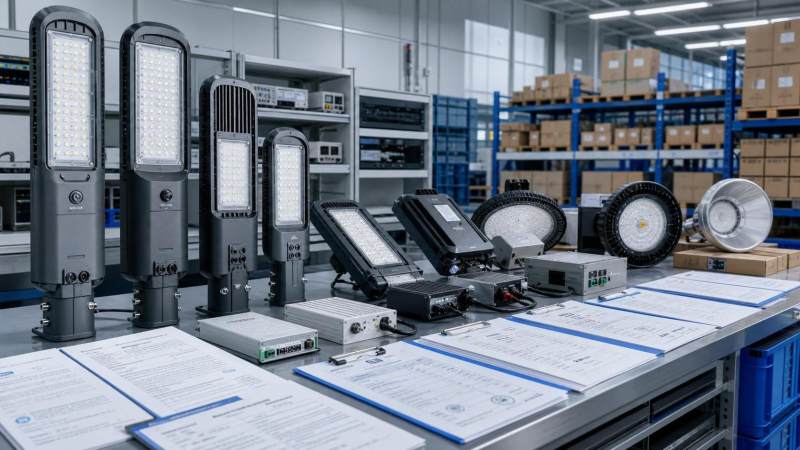
On June 17, 2026, a compliance change took effect in Turkey for imported LED road and industrial luminaires: products now need to pass an SRI smart readiness assessment and carry the relevant label under standards implemented by TSE. For manufacturers, exporters, importers, project suppliers, and procurement teams, this matters not only as a technical requirement but also as a market-entry condition tied to customs clearance and access to municipal and commercial purchasing lists.
What the rule now requires
According to the information provided, the Turkish Standards Institution (TSE) formally implemented mandatory certification requirements on June 17, 2026 under TS EN 15232-1:2026 and TS EN IEC 63120 for the SRI smart readiness indicator. The requirement applies to all imported LED road and industrial lighting products. These products must complete an SRI grade assessment and display the corresponding marking.
The scope of the new requirement includes automatic control interfaces, compatibility with DALI-2 and D4i Gen 2 drivers, and the capability to report energy-consumption data. Products that do not meet the requirement cannot clear customs and cannot enter procurement lists for municipal or commercial projects.
Where the pressure shifts across the supply chain
Market access now depends on technical compliance
From an industry perspective, importers and exporters are likely to feel the first impact because the rule directly connects compliance status with customs entry. This means the issue is no longer limited to product positioning or optional project specifications; it becomes a precondition for shipment acceptance into the Turkish market for the covered LED categories.
What deserves closer attention is the need to align product documentation, certification readiness, and shipment planning. Where a product has not completed the relevant assessment or cannot support the required labeling, the trade risk may appear at the border rather than later in the sales cycle.
Procurement teams may tighten specification screening
For buyers serving municipal and commercial projects, the change is relevant because non-compliant products are described as unable to enter procurement lists. Analysis shows this can shift review activity earlier in the purchasing process, especially around specification matching, eligibility screening, and supplier qualification checks for imported road and industrial lighting products.
In practical terms, procurement and tender teams may need to pay closer attention to whether product files clearly show SRI assessment status, labeling readiness, interface capability, and driver compatibility where these points are relevant to bid evaluation or technical acceptance.
Manufacturers and system suppliers face design-linked compliance questions
For manufacturers, OEM suppliers, and lighting system integrators, the rule matters because the covered items are not limited to basic lamp performance. The stated scope reaches into smart-readiness elements such as automatic control interfaces, DALI-2 and D4i Gen 2 driver compatibility, and energy data reporting capability.
Observably, this can affect product configuration review, driver selection, interface alignment, and supporting technical file preparation. Even where the product is physically ready, marketability may still depend on whether its compliance presentation matches the new certification and labeling requirement.
Testing and certification support functions may become a bottleneck
Certification-related service providers, testing support teams, and compliance coordinators may also be affected because the rule introduces a mandatory assessment step for covered imports. Analysis shows that the operational challenge may not only be the technical test itself, but also the timing of document preparation, label readiness, and consistency between technical claims and compliance records used in trade and procurement workflows.
What companies should review now
Check whether the covered product scope matches current shipments
Companies handling LED road and industrial luminaires should first confirm whether their products fall within the imported categories described in the new rule. This is especially important for businesses that manage mixed product portfolios, because the compliance requirement is tied to specific product applications rather than to all lighting products in general.
Revisit technical files around interfaces and driver compatibility
What deserves closer attention is whether existing technical documentation clearly supports the required elements named in the rule: automatic control interfaces, DALI-2 and D4i Gen 2 driver compatibility, and energy-consumption data reporting capability. If those points are not consistently reflected in product files, certification preparation and procurement acceptance could become more difficult.
Review labeling and customs-facing documentation
Because the provided information links non-compliance to customs clearance risk, companies should pay close attention to the completeness and consistency of labels and supporting compliance documents. It is more appropriate to understand this as a documentation and delivery issue as much as a product issue, particularly for shipments already scheduled for the Turkish market.
Watch for execution details in procurement and enforcement practice
The input does not provide detailed enforcement procedures, review timelines, or project-side document formats. For that reason, companies should treat upcoming procurement documents, certification interpretations, and implementation language from relevant institutions as items to monitor rather than as settled practice. This is particularly relevant for bid submissions, supplier onboarding, and acceptance criteria in municipal and commercial projects.
Why this looks like an execution signal, not just a policy notice
Analysis shows that this development is better understood as a rule already entering operational use rather than as an early policy discussion. The decisive point is that the requirement is described as mandatory from June 17, 2026 and is tied to two immediate commercial consequences: customs clearance and access to procurement lists.
At the same time, observably, the market still needs to watch how this requirement is applied in practice. Areas that merit continued attention include certification interpretation, labeling expectations, technical file review standards, and how procurement entities reflect the requirement in tender and qualification documents.
How the market should read this change
This update should be read as a concrete compliance threshold for imported LED road and industrial luminaires in Turkey, not merely as a reference standard update. Its significance lies in connecting smart-readiness certification with trade access and project eligibility.
From an industry perspective, the most balanced conclusion is that the rule has already moved into the category of implemented market-access requirements, while some practical details of execution still deserve close monitoring. Companies involved in product supply, certification, bidding, and delivery should therefore focus on readiness, documentation consistency, and downstream procurement treatment.
Basis of this article
This article is based on the user-provided news title, event date, and event summary. The summary states that TSE implemented mandatory certification requirements under TS EN 15232-1:2026 and TS EN IEC 63120 on June 17, 2026 for imported LED road and industrial luminaires, including SRI grading and labeling, with scope covering automatic control interfaces, DALI-2/D4i Gen 2 driver compatibility, and energy-consumption data reporting capability.
For developments of this type, commonly relevant source categories may include official notices, regulator or standards-body releases, customs or trade authority information, industry association updates, standardization documents, and reporting by authoritative trade media. No specific official source link was provided in the input, so the exact official reference still requires follow-up verification. Items that remain worth tracking include implementation details, certification interpretation, procurement document changes, market feedback, and how companies execute against the requirement in practice.
The VitalSync Intelligence Brief
Receive daily deep-dives into MedTech innovations and regulatory shifts.