
Security
China Opens Fast-Track Solar Lighting Exports
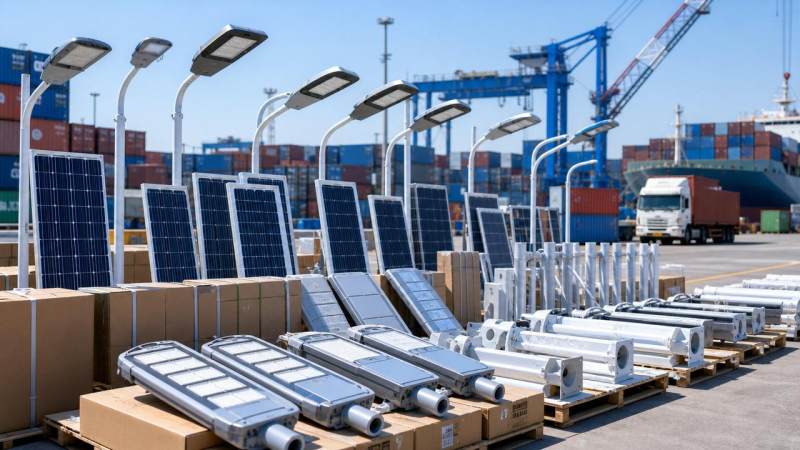
On June 5, 2026, China announced a pilot fast-track customs review channel for solar lighting exports at 12 key ports, linking faster clearance to the submission of an ISO 14067 carbon footprint declaration issued by a recognized body. For exporters, manufacturers, certification-related service providers, and overseas project suppliers working with solar street lights and off-grid garden lighting, this is not just a customs update; it signals that carbon documentation is becoming more directly connected to delivery speed, bidding responsiveness, and export execution.
What the pilot measure confirms
According to the announced arrangement, the General Administration of Customs and the Ministry of Ecology and Environment launched a pilot “green review channel” for solar lighting product exports on June 5, 2026. The pilot applies at 12 key ports nationwide. Where an exporter submits an ISO 14067 carbon footprint declaration issued by a recognized institution, customs clearance time is reduced to within 24 hours. The mechanism covers the full Solar Lighting category, including LED solar street lights and off-grid garden lights. The announcement also states that the measure is expected to improve responsiveness to green procurement projects in Europe, Latin America, and the Middle East.
Where the rule change may be felt first
Export execution is now tied more closely to carbon documentation
From an industry perspective, exporters are likely to feel the most immediate effect because the new pilot connects customs processing speed with a specific carbon-related document. The practical impact may appear in shipment scheduling, tender response timing, and document preparation before goods reach port. What deserves closer attention is whether exporters already have a valid ISO 14067 carbon footprint declaration from a recognized body ready at the shipment stage, rather than treating carbon information as a secondary marketing file.
Manufacturing planning may need to support documentary readiness
For manufacturers of solar lighting products, the measure may affect how production batches, product specifications, and supporting technical files are organized for export. Analysis shows that when faster customs treatment depends on carbon footprint documentation, factories may need closer alignment between product configuration, compliance records, and export paperwork. The key issue is not only manufacturing output, but whether the product set being shipped can be matched cleanly to the declaration used for customs review.
Certification and testing services may become more embedded in shipment timelines
Certification-related companies and testing service institutions may also see changes in client demand. Observably, if ISO 14067 declarations become a gateway to faster customs treatment, clients may place greater emphasis on timing, document acceptance, and the recognition status of the issuing body. This does not confirm a broader regulatory expansion, but it does indicate that carbon-related documentation could move closer to the operational center of export delivery rather than remaining a purely external-facing sustainability file.
Overseas buyers and project suppliers may adjust procurement coordination
For buyers, distributors, and project delivery teams serving green procurement programs, the main effect may be on lead-time expectations and supplier screening. Where project schedules are sensitive to customs timing, suppliers able to present the required declaration may gain an execution advantage. What matters in practice is not only price and product fit, but also whether carbon-related documentation can support customs handling within the announced pilot framework.
What companies should watch now
Review whether current export files can support the pilot channel
Companies involved in solar lighting exports should examine whether their current document set already includes an ISO 14067 carbon footprint declaration issued by a recognized body, and whether that document is organized in a way that can be used smoothly in export review. If such documentation is missing or not shipment-ready, the announced faster clearance benefit may be difficult to capture in practice.
Track how the pilot is described in operational language
Analysis shows that the most important near-term issue is not broad market interpretation, but execution wording. Businesses should continue monitoring how the pilot is expressed in official notices, customs practice, and related compliance communications, especially around document acceptance, product scope, and filing expectations. The current announcement confirms the mechanism, but does not provide every operational detail.
Align tender, procurement, and delivery commitments with document readiness
For companies serving overseas public or green procurement projects, bid preparation and delivery promises may need closer coordination with carbon declaration readiness. It is more appropriate to understand this as a workflow issue: if customs acceleration depends on a qualifying document, sales teams, compliance staff, and logistics teams may need to work from the same assumptions before shipment is booked.
Keep traceability and after-sales records consistent with export claims
Although the announcement focuses on customs efficiency, companies should also pay attention to internal traceability, technical records, and product documentation consistency. Observably, where export benefits are linked to declared carbon information, mismatches between shipped goods, technical files, and supporting declarations may create avoidable compliance or delivery friction.
Why this looks like an execution signal rather than a finished rule set
Analysis shows that this development is best understood as an executed policy signal with immediate operational relevance, but not yet as a fully settled framework with all implementation details visible. The pilot already matters because it creates a direct connection between recognized carbon footprint documentation and customs timing. At the same time, continued industry attention is warranted because the longer-term effect will depend on how the pilot is applied in practice, how documentation expectations are interpreted, and whether procurement and tender documents begin to reflect the same logic more explicitly.
How to read the development at this stage
At this stage, the announcement points to a concrete change in export processing for solar lighting products: carbon footprint declarations are no longer only a sustainability or market-access discussion point, but may also influence customs speed under the pilot arrangement. A neutral reading is that the measure has clear operational value for eligible shipments, while its wider market impact still depends on implementation detail, uptake by exporters, and feedback from actual project delivery and trade execution.
Basis of this article and what still needs verification
This article is generated from the user-provided news title, event date, and event summary. Source types commonly relevant to developments of this kind include official announcements, releases from regulatory authorities, customs or trade administration information, industry association updates, standard-setting documents, and reporting by authoritative media. A specific official source link was not provided in the input, so the exact public source document still needs to be verified. It also remains necessary to monitor later details such as implementing guidance, certification acceptance practice, tender document changes, market feedback, and how companies actually apply the pilot in export operations.
The VitalSync Intelligence Brief
Receive daily deep-dives into MedTech innovations and regulatory shifts.