
Security
Low-Carbon LED Standard Gains Procurement Weight
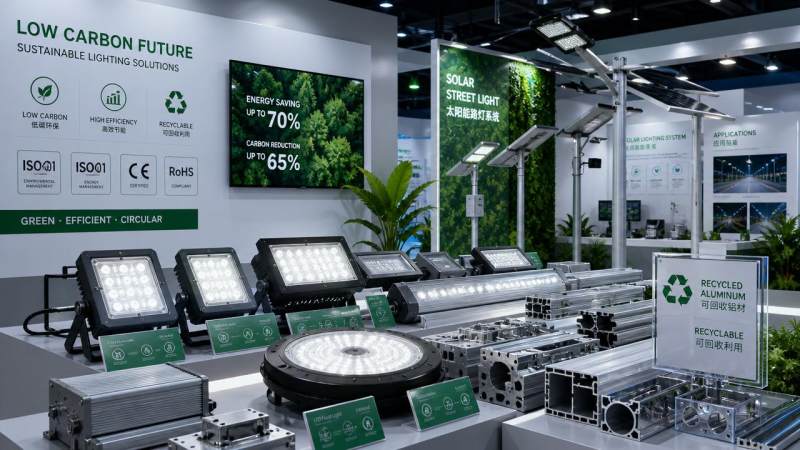
At the World Outdoor & OOH Expo (WOO) in London on June 10, 2026, Absen and UL Solutions introduced a new voluntary certification framework for outdoor LED luminaires that brings luminous efficacy, carbon footprint, and recyclability into the same assessment structure. For suppliers, buyers, certification participants, and project delivery teams in outdoor advertising lighting and adjacent Solar Lighting / Industrial Lights applications, the development is worth close attention because it signals that low-carbon performance is moving closer to procurement screening rather than remaining only a product marketing claim.
A new certification reference enters the procurement conversation
According to the information provided, Absen and UL Solutions released the Outdoor LED Luminaires Low-Carbon Performance Framework at the WOO London event that opened on June 10, 2026. The framework places three indicators into a global voluntary certification system for outdoor advertising lighting in cross-over Solar Lighting / Industrial Lights scenarios: luminous efficacy (lm/W), carbon footprint (kgCO₂e/kWh), and recyclability of at least 85%.
The same information states that the framework has received preliminary acceptance from the UK BEIS and Canada's NRCan. It is also stated that the framework is expected to become a prerequisite for G7 government procurement starting in 2027.
Where the pressure points may appear first
Technical suppliers may face earlier document alignment
From an industry perspective, manufacturers and exporters involved in outdoor LED luminaires may be among the first to feel the practical effect. If procurement teams and certification bodies begin referencing this framework, the impact is likely to show up in product specification sheets, compliance submissions, technical bid alignment, and supporting lifecycle-related documentation rather than only in product marketing materials.
Buyers may add low-carbon criteria before final rule detail is fully settled
Procurement entities, especially those linked to public-sector or government-influenced projects, may need to review how they define product eligibility. Analysis shows that when a voluntary framework is described as a future procurement prerequisite, buyers may start adjusting tender language, supplier screening logic, and qualification checklists in advance, even before all execution details are fully visible.
Certification and testing participants may see broader review scopes
Companies involved in certification preparation, conformity review, and technical testing should pay attention to the combined treatment of energy efficiency, carbon metrics, and recyclability. What deserves closer attention is that the compliance focus may no longer be limited to conventional performance testing alone; it may expand toward evidence packages that connect design, material recovery potential, and environmental performance claims.
Delivery and after-sales teams may need stronger traceability support
For project delivery, after-sales, and quality traceability functions, the likely effect is less about immediate field operation changes and more about record consistency. If low-carbon criteria become embedded in procurement and certification workflows, downstream teams may need to support documentation continuity across shipment, installation, maintenance, and product replacement discussions.
What companies should watch now
Prepare certification files around the three disclosed metrics
Analysis shows that companies with exposure to outdoor advertising lighting and adjacent application categories should first check whether their current technical files can clearly present luminous efficacy, carbon footprint, and recyclability information in a form usable for certification review or bid submission.
Monitor how public procurement language starts to change
Because the provided information says the framework is expected to become a G7 government procurement prerequisite from 2027, companies should closely watch future procurement wording, qualification clauses, and any official clarification on how the framework is cited in tender documents. At this stage, it is more appropriate to treat this as a developing execution signal rather than a fully detailed operating rule.
Review supplier qualification and component traceability
Observably, any framework that combines performance and recyclability can affect upstream supplier coordination. Companies should pay attention to whether supplier qualifications, component declarations, and material-related records are sufficient to support future compliance review, especially where recyclability claims may require consistent substantiation.
Reassess export timing and bid readiness for affected markets
Export-oriented businesses and project teams should examine whether product readiness, supporting reports, and internal approval cycles are matched to possible changes in qualification timing. The key practical issue is not to assume immediate mandatory enforcement, but to avoid entering bids or delivery commitments without checking whether low-carbon certification expectations have begun to influence buyer requirements.
Why this looks more like an execution signal than a finished rulebook
Analysis shows that this development carries more weight than a routine product announcement because it links a voluntary framework to preliminary acceptance by named public bodies and to a stated 2027 procurement expectation. At the same time, the current information does not provide full execution detail, formal implementation text, or final procurement wording. It is therefore more appropriate to understand this as a strong signal of rule direction and procurement conditioning, while continuing to watch for finer points in certification interpretation, government purchasing practice, and market adoption.
How the market is likely to read this stage
The immediate significance of the event is that low-carbon evaluation in outdoor LED lighting is being framed in a more structured and procurement-relevant way, especially where outdoor advertising lighting overlaps with Solar Lighting and Industrial Lights scenarios. A cautious reading is still necessary: the event points to a meaningful shift in compliance expectations, but the market should treat it as an emerging procurement and certification reference that requires continued verification as official language, tender practice, and industry response become clearer.
Basis of this article and what still needs verification
This article is based on the user-provided news title, event date, and event summary. For developments of this kind, relevant source categories typically include official announcements, releases from regulatory bodies, trade or procurement authorities, industry association materials, standard-setting documents, and reporting by authoritative industry media.
No specific official source link was provided in the input, so the exact official documentation path still requires follow-up verification. What still needs continued observation includes later policy detail, certification execution language, changes in tender documents, market feedback, and how companies implement related compliance and delivery preparations in practice.
The VitalSync Intelligence Brief
Receive daily deep-dives into MedTech innovations and regulatory shifts.