
Security
Industrial Security Intelligence: Cutting Response Delays
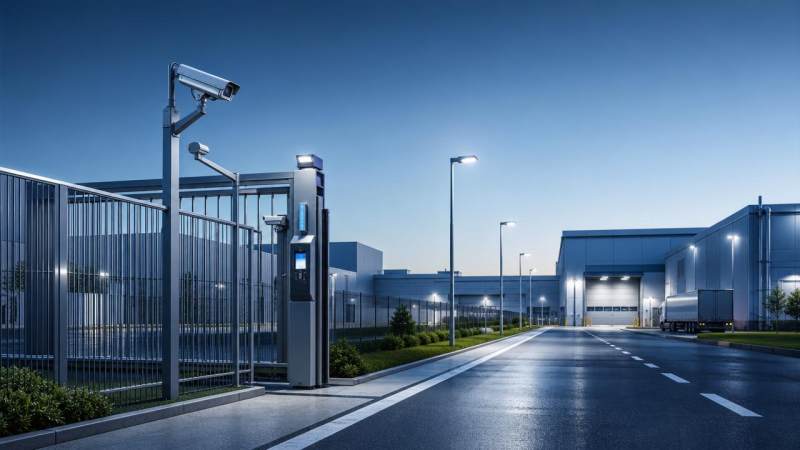
Industrial security intelligence is becoming essential for operators who must respond faster to evolving risks across facilities, infrastructure, and public environments. As digital upgrades reshape safety standards worldwide, GSIM helps users cut response delays with actionable insights, regulatory context, and forward-looking analysis that connects physical security assurance with optical environment optimization.
For operators, the challenge is rarely a lack of devices alone. In many sites, cameras, access points, lighting systems, alarms, and reporting tools already exist, yet response still slows down because information is fragmented across 3 to 7 systems, escalation rules are inconsistent, and local teams lack a clear view of legal or technical changes.
That is where industrial security intelligence becomes practical rather than theoretical. It turns raw events into prioritized action, links risk signals with operating conditions, and gives frontline users a structured way to decide what must be checked in 30 seconds, what can wait 30 minutes, and what requires strategic follow-up over 30 days.
GSIM supports this shift by functioning as both a knowledge platform and a decision-support layer. Its Strategic Intelligence Center connects policy interpretation, optical technology evolution, and commercial procurement insight, helping users reduce uncertainty in daily operations while preparing for the 2026 wave of digital infrastructure and urban safety upgrades.
Why Industrial Security Intelligence Matters in Daily Operations
In operational environments, delay is often caused by four practical gaps: slow threat recognition, poor visual conditions, unclear compliance obligations, and weak coordination between teams. Industrial security intelligence addresses all four by combining incident awareness, optical environment analysis, regulatory updates, and response logic into one usable framework.
For an operator responsible for a plant gate, logistics yard, municipal corridor, or public venue, even a 2-minute delay can change the scale of an incident. A blocked camera angle, insufficient illumination at 15 to 30 lux, or missed change in local surveillance rules can reduce evidence quality and slow intervention.
The Shift from Monitoring to Guided Response
Traditional monitoring asks users to watch multiple screens and react after something looks wrong. Industrial security intelligence shifts the model toward guided response. Instead of treating every alert equally, it ranks events by severity, operational context, and probable impact, which is especially important when one operator may oversee 50 to 300 endpoints.
This guided model improves action speed because users no longer spend the first 5 to 10 minutes deciding where to look. They receive context: whether the issue relates to perimeter breach, lighting failure, camera occlusion, unauthorized after-hours movement, or a compliance-sensitive recording zone.
Core operator benefits
- Shorter triage time, often reduced from several manual checks to 3 structured verification steps.
- Better visibility in mixed environments such as warehouses, tunnels, substations, and public access areas.
- Clearer escalation paths based on incident severity levels 1, 2, and 3.
- Improved alignment between on-site action and changing legal requirements for surveillance and data handling.
The table below shows how industrial security intelligence changes common operational bottlenecks across mixed-use security environments.
The key takeaway is that industrial security intelligence does not replace hardware; it makes hardware more actionable. For operators, that means fewer blind spots, fewer repeated checks, and a better chance of making the right move on the first pass.
How GSIM Cuts Response Delays Across Security and Optical Systems
GSIM is built for an environment where physical security and optical performance can no longer be managed separately. In modern infrastructure, camera placement, lighting uniformity, compliance interpretation, and procurement timing all influence the same result: how quickly and accurately an operator can detect, verify, and respond.
Its Strategic Intelligence Center acts as a digital lighthouse by consolidating three practical streams. Latest Sector News keeps users aware of fast-changing policy and market shifts. Evolutionary Trends tracks technologies such as AI vision and Visible Light Communication. Commercial Insights helps teams understand procurement patterns for smart construction sites, utilities, transport nodes, and public safety programs.
Three intelligence layers operators can use immediately
- Regulatory interpretation for electronic surveillance, retention logic, and site-specific notice requirements.
- Technology trend analysis covering AI-assisted visual detection, smart illumination, and VLC-related deployment signals.
- Commercial procurement insight to compare delivery cycles, integration demands, and specification priorities before orders are placed.
These layers are valuable because operators often receive equipment after purchasing decisions are already made. With industrial security intelligence available earlier, users can influence configuration choices before deployment, not only after performance problems emerge during live operation.
Where delay reduction usually happens first
In most mixed-industry sites, the first measurable gains appear in three zones: event triage, visual verification, and handoff accuracy. Triage time may shrink from 8 minutes to 2 or 3 when alerts are contextualized. Visual verification improves when illumination levels are corrected across key lanes, gates, and blind corners. Handoff accuracy rises when teams share a common response matrix.
GSIM is especially relevant during upgrade planning cycles of 2 to 4 quarters. That timeline is long enough for policy shifts, vendor changes, and technical standards to move, which means static planning documents can become outdated before full rollout. Intelligence-led review reduces that risk.
Selecting the Right Industrial Security Intelligence Framework
Not every intelligence source is equally useful for frontline teams. Operators need practical guidance that translates into daily checks, escalation timing, camera-lighting coordination, and procurement feedback. A usable framework should help answer five questions within minutes, not days.
Five selection criteria for operators and site teams
- Does it connect policy updates with real operating procedures?
- Does it include optical environment considerations such as glare, lux range, uniformity, and visibility zones?
- Can it support both immediate incidents and longer 6 to 12 month upgrade planning?
- Does it help compare solutions using measurable criteria rather than broad claims?
- Can supervisors, operators, and procurement staff all use the same information base?
The comparison table below outlines what users should look for when evaluating an industrial security intelligence resource or platform.
A strong industrial security intelligence platform should support decisions before, during, and after deployment. If it cannot guide incident handling, validate environmental conditions, and inform purchasing logic, operators will still face fragmented response chains.
Common selection mistakes
One common mistake is evaluating only camera resolution or alarm count while ignoring site visibility quality. Another is focusing on compliance only after installation. A third is treating lighting as a facility issue rather than a security performance factor. In practice, these gaps often add 10% to 25% more review time during incidents.
Implementation Steps for Faster and More Reliable Response
Adopting industrial security intelligence does not require a full system replacement. In many facilities, progress starts with a 5-step implementation sequence that uses existing infrastructure, identifies delay points, and improves operational rules before major capital investment is considered.
A practical 5-step rollout model
- Map the top 10 incident types from the last 90 to 180 days.
- Measure current triage, verification, and escalation time for each type.
- Check optical conditions in priority zones, including glare, shadow, backlight, and low-lux periods.
- Align surveillance actions with current regional compliance rules.
- Build a response matrix with 3 severity levels and named decision owners.
This process creates a baseline. Without a baseline, teams often assume delays come from staff performance when the real issue is poor visual conditions, incomplete procedures, or outdated policy assumptions. Industrial security intelligence helps distinguish these causes.
Recommended checkpoints during rollout
- Review at least 3 shift periods: daytime, nighttime, and low-traffic transition hours.
- Inspect 6 key fields: camera angle, illumination range, recording quality, alert thresholds, signage status, and escalation contacts.
- Revalidate settings every 30 to 90 days in dynamic environments such as construction sites or transit corridors.
For many users, the biggest gain comes from linking visual evidence quality with workflow rules. A smart alert has little value if the image is unusable, and a clear image has limited value if no one knows whether to escalate in 1 minute or 15. Industrial security intelligence works best when both conditions are solved together.
Future Trends Operators Should Watch Through 2026
As infrastructure upgrades accelerate, industrial security intelligence will expand beyond incident response into predictive planning. Operators will increasingly work in environments where AI vision, smart illumination, and communication-enabled lighting systems influence both detection quality and site management efficiency.
One notable development is the convergence of AI vision and VLC-related environments. While deployment maturity varies by region and project type, the trend matters because lighting systems are becoming more than passive fixtures. They can support visibility design, sensor coordination, and future-ready communication logic in the same space.
What this means for operators
Operators will need broader literacy across security, illumination, and compliance. Over the next 12 to 36 months, the most effective teams are likely to be those that can interpret technical changes early, participate in specification reviews, and translate strategic intelligence into shift-level action.
This is why GSIM’s role as a standard-setter and decision-support provider matters. It helps users move from reactive monitoring to informed operational control, especially in sectors affected by smart city programs, public safety modernization, industrial digitization, and complex procurement cycles.
Priority watchlist for the next upgrade cycle
- Changes in electronic surveillance compliance across cross-border or multi-site operations.
- Integration standards for AI-assisted analytics and evidence review workflows.
- Lighting design criteria that support both human visibility and machine vision performance.
- Procurement signals for smart construction sites, utilities, transportation, and civic safety projects.
Industrial security intelligence is no longer only for senior planners or consultants. It is becoming an operational necessity for users who need to act faster, document better, and adapt to technical and regulatory change without waiting for a major incident to expose system weakness.
With GSIM, operators gain a clearer bridge between global security policy, optical environment optimization, and real-world response execution. If your team is preparing for a facility upgrade, refining surveillance workflows, or evaluating how to cut response delays across mixed environments, now is the right time to explore a more intelligence-driven model. Contact us to get a tailored solution, discuss operational priorities, and learn more about practical pathways to faster, more reliable security response.
- physical security assurance
- optical environment optimization
- digital infrastructure
- urban safety upgrades
- decision-support provider
- strategic intelligence center
- optical technology
- electronic surveillance
- AI vision
- Visible Light Communication
- smart construction sites
- optical systems
- security intelligence
- digital lighthouse
- sector news
- evolutionary trends
- commercial insights
- industrial security
- global security
- security intelligence platform
- industrial security intelligence
The VitalSync Intelligence Brief
Receive daily deep-dives into MedTech innovations and regulatory shifts.