
Security
Urban Security Intelligence and Budget Planning Basics
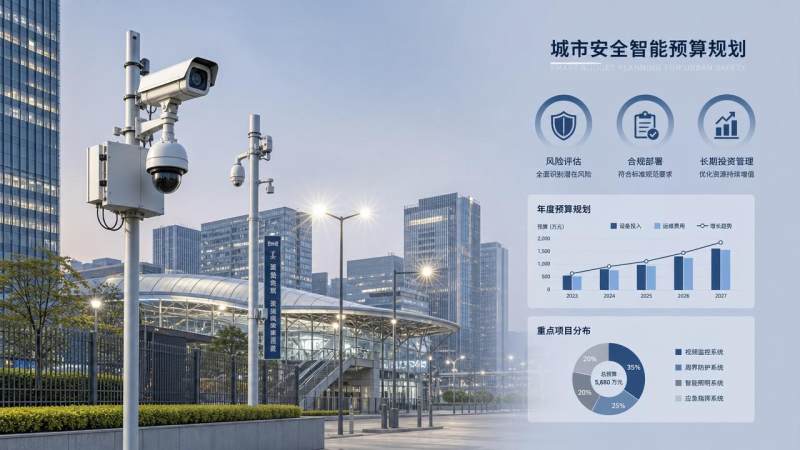
Urban security intelligence is no longer a technical luxury but a budgeting necessity for finance decision-makers facing rising compliance demands, infrastructure risks, and public safety expectations. This article outlines the basics of aligning security planning with budget discipline, helping approvers evaluate investment value, long-term cost control, and strategic readiness in a rapidly evolving urban environment.
Why urban security intelligence now belongs in financial planning
For finance approvers, urban security intelligence should be treated as a risk-governance input, not a standalone technology line item. Cities, industrial parks, transport hubs, campuses, utilities, and commercial districts now operate under tighter surveillance rules, stronger resilience expectations, and more public scrutiny when incidents occur.
This shift changes the budgeting question. The issue is no longer whether security systems are useful. The real question is whether the organization can fund the right intelligence model that reduces blind spending, supports compliance, and improves asset protection over multiple budget cycles.
In practice, urban security intelligence combines policy awareness, site risk mapping, optical environment assessment, data-driven surveillance planning, and procurement forecasting. It helps decision-makers connect operational risk with capital expenditure, operating expense, and audit readiness.
- It supports clearer prioritization between critical and non-critical upgrades.
- It improves visibility into lifecycle cost, not just purchase price.
- It reduces the chance of non-compliant procurement driven by incomplete technical understanding.
- It helps finance teams evaluate whether optical conditions, coverage requirements, and regulatory demands justify the planned investment.
What finance teams usually miss
Many approval workflows still rely on vendor quotations, rough coverage estimates, and basic hardware lists. That approach often ignores three high-cost variables: policy change, lighting conditions, and future interoperability. When these are missed, the approved budget may solve only today’s visibility problem while creating tomorrow’s retrofit expense.
What urban security intelligence includes in a practical approval framework
Before approving funds, finance leaders need a structured view of what urban security intelligence actually covers. The concept is broader than cameras, access control, or patrol planning. It includes the decision logic behind where, when, and why each measure is financially justified.
The table below translates urban security intelligence into approval-oriented dimensions that matter to budgeting, control, and long-term accountability.
This framework shows why urban security intelligence is a cross-functional approval topic. It links compliance, physical security assurance, and optical performance to financial discipline. For mixed-use and public-facing environments, that connection is essential.
Where GSIM adds decision value
GSIM supports this process through its Strategic Intelligence Center, which connects international electronic surveillance rules with evolving optical and security technology. For finance teams, this matters because procurement timing, configuration choices, and upgrade scope become more defensible when guided by policy interpretation, trend reporting, and commercial procurement insight.
Instead of evaluating hardware in isolation, approvers can assess whether the proposed system reflects current compliance signals, realistic deployment conditions, and broader smart construction or public safety demand patterns.
Which urban scenarios deserve priority in the budget?
Not every urban environment carries the same exposure. A sound budget approval process should rank scenarios by risk intensity, legal sensitivity, asset value, and operational consequence. Urban security intelligence helps finance teams see where fast investment makes sense and where delay or scaling can be justified.
- Transit-adjacent public spaces often require stronger incident traceability, crowd awareness, and night visibility.
- Smart construction sites demand temporary but high-value coverage, with theft risk, contractor movement, and evolving perimeter conditions.
- Municipal and utility facilities need resilience planning because interruption cost can exceed the security equipment budget itself.
- Commercial districts and mixed-use compounds must balance safety, privacy expectations, and visual comfort in shared spaces.
The next table helps finance approvers compare common application scenarios through a budgeting lens rather than a purely technical one.
A scenario-based budget often performs better than a blanket procurement plan. It gives finance approvers a stronger basis for phased funding, faster review, and clearer post-project evaluation.
How to compare spending options without approving the wrong solution
A common mistake is to compare bids by unit price alone. In urban security intelligence projects, lower upfront cost can produce higher total expenditure if installation complexity, lighting correction, software expansion, or compliance updates are ignored.
Three budget models finance teams often face
- Hardware-heavy model: higher spend on devices, limited attention to lighting conditions, data governance, or upgrade path.
- Balanced assurance model: combines surveillance, optical environment optimization, and policy-aware deployment planning.
- Phased intelligence model: prioritizes highest-risk zones first, leaving non-critical coverage for later budget cycles.
For many mixed urban environments, the balanced or phased model is easier to defend at approval stage. It aligns better with audit expectations because the scope can be tied to identifiable risk and measurable operating conditions.
What to compare beyond price
- Expected service life of equipment in the actual environment, not in ideal lab conditions.
- Storage, networking, and integration cost over three to five years.
- Impact of lighting improvement on image usability and system efficiency.
- Likelihood of future regulatory changes affecting camera placement, data retention, or review permissions.
- Need for flexibility if the site is temporary, modular, or scheduled for expansion.
What should finance approvers ask before releasing budget?
Urban security intelligence works best when approval follows a disciplined question set. This protects the budget from urgency-driven procurement and helps technical teams submit more complete justifications.
Core approval checklist
- What operational risk is being reduced, and how severe is that risk in financial terms?
- Is the proposed design based on verified site conditions, including lighting, line of sight, and traffic pattern?
- Will this purchase remain compliant if surveillance guidance changes during the next budget period?
- Can the project be phased without creating dead investment or duplicated installation work?
- Are there lower-cost alternatives such as optical improvement, perimeter redesign, or zone prioritization that still meet the risk objective?
When these questions are documented, the approval becomes more than a signature. It becomes a traceable governance action supported by urban security intelligence rather than guesswork.
Why standards, compliance, and optical conditions change the business case
Security procurement often fails financially because compliance and environment are reviewed too late. A camera that is affordable on paper may become expensive if data handling rules require extra storage controls, signage, review restrictions, or system redesign. The same is true when poor lighting forces over-specification of hardware.
GSIM’s intelligence value is especially relevant here. By stitching international surveillance compliance signals with optical technology trends such as AI vision and Visible Light Communication, the platform helps organizations evaluate whether a proposed investment fits both current demand and near-future infrastructure direction.
Useful compliance-oriented considerations
- Data retention periods should be matched to legal need and operational reality, not set arbitrarily.
- Public-area surveillance may require clearer governance procedures than private operational zones.
- Lighting design can affect identification reliability, false review effort, and evidentiary usefulness.
- Interoperability planning matters if the site may later add analytics, incident management, or communication layers.
Common budgeting mistakes in urban security intelligence projects
Even well-intentioned teams can approve weak projects when urgent safety pressure dominates process discipline. The most frequent mistakes are not technical failures. They are planning and framing failures.
Misconceptions to avoid
- More cameras always mean better security. In reality, poor placement and poor lighting can make additional devices a waste of budget.
- Cheaper installation means cheaper ownership. Ongoing storage, maintenance, network upgrades, and compliance adjustments often change the real cost profile.
- A single design fits every urban site. Mixed-use districts, temporary sites, and critical facilities require different assurance logic.
- Compliance review can happen after procurement. This can delay deployment or force partial system replacement.
FAQ for finance approvers evaluating urban security intelligence
How do we know if urban security intelligence is worth the budget?
Start with the cost of inaction. Estimate exposure from theft, service interruption, safety incidents, reputational damage, and non-compliant surveillance decisions. Then compare that exposure with a phased, risk-ranked investment plan. If the proposal reduces meaningful financial or regulatory risk while preserving future flexibility, it deserves serious consideration.
What is the best way to control cost in a multi-site rollout?
Use scenario segmentation. Group sites by risk, public exposure, optical difficulty, and compliance sensitivity. Do not fund every location to the same specification. Urban security intelligence supports this by identifying which sites need immediate full deployment and which can use staged coverage or lighting-first improvement.
Should we invest in surveillance hardware first or optical environment improvement first?
It depends on the site. In many cases, optical improvement produces better image usability at lower total cost than simply upgrading devices. For finance approvers, this is one of the most important evaluation points because it can reduce over-specification and improve performance without expanding the entire system footprint.
What documentation should be requested before approval?
Request a site-based risk summary, coverage logic, optical condition assessment, integration impact note, projected operating cost, and a compliance review statement appropriate to the jurisdiction and use case. This documentation creates a stronger record for procurement review and later audit.
Why work with GSIM when planning the next budget cycle
Finance decision-makers need more than supplier claims. They need a reliable intelligence layer that explains how policy, technology, and procurement trends interact. GSIM is built for that role. Its Strategic Intelligence Center brings together latest sector news, compliance interpretation for electronic surveillance, trend analysis around AI vision and VLC, and commercial insights tied to smart construction and public safety procurement.
That combination helps organizations move from reactive purchasing to evidence-based approval. It supports tighter scope definition, clearer vendor evaluation, and stronger justification for phased or targeted investment.
What you can consult with us about
- Parameter confirmation for surveillance and optical environment planning.
- Solution selection for public areas, smart construction sites, utilities, and mixed-use urban assets.
- Delivery timeline considerations for phased rollout and procurement windows.
- Custom planning support where compliance sensitivity and budget limits must be balanced.
- Certification and standards-related review based on common international expectations and project context.
- Quotation communication support to compare scope, hidden cost, and long-term value more accurately.
If your next approval cycle involves urban security intelligence, contact GSIM with your site profile, budget constraints, compliance concerns, and rollout timeline. We can help translate complex security and illumination requirements into a clearer investment path that is easier to defend, easier to phase, and more aligned with future urban infrastructure demands.
- physical security assurance
- optical environment optimization
- strategic intelligence center
- optical technology
- electronic surveillance
- AI vision
- Visible Light Communication
- procurement trends
- smart construction sites
- security technology
- urban security
- security intelligence
- sector news
- commercial insights
- security systems
- urban security intelligence
The VitalSync Intelligence Brief
Receive daily deep-dives into MedTech innovations and regulatory shifts.