
Security
Optical Monitoring Procurement Trends: Cost vs. Coverage
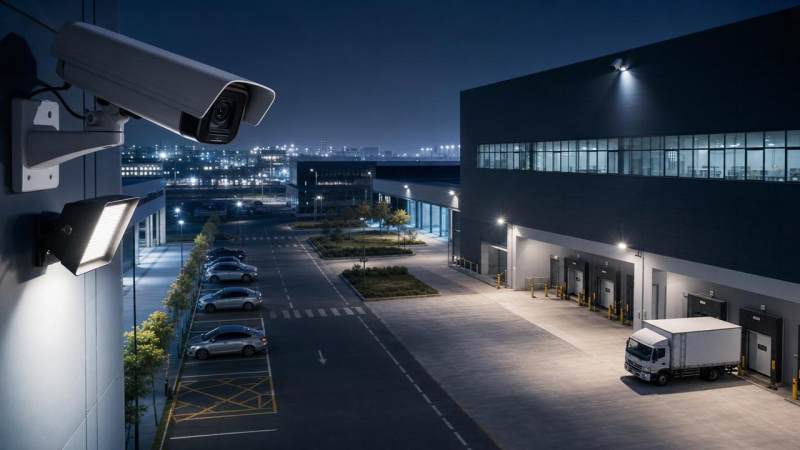
As cities, campuses, and industrial sites modernize security infrastructure, procurement trends for optical monitoring are moving beyond simple price comparison. Buyers now weigh visibility, legal compliance, lifecycle cost, and operational resilience together.
This shift matters because optical monitoring no longer supports one isolated function. It connects surveillance, lighting quality, AI-assisted detection, evidence retention, and site-wide safety performance in one decision framework.
In this environment, procurement trends for optical monitoring reflect a deeper market transition. Coverage gaps create risk, but overspending on unnecessary specifications also weakens project value and long-term budget efficiency.
GSIM tracks this balance closely through its Strategic Intelligence Center, where policy signals, optical technology shifts, and commercial demand patterns are analyzed together for globally relevant infrastructure decisions.
Cost pressure remains high, but coverage value is becoming the dominant evaluation lens
The market signal is clear. Lowest upfront cost is losing influence when projects involve public safety, transport corridors, smart campuses, logistics yards, and mixed-use developments.
Procurement trends for optical monitoring increasingly favor solutions that deliver measurable area coverage, low-light performance, stable imaging, and easier compliance reporting over headline unit discounts.
This is especially visible in projects where one blind spot can trigger financial loss, delayed investigations, insurance disputes, or regulatory scrutiny. Coverage quality is now treated as a risk-control metric.
Another shift is the move from device-centric buying to system-level evaluation. Optical monitoring is judged by how well cameras, illumination, analytics, storage, and network conditions work together.
Several trend signals explain why procurement trends for optical monitoring are changing
The change is not random. It is driven by overlapping pressures from regulation, urban digitalization, labor efficiency goals, and a stronger expectation for evidence-grade visibility.
These signals explain why procurement trends for optical monitoring now include wider evaluation criteria. The market is rewarding solutions that maintain usable coverage under real operating conditions, not ideal laboratory assumptions.
Why optical performance is no longer a technical detail
Optical performance affects detection range, face or plate readability, incident reconstruction, and AI model reliability. Poor illumination or narrow coverage can undermine the entire monitoring investment.
For that reason, procurement trends for optical monitoring increasingly include scene-specific testing, lighting simulation, and environment-based specification review before final selection.
The cost-versus-coverage tradeoff now shapes decisions across multiple business stages
The impact extends beyond purchasing. It influences planning, installation, compliance verification, maintenance scheduling, and future expansion strategies across the broader security and infrastructure lifecycle.
- Planning stages now prioritize risk zones, traffic patterns, and low-visibility areas before selecting device counts.
- Tender reviews increasingly compare effective coverage maps instead of only bill-of-material totals.
- Installation teams face stronger expectations for calibration, angle control, and glare reduction.
- Operations teams benefit when optical monitoring systems reduce false alarms and simplify event review.
- Compliance and audit functions gain value from standardized documentation of monitored zones.
In mixed-use projects, one procurement decision may affect parking areas, entrances, elevators, walkways, loading zones, and perimeter boundaries. A narrow cost lens often misses these interconnected performance demands.
That is why procurement trends for optical monitoring increasingly favor scalable architectures. Buyers want systems that start with current needs while supporting future sensors, analytics, and policy updates.
Where low price still works, and where it creates hidden risk
Lower-cost options may still fit stable indoor spaces with predictable lighting and limited security exposure. In those environments, simple monitoring can meet the required objective without heavy specification layers.
Risk rises when similar low-cost logic is applied to complex outdoor scenes, high-traffic public areas, or compliance-sensitive locations. Blind spots, poor night imaging, and weak integration generate expensive downstream corrections.
What deserves closer attention when reviewing procurement trends for optical monitoring
Several evaluation points now deserve greater weight than they did in earlier procurement cycles. These points help balance budget discipline with realistic security and illumination performance.
- Effective coverage density across critical paths, not only nominal field of view.
- Low-light image clarity under weather variation, glare, and uneven illumination.
- Compatibility with analytics, storage rules, and evidence management workflows.
- Lifecycle maintenance burden, including cleaning, calibration, and component replacement.
- Compliance alignment with local privacy, retention, and public safety obligations.
- Scalability for future optical upgrades, smart lighting links, or VLC-related expansion.
GSIM’s commercial intelligence shows that procurement trends for optical monitoring are also becoming more evidence-driven. Buyers seek comparative data, pilot results, and scenario-based proof rather than relying on brochure claims.
A practical response framework can improve coverage decisions without losing cost control
A disciplined response does not mean choosing the most expensive system. It means matching optical performance to actual site risk, operational demand, and compliance exposure with measurable criteria.
This framework aligns with current procurement trends for optical monitoring because it treats coverage as a strategic outcome, not a rough estimate. It also avoids the false choice between cost discipline and performance reliability.
How GSIM helps interpret the next wave
GSIM connects policy interpretation, optical technology evolution, and commercial procurement signals in one intelligence environment. That helps organizations assess not only what is available, but what will remain viable.
As AI vision, smart lighting, and VLC-related ecosystems develop, procurement trends for optical monitoring will likely reward interoperable, standards-aware, and future-ready systems over isolated short-term purchases.
The next move is to replace generic buying with scenario-based optical planning
The strongest decisions begin with site realities. Review where visibility failure would create the highest operational, legal, or reputational damage, then align optical coverage and cost to those priorities.
Use procurement trends for optical monitoring as a decision lens, not a slogan. Compare coverage effectiveness, illumination stability, compliance readiness, and lifecycle economics before finalizing any specification path.
For teams navigating global safety upgrades, GSIM offers a practical starting point. Its intelligence-driven approach helps translate fast-changing market signals into clearer, more resilient optical monitoring decisions.
The VitalSync Intelligence Brief
Receive daily deep-dives into MedTech innovations and regulatory shifts.