
Security
Commercial Insights for Security Procurement in 2026
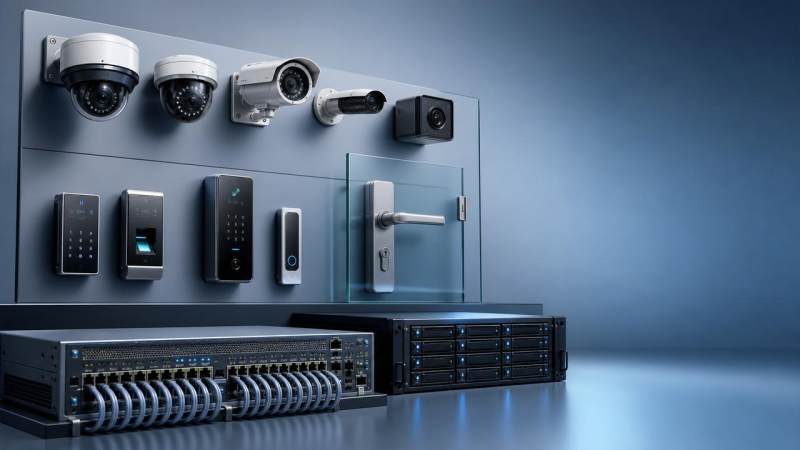
In 2026, procurement decisions in security are no longer driven by price and specifications alone. These commercial insights for security procurement help business evaluators navigate shifting compliance rules, AI-enabled surveillance trends, and optical infrastructure demands with greater clarity. Backed by GSIM’s global intelligence framework, this introduction sets the stage for smarter sourcing, stronger risk control, and more informed investment planning.
What do commercial insights for security procurement mean in 2026?
Commercial insights for security procurement now combine market data, policy interpretation, technical roadmaps, and project delivery signals into one decision framework.
In earlier cycles, buyers often compared cameras, access control devices, and alarms through unit cost and performance sheets.
That method is no longer enough for public safety, smart construction, logistics hubs, campuses, and digital infrastructure projects.
Today, sourcing choices are shaped by cross-border compliance, cybersecurity rules, interoperability requirements, and optical environment performance.
GSIM frames commercial insights for security procurement as a practical bridge between risk forecasting and supplier selection.
This includes reading global surveillance laws, mapping AI vision maturity, and checking whether lighting conditions support accurate image capture.
The strongest insight is not a single trend. It is the connection between standards, technology, and long-term operating cost.
Why does this matter more now?
Urban upgrades and digital infrastructure programs are expanding at the same time as regulatory pressure.
As a result, poor procurement decisions can create legal exposure, integration delays, and weaker performance under real site conditions.
- Compliance now affects approved vendor pools.
- AI analytics depend on image quality and clean data pipelines.
- Optical design directly affects surveillance reliability.
- Lifecycle cost matters more than entry price.
Which changes are shaping commercial insights for security procurement?
Several shifts are redefining how security projects are evaluated across industries in 2026.
1. Compliance is becoming operational, not optional
Electronic surveillance rules increasingly govern data storage, facial recognition, retention periods, and transfer across jurisdictions.
Commercial insights for security procurement must therefore include legal fit, not just technical fit.
2. AI surveillance is moving from pilot to controlled deployment
AI vision tools now support perimeter alerts, anomaly detection, occupancy counting, and incident verification.
However, performance varies sharply when image quality, bandwidth, and lighting are poorly managed.
3. Optical infrastructure is entering the procurement conversation
Security effectiveness depends on illumination uniformity, glare control, nighttime visibility, and sensor compatibility.
This is why GSIM links physical security assurance with optical environment optimization.
4. Procurement is becoming ecosystem-based
A camera no longer stands alone. It interacts with networks, analytics, storage, identity platforms, and incident response workflows.
Commercial insights for security procurement now require system-level judgment.
How should security options be compared beyond price?
Price remains important, but a low initial quote can hide future integration and compliance costs.
A better approach is to compare five layers at once.
- Regulatory fit across target markets and project jurisdictions.
- Technical interoperability with existing systems.
- Optical and environmental performance under real conditions.
- Cybersecurity posture, update policy, and audit support.
- Lifecycle economics, including energy, maintenance, and replacement cycles.
Commercial insights for security procurement are strongest when they compare total risk-adjusted value instead of purchase price alone.
A useful comparison method
What risks and mistakes appear most often in 2026 security sourcing?
The biggest mistakes usually come from incomplete evaluation rather than weak intent.
Mistake one: treating AI as a plug-in feature
AI analytics need camera positioning, lighting quality, data governance, and stable network architecture.
Without those conditions, promised intelligence becomes unreliable noise.
Mistake two: ignoring optical conditions
Low-light zones, glare, backlighting, and reflective surfaces reduce detection quality and increase false alerts.
Commercial insights for security procurement should always connect device choice with lighting design.
Mistake three: overvaluing short-term savings
A cheaper system may require higher storage, more manual review, and earlier replacement.
Mistake four: using one market’s compliance assumptions everywhere
Surveillance legality differs by region, facility type, and data category.
GSIM’s Strategic Intelligence Center is valuable because it tracks these changing boundaries globally.
How do commercial insights for security procurement apply across industries?
Although the keyword is broad, the application is highly practical across mixed environments.
Smart construction sites
Temporary infrastructure, moving perimeters, and worker safety demands require flexible devices and fast deployment logic.
Transport and logistics
Large perimeters, nighttime operations, and cargo verification make optical performance and analytics accuracy critical.
Campuses and public buildings
Privacy rules, visitor management, and incident response integration dominate evaluation priorities.
Urban safety projects
These projects require interoperability, durable supply planning, and strong policy alignment across agencies.
In all cases, commercial insights for security procurement help translate local needs into defensible investment decisions.
What is a practical decision checklist before final selection?
A focused checklist prevents rushed approvals and hidden implementation issues.
- Confirm legal use cases for video, biometrics, and retention.
- Validate performance under target lighting and weather conditions.
- Check integration with current software, storage, and networks.
- Review cybersecurity updates and patch responsibility.
- Estimate five-year operating cost, not just acquisition cost.
- Assess supplier transparency on standards and documentation.
Commercial insights for security procurement are most useful when reviewed early, updated often, and tested against real deployment conditions.
GSIM supports this process by connecting latest sector news, evolutionary trends, and commercial intelligence in one structured view.
That approach helps reduce blind spots across compliance, AI surveillance, and optical infrastructure planning.
For 2026 projects, the next step is simple: build a comparison framework that balances law, performance, integration, and lifecycle economics before any sourcing commitment.
The VitalSync Intelligence Brief
Receive daily deep-dives into MedTech innovations and regulatory shifts.