
Security
Optical Security Solutions: What Impacts Total Cost?
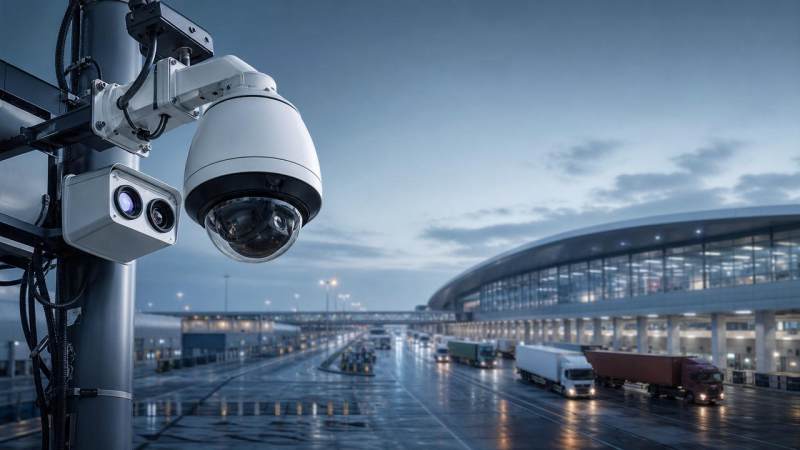
For distributors, agents, and channel partners, the real cost of optical security solutions is rarely defined by unit price alone. In today’s security market, project value is shaped by compliance pressure, optical accuracy, integration complexity, maintenance cycles, and supply chain uncertainty.
As cities digitize and infrastructure protection becomes more data-driven, optical security solutions are moving from isolated devices to connected assurance systems. That shift changes how budgets should be evaluated and how sourcing decisions should be judged.
GSIM tracks this transition through policy intelligence, optical technology analysis, and procurement insight. The result is clear: understanding total cost means understanding risk, performance, and long-term operational fit together.
Why total cost is becoming the real benchmark for optical security solutions
In the past, many projects compared optical security solutions mainly by upfront quotation. That approach is losing relevance. Security systems now operate inside stricter legal, digital, and environmental frameworks.
A camera, illuminator, optical sensor, or integrated surveillance node must deliver more than image capture. It must support evidentiary quality, low-light reliability, software compatibility, and acceptable lifecycle economics.
This is especially visible in smart construction, transport hubs, logistics parks, campuses, utilities, and public safety projects. In these environments, weak optical performance can trigger hidden expenses long after installation.
The strongest market signals are pointing to deeper cost layers
Several trend signals show why total investment in optical security solutions is rising in complexity rather than simply in price.
- Regulators are tightening rules on surveillance quality, storage, privacy, and data traceability.
- End users expect higher performance in low-light, glare, dust, fog, and mixed-weather environments.
- AI analytics require cleaner optical input, raising demands on lens quality and illumination control.
- Project owners increasingly compare lifecycle cost instead of just procurement cost.
- Cross-border sourcing now includes greater attention to certification validity and geopolitical supply risk.
These signals matter because each one adds a cost layer. Some raise hardware requirements. Others increase commissioning work, software adaptation, or long-term service obligations.
What actually drives the total cost of optical security solutions
The cost structure behind optical security solutions can be broken into several connected drivers. Looking at them together creates a more realistic financial picture.
1. Optical performance requirements
Higher resolution alone does not guarantee better results. Total cost often rises when projects need strong image quality under low light, backlight, motion blur, long distance, or wide dynamic range conditions.
Premium lenses, advanced coatings, precise infrared matching, and stable illumination modules improve output. They also increase component cost, calibration time, and replacement expectations.
2. Compliance and certification burden
Different markets may require CE, FCC, RoHS, NDAA-related review, local safety marks, cyber controls, or sector-specific validation. Non-compliance can delay customs clearance, project approval, or operational acceptance.
Verified compliance adds documentation, testing, audit preparation, and supplier management work. These costs are often hidden until late-stage procurement.
3. Integration with digital infrastructure
Modern optical security solutions must often connect with video management systems, AI engines, access control, alarms, cloud dashboards, and edge computing nodes.
If protocols are unstable or APIs are limited, integration costs rise quickly. Extra middleware, custom development, and prolonged testing can exceed the hardware discount gained at purchase.
4. Installation environment and site conditions
Dust, vibration, humidity, salt spray, thermal stress, and unstable power supply all change the cost profile of optical security solutions.
More rugged enclosures, thermal design, surge protection, and optical cleaning schedules are often needed. Site adaptation is a cost multiplier, not a minor detail.
5. Maintenance and lifecycle reliability
A cheaper device with higher failure rates may create larger service losses over three to five years. Truck rolls, downtime, warranty claims, and image degradation all affect margin.
For optical security solutions, lens contamination, illuminator decay, thermal aging, and firmware instability are common sources of hidden lifecycle cost.
6. Procurement and supply chain risk
Lead-time volatility, substitution risk, incomplete documentation, and post-sale support gaps can erase apparent savings. A lower invoice price may carry higher delivery and continuity risk.
Why these cost shifts matter across the security value chain
The rising complexity of optical security solutions affects more than hardware planning. It changes quotation methods, project scheduling, support design, and even market positioning.
Where compliance is strict, documentation quality becomes a commercial advantage. Where optical conditions are harsh, proven field reliability becomes more important than broad specification claims.
Integration-ready optical security solutions also create stronger downstream value. Better compatibility shortens deployment cycles and helps analytics systems perform as promised.
- Bid accuracy improves when optical and compliance assumptions are checked early.
- Warranty exposure falls when lifecycle reliability is measured before selection.
- Project delays decrease when software integration is tested before rollout.
- Channel competitiveness rises when total cost is explained with evidence.
The most important areas to monitor before comparing optical security solutions
Before comparing brands, models, or sourcing regions, several points deserve close attention. They often determine whether optical security solutions stay cost-efficient after deployment.
- Check image usability, not just resolution, under expected field conditions.
- Verify certification scope by destination market and application type.
- Review protocol compatibility with existing security and IT platforms.
- Estimate maintenance frequency for optics, housings, power, and firmware.
- Assess supply continuity for core components and replacement units.
- Request evidence from similar installations, not only lab specifications.
- Map expected ownership cost across three to five years.
A more practical way to judge future cost pressure
A useful evaluation model is to separate short-term price from long-term cost exposure. This helps identify which optical security solutions are cheap, and which are truly economical.
This framework is especially useful in a market shaped by AI vision, connected lighting, edge analytics, and visible light communication exploration. As systems become smarter, optical quality becomes more financially sensitive.
How to respond as the market for optical security solutions keeps evolving
The best response is not simply to spend more. It is to build better decision criteria around optical security solutions and align them with actual project risk.
- Define performance targets by real scene conditions, not brochure numbers.
- Create a compliance checklist for each destination market before quotation.
- Test integration assumptions early with software, storage, and analytics layers.
- Compare total ownership cost over several years, including service events.
- Use supplier intelligence to reduce sourcing and continuity risk.
GSIM’s intelligence model supports this shift by connecting security regulation, optical innovation, and procurement trends. That combination helps turn optical security solutions from a price debate into a strategic decision.
As global infrastructure upgrades accelerate, the winners will be those who understand where cost is created, where risk is hidden, and where long-term value can be protected.
If the next step is evaluating optical security solutions for a new market, a new site type, or a more demanding compliance environment, start with a total cost lens. It is the clearest way to protect margin and improve project outcomes.
The VitalSync Intelligence Brief
Receive daily deep-dives into MedTech innovations and regulatory shifts.