
Security
Critical Infrastructure Security: Upgrade or Maintain?
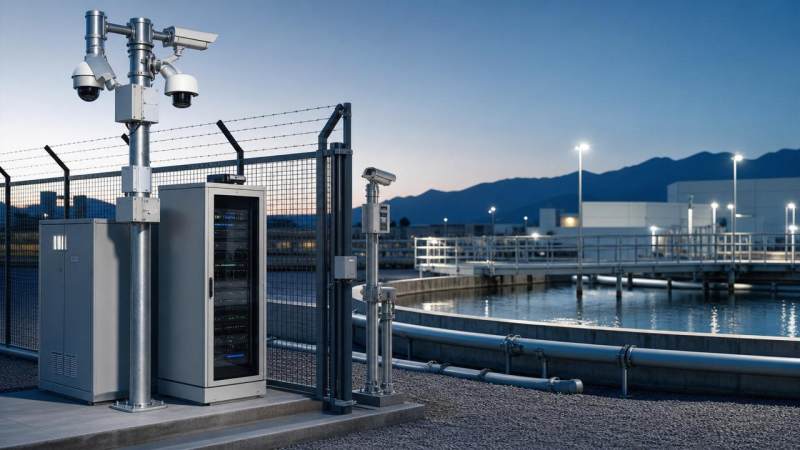
As governments, utilities, and operators face rising risk exposure, critical infrastructure security has become a strategic procurement priority rather than a routine maintenance issue. For buyers weighing whether to upgrade existing systems or extend current assets, the right decision depends on compliance demands, operational resilience, lifecycle cost, and future-readiness. This article explores how procurement teams can evaluate both paths with greater clarity and confidence.
For procurement teams, the challenge is rarely technical in isolation. It sits at the intersection of budget cycles, compliance deadlines, service continuity, and supply-chain timing. In sectors such as energy, transport, water, telecom, healthcare, and public facilities, a poor decision can lock in avoidable cost for 5 to 10 years.
That is why critical infrastructure security should be reviewed as a lifecycle strategy rather than a one-time purchase. Buyers must compare upgrade paths, maintenance programs, integration risks, and future expansion needs. Platforms such as GSIM help this process by connecting policy intelligence, optical technology trends, and procurement insight in one decision-support framework.
Why the Upgrade-or-Maintain Decision Matters More in 2026
The 2026 infrastructure modernization cycle is accelerating investment in surveillance, perimeter protection, command platforms, resilient lighting, and sensor-linked visibility systems. For buyers, critical infrastructure security is no longer only about guarding assets. It is also about meeting inspection requirements, reducing downtime, and improving incident response within 30 to 120 seconds.
In many estates, security equipment was deployed in phases across 3 to 8 years. As a result, camera generations, access controllers, network switches, backup power units, and outdoor illumination levels often do not match. This creates blind spots, inconsistent maintenance records, and integration friction when operators try to expand.
Four procurement pressures reshaping decision criteria
- Compliance windows are tightening, especially where video retention, privacy controls, and audit logs must be documented for 90 days, 180 days, or longer.
- Operational resilience targets are rising, with many buyers now requiring redundancy across power, storage, and communications layers.
- Legacy maintenance costs are increasing as spare parts become harder to source after year 5 or year 7 of deployment.
- Future-readiness is gaining weight as AI vision, low-light analytics, and Visible Light Communication integration move from pilot stage to active planning.
Where maintenance remains a valid strategy
Maintaining current assets still makes sense when the installed base remains compliant, failure rates are low, and coverage performance meets site risk levels. A well-structured maintenance plan can extend useful life by 12 to 36 months, especially for stable locations with low expansion pressure and predictable service environments.
The table below helps buyers compare conditions that usually support maintenance versus those that typically justify a full or partial upgrade.
A key takeaway is that maintenance is most effective when it preserves a stable, compliant environment. Once failures, policy changes, or expansion requirements start compounding, maintaining legacy assets often becomes a short-term patch rather than a value-driven procurement decision.
How Buyers Should Evaluate Critical Infrastructure Security Options
A disciplined procurement review should weigh at least 4 dimensions: compliance exposure, asset condition, operational impact, and total cost over time. In critical infrastructure security, the lowest upfront quote can become the highest 3-year cost if maintenance hours, downtime, and integration work are underestimated.
1. Compliance and governance fit
Start by mapping current systems against applicable surveillance rules, sector safety guidance, and internal governance requirements. Buyers should verify storage duration, access privilege controls, event logging, image usability, and maintenance traceability. A system that cannot generate defensible records within 24 hours of an incident may already be a compliance risk.
2. Performance under real operating conditions
Asset lists alone are not enough. Procurement teams should request field performance data from security, engineering, and operations staff. Review night visibility, detection latency, weather resilience, false alarm rates, and restoration times after power fluctuation. In outdoor sites, even a 15 to 20 percent illumination drop can affect image interpretation and incident response quality.
3. Lifecycle cost instead of repair-by-repair budgeting
Compare a 12-month maintenance spend with a 3-year and 5-year ownership view. Include labor hours, spare parts, emergency callouts, software support, firmware compatibility, testing cycles, and service interruptions. Many buyers discover that after the third major repair cluster, the economics of maintaining legacy infrastructure become progressively weaker.
4. Integration and future expansion
Critical infrastructure security systems increasingly need to connect with analytics, building management, command centers, and optical environment controls. Buyers should check whether existing platforms support open integration, segmented network architecture, and staged expansion. If adding 20 percent more coverage requires replacing the core platform, the installed base may be near its strategic limit.
A practical scoring model for procurement teams
The matrix below provides a simple way to rank maintain-versus-upgrade options during technical and commercial review. It is useful for cross-functional meetings where procurement, security, compliance, and facilities need a shared decision language.
This model does not replace engineering validation, but it helps procurement teams convert scattered technical observations into structured buying criteria. It also supports supplier discussions by clarifying which factors carry strategic weight rather than cosmetic preference.
When an Upgrade Delivers Better Security Value
An upgrade is usually justified when risk, cost, and complexity begin rising at the same time. In critical infrastructure security, this often appears as a mix of outdated recording capability, inconsistent perimeter visibility, unsupported software versions, and slow incident verification during low-light or adverse weather conditions.
Common indicators that the installed base is nearing end-of-value
- Critical components are beyond the manufacturer’s normal support cycle, often after 5 to 7 years.
- Spare-part sourcing regularly exceeds 30 days, creating risk for continuity planning.
- Image quality no longer supports identification needs at required distances or illumination levels.
- System changes require manual workarounds across multiple vendors or disconnected software layers.
- Maintenance spend is consuming budget that could fund phased modernization within 12 to 24 months.
Why phased upgrade often works better than full replacement
Not every site needs a total rip-and-replace project. Buyers can prioritize the highest-risk layers first: perimeter detection, critical zone surveillance, resilient storage, backup power, or low-light optical enhancement. A phased program across 2 or 3 stages reduces disruption, spreads capital expenditure, and preserves functioning assets where practical.
This is also where GSIM’s intelligence-led approach becomes useful. By linking global policy developments with commercial and optical technology trends, procurement teams can identify which upgrades are compliance-driven, which are resilience-driven, and which can be scheduled with less urgency.
When Maintenance Still Makes Commercial Sense
Maintenance should not be dismissed as a defensive choice. For many operators, it is the most sensible path when systems are structurally sound, risk conditions are stable, and expansion plans are limited. The objective is to preserve security performance while controlling cost and avoiding unnecessary capital deployment.
Best-fit scenarios for extended asset life
- Sites with low change frequency, such as mature substations, utility compounds, or remote pumping facilities.
- Systems that still meet target recording, access, and response requirements after recent inspection.
- Environments where a 12 to 18 month extension aligns with broader campus redevelopment plans.
- Installations supported by available spare stock, stable service partners, and documented preventive maintenance routines.
What a strong maintenance procurement package should include
Buyers should require more than break-fix labor. A credible maintenance scope usually includes quarterly inspections, firmware review, cleaning and calibration, illumination checks, backup testing, incident log review, and defined response times such as 4 hours for critical faults and 24 hours for non-critical issues.
It is also good practice to ask suppliers for an asset health report every 6 months. This creates a decision bridge between maintenance and eventual upgrade, helping procurement teams avoid sudden budget shocks and unsupported end-of-life events.
A 5-Step Procurement Framework for Critical Infrastructure Security
Whether the outcome is maintenance, upgrade, or a hybrid plan, procurement teams benefit from a structured review sequence. The following 5-step framework supports cross-functional alignment and reduces the chance of buying on price alone.
Step 1: Define mission-critical zones
Separate high-consequence areas from standard coverage areas. For example, control rooms, substations, reservoirs, transport nodes, and emergency access points may require higher resilience, stronger evidence quality, and shorter restoration thresholds than general perimeter zones.
Step 2: Audit the current installed base
Document device age, support status, firmware level, failure history, network dependencies, and optical coverage conditions. A practical audit often reviews 6 core items: hardware condition, software support, power resilience, storage health, visibility adequacy, and service documentation.
Step 3: Model 3 budget scenarios
Compare maintain-only, phased upgrade, and accelerated upgrade options. Evaluate each against 12-month cash flow, 3-year ownership cost, and operational risk reduction. This makes it easier to present a procurement case to finance and executive stakeholders.
Step 4: Validate supplier capability
Review technical support structure, lead times, service-level commitments, integration experience, and documentation quality. For critical infrastructure security, a supplier’s ability to support staged deployment and post-installation evidence trails is often as important as the equipment itself.
Step 5: Build a transition roadmap
Even maintenance decisions need a roadmap. Define what triggers the next review, such as two major failures in one quarter, a new compliance requirement, or a site expansion program. This converts procurement from reactive replacement into managed lifecycle planning.
Common Buying Mistakes and How to Avoid Them
Many procurement issues in critical infrastructure security come from misframing the decision. The question is not whether maintenance is cheaper today or whether an upgrade looks newer. The real question is which option preserves compliance, continuity, and value under realistic operating conditions.
Mistake 1: Using unit price as the main decision driver
A lower unit price can hide higher service dependence, shorter support windows, or costly compatibility work. Always compare full delivery scope, not just device cost.
Mistake 2: Ignoring optical environment quality
Security effectiveness depends on visibility as much as on sensors or recording. Poor lighting uniformity, unmanaged glare, and weak low-light performance can undermine otherwise acceptable system specifications.
Mistake 3: Delaying decisions until failure becomes urgent
Emergency replacement usually narrows supplier choice, weakens negotiation leverage, and increases implementation risk. Planned review cycles every 6 or 12 months create better commercial outcomes.
Choosing with Better Intelligence, Not Just Better Hardware
The most effective critical infrastructure security decisions are informed by policy, technology, and procurement timing together. That is the value of an intelligence-led portal such as GSIM. By combining regulatory interpretation, market signals, and optical environment insight, buyers can assess whether to upgrade, maintain, or phase both approaches with more confidence.
If your organization is reviewing legacy surveillance, resilient illumination, or multi-site protection strategy, a structured decision process will save both budget and operational risk over the next 3 to 5 years. To explore a tailored path for your facilities, consult GSIM for sector intelligence, evaluate your asset roadmap, and get a customized solution plan built around compliance, resilience, and future-ready procurement.
The VitalSync Intelligence Brief
Receive daily deep-dives into MedTech innovations and regulatory shifts.