
Security
Optical Standards Explained: Key Compliance Points That Matter
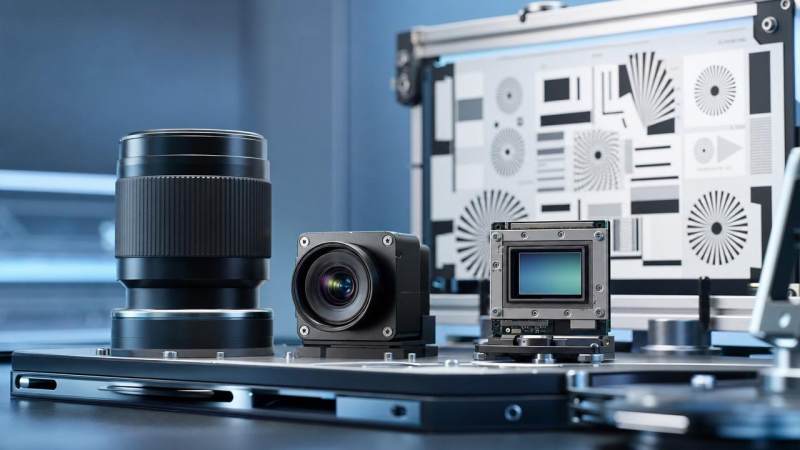
Optical standards sit at the intersection of safety, image quality, procurement control, and regulatory compliance. In surveillance, public lighting, transport hubs, industrial inspection, and smart infrastructure, they shape whether optical systems perform consistently under real operating conditions.
That is why optical standards matter far beyond lab testing. They influence acceptance criteria, maintenance planning, legal defensibility, and the long-term reliability of cameras, lenses, illuminators, displays, sensors, and related control systems.
As digital infrastructure expands in 2026, projects increasingly combine physical security assurance with optical environment optimization. In that setting, compliance is not only about passing a checklist. It is about knowing which requirements affect risk, visibility, and operational outcomes.
What optical standards actually cover
In simple terms, optical standards define how optical performance is measured, compared, and verified. They create a common language for manufacturers, testing bodies, project teams, and inspection authorities.
These standards may apply to transmissivity, luminous intensity, spectral output, glare control, resolution, distortion, color rendering, environmental durability, electrical safety, and electromagnetic compatibility.
Some optical standards focus on product design. Others govern test methods, calibration procedures, installation tolerances, or field performance under specific environmental conditions.
This distinction matters. A product may be built with strong materials yet still fail compliance if the measurement method, tolerance range, or installation environment does not align with the relevant standard.
Why compliance pressure is increasing now
The current compliance landscape is becoming more demanding for three reasons. Systems are more connected, performance expectations are higher, and cross-border procurement exposes projects to different legal and technical frameworks.
Electronic surveillance is a clear example. Image clarity now affects not only operational monitoring but also forensic review, privacy governance, and evidence reliability.
At the same time, lighting systems are no longer judged only by brightness. They are assessed for uniformity, visual comfort, energy efficiency, optical control, and compatibility with sensors or AI-enabled vision systems.
Platforms such as GSIM reflect this shift. By linking security policy, optical technology, sector news, and procurement signals, they show that optical standards are now part of strategic decision support, not just technical paperwork.
The compliance points that usually matter most
Not every clause has the same operational value. In practice, several compliance points tend to carry the greatest weight during selection, inspection, and risk review.
Measurement consistency
A result is only useful if it is reproducible. Test conditions, instrument calibration, ambient temperature, alignment, and sample handling must match the referenced method.
Application-specific performance
Optical standards should fit the actual use case. A lens, illuminator, or camera that meets a general benchmark may still underperform in low light, fog, vibration, or high-glare environments.
Safety and exposure limits
For visible, infrared, or laser-based products, exposure thresholds and photobiological safety requirements are essential. Overlooking them creates legal risk and operational liability.
Environmental robustness
Dust, moisture, vibration, corrosion, and temperature shifts can change optical output over time. Compliance should cover both initial performance and durability after environmental stress.
Documentation traceability
Certificates, test reports, calibration records, and version-controlled specifications should align. Weak traceability often causes more project delays than obvious technical defects.
How optical standards affect real project decisions
The practical value of optical standards becomes clearer when viewed through everyday decisions. They help separate acceptable products from suitable products.
This is especially relevant in mixed environments such as smart construction sites, urban monitoring networks, logistics yards, campuses, tunnels, and public safety corridors.
Where misunderstandings usually happen
One common mistake is treating all certificates as equal. Some documents confirm limited lab tests, while others indicate broader conformity. The scope, issuing body, and test date all need review.
Another issue is relying on headline metrics alone. High lumen output or strong resolution figures do not guarantee useful performance if beam control, contrast handling, or optical uniformity are poor.
There is also a tendency to ignore standards updates. As AI vision, Visible Light Communication, and digital evidence systems advance, the interpretation of optical standards keeps evolving with new operational expectations.
GSIM’s intelligence model is relevant here. A compliance decision today often requires more than a standards list. It benefits from regulatory interpretation, market trend analysis, and understanding how optical technology is being deployed globally.
A practical reading framework for optical standards
When reviewing specifications or tender documents, a structured reading approach saves time and avoids superficial compliance checks.
- Confirm whether the standard covers product design, test methods, installation, or ongoing operation.
- Check if the cited edition is current and accepted in the target market.
- Match optical standards to the exact application, not to a broad product category.
- Review tolerance limits, not just nominal values.
- Verify whether compliance was self-declared or independently tested.
- Look for links between optical performance and safety, EMC, and environmental requirements.
Usually, the strongest decisions come from reading standards as an operational package rather than isolated clauses. Optical output, installation geometry, maintenance cycles, and legal context often affect one another.
High-impact scenarios across sectors
Optical standards are not limited to one industry. Their relevance grows wherever visibility, safety, or image-based judgment influences outcomes.
Security and surveillance
Standards support image fidelity, low-light performance, infrared compatibility, and admissible documentation for incident review.
Roads, rail, and transport nodes
Here, optical standards help balance illumination, glare limitation, driver visibility, and sensor readability.
Industrial and logistics facilities
They guide inspection clarity, machine vision reliability, and durable performance in dusty or temperature-variable conditions.
Smart urban infrastructure
They support integrated lighting, connected sensors, public area visibility, and the convergence of AI vision with communications technologies such as VLC.
What to do next with this understanding
The most useful next step is to map optical standards against actual project risks. That means identifying where failure would affect safety, legal exposure, image usability, or maintenance cost.
From there, build a short compliance matrix. Include the required standard, test method, accepted tolerance, evidence source, and field verification point for each critical optical function.
It also helps to track changes in regulation and technology through a reliable intelligence source. When policies, surveillance rules, and optical innovation move together, static compliance assumptions age quickly.
Optical standards are most valuable when they inform judgment, not when they sit untouched in a specification file. Used well, they sharpen procurement, strengthen inspections, and support safer, more dependable infrastructure decisions.
The VitalSync Intelligence Brief
Receive daily deep-dives into MedTech innovations and regulatory shifts.