
Security
Safety Technology Gaps That Increase Workplace Risk
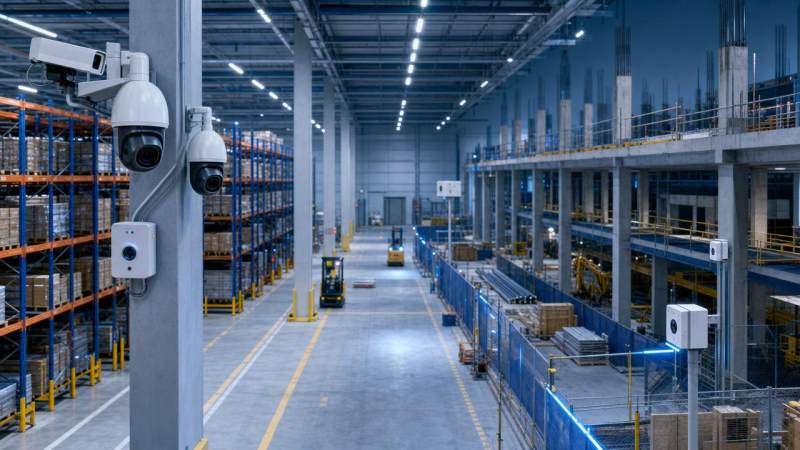
Why safety technology gaps become dangerous in real operations
Many incidents begin long before an alarm sounds or a person makes a mistake.
They often start where visibility is poor, monitoring is fragmented, or old devices no longer match current working conditions.
That is why safety technology deserves closer review across mixed-use workplaces, public facilities, logistics zones, and digital infrastructure projects.
The issue is not only whether equipment is installed.
The more useful question is whether that safety technology still supports real movement patterns, lighting conditions, compliance duties, and response speed.
In practical terms, outdated cameras, inconsistent illumination, isolated sensors, and weak data interpretation create blind spots that expand risk.
A corridor, loading area, control room, or temporary work zone may appear covered on paper while remaining exposed in daily use.
GSIM follows this shift closely through its Strategic Intelligence Center, where physical security assurance and optical environment optimization are reviewed together rather than as separate decisions.
That combined view matters because workplace risk rarely comes from one failed component.
It usually grows from small mismatches between environment, standards, technology capability, and operational reality.
Different sites expose different weaknesses
Not every site asks the same thing from safety technology.
A smart construction project faces changing layouts and temporary hazards.
A warehouse cares more about route visibility, vehicle interaction, and after-hours security continuity.
A public building often needs balanced surveillance, clear evacuation guidance, and compliance with privacy and access rules.
The key difference is not industry labels alone.
What changes the requirement is how people, equipment, and light behave across a full shift, not just during planned inspections.
This is also where many assessments go wrong.
Sites with similar floor area may still need very different safety technology because glare, dust, weather exposure, crowd density, and operating hours are different.
In actual application, better judgment starts with asking what the system must detect, under which light conditions, and how quickly a response must follow.
Where the main decision points usually change
This kind of comparison helps explain why safety technology cannot be judged by hardware specification alone.
On smart construction sites, change itself becomes a risk factor
Construction environments reveal safety technology gaps faster than stable facilities do.
Routes change, obstructions move, and work often continues under uneven lighting.
A system that worked last month may now monitor the wrong access point or miss elevated work activity after a layout change.
In these settings, the real question is adaptability.
Safety technology should support rapid redeployment, temporary perimeter control, and clear optical performance in dust, backlight, or night operations.
Commercial insights tracked by GSIM increasingly point to this problem in global smart construction programs.
Procurement often focuses on device count, while site exposure depends more on placement logic, update discipline, and integration with changing task zones.
A common misjudgment is assuming temporary environments can tolerate lower-grade monitoring.
In reality, the opposite is often true because change creates uncertainty, and uncertainty widens risk.
Warehouses and logistics hubs need more than surveillance coverage
In logistics environments, incidents frequently arise at intersections between movement, pace, and visibility.
Forklift routes, stacked goods, blind corners, and variable shift lighting make simple camera coverage insufficient.
Here, safety technology must help distinguish normal motion from emerging conflict points.
That may involve better zone illumination, sensor-supported alerts, and monitoring logic tied to traffic patterns rather than static floor plans.
One frequent problem is that facilities upgrade security devices but leave optical conditions untouched.
The result is recorded footage without dependable risk recognition.
Another issue appears over time.
Shelf height changes, seasonal throughput rises, and temporary storage compresses sightlines.
If safety technology is not reviewed against those operational shifts, blind spots return even after a recent upgrade.
Useful checks before treating a system as adequate
- Confirm whether visibility stays stable during peak loading hours, not only daytime checks.
- Review crossing zones where people and vehicles share narrow paths.
- Check whether alert outputs reach the right point of action without delay.
- Compare maintenance cycles with actual dust, vibration, and impact exposure.
In public facilities, compliance and optical clarity have to work together
Public buildings, transport nodes, and civic infrastructure present a different balance.
Security coverage matters, but so do legal boundaries, safe circulation, and clear visual guidance during routine use or emergency movement.
That is why safety technology in these places must be judged through both operational and regulatory lenses.
GSIM’s policy-oriented intelligence is relevant here because electronic surveillance cannot be separated from changing compliance requirements.
A technically strong system may still create risk if data handling, retention logic, or coverage zones conflict with current rules.
There is also an optical dimension that is often underestimated.
Poorly coordinated lighting can reduce recognition accuracy, distort emergency signage, and weaken navigation during stress events.
In these environments, safety technology should be assessed as a layered system involving visibility, monitoring, legal fit, and response coordination.
Where similar-looking sites are often misread
A recurring mistake is to treat similar buildings as identical risk environments.
Two facilities may use comparable equipment yet require different safety technology because occupancy pattern, ambient light, or incident response paths differ.
Another misread is focusing on acquisition cost while ignoring recalibration, downtime, replacement access, or interoperability limits.
This matters even more as AI vision and VLC begin to influence monitoring design.
Emerging capabilities can improve precision, but only when site conditions support them.
Installing advanced safety technology in a poorly mapped environment often creates a more expensive blind spot, not a smarter system.
A better approach is to review actual use patterns first, then decide whether the technology stack matches environmental complexity and maintenance capacity.
A more reliable way to match safety technology to site reality
When the goal is lower exposure, the strongest decisions usually come from structured comparison rather than fast replacement.
Start by mapping where visibility breaks down, where monitoring lacks continuity, and where standards have moved beyond legacy configurations.
Then compare those findings against actual operating hours, environmental stress, response timing, and optical performance needs.
In many workplaces, this reveals that the main safety technology gap is not a missing device.
It is the mismatch between site conditions and the assumptions built into an older system.
A practical next step is to create a site-by-site review standard.
Include lighting behavior, surveillance quality, environmental interference, compliance updates, maintenance burden, and future adaptability.
That method aligns with how GSIM frames modern risk intelligence: connect policy, optical conditions, and physical security decisions before failure exposes the gap.
Where workplace risk is rising, better safety technology decisions rarely start with more hardware.
They start with sharper scenario judgment, clearer standards, and a more honest reading of what the site really demands.
The VitalSync Intelligence Brief
Receive daily deep-dives into MedTech innovations and regulatory shifts.