
Security
Can risk assessment predict cascading security failures?
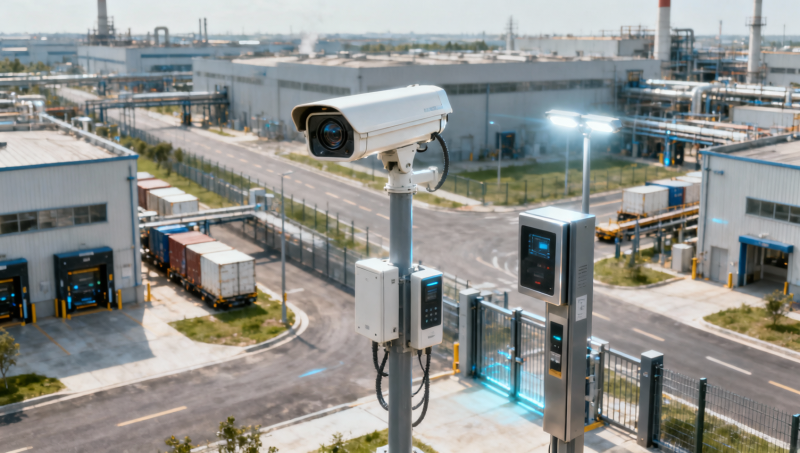
Can risk assessment really predict cascading security failures across modern infrastructures? The short answer is: not with perfect certainty, but yes—when it is designed as a dynamic, system-level process rather than a static checklist. In today’s connected environments, a single weakness in physical security, networked devices, lighting systems, surveillance operations, or policy enforcement can trigger wider operational disruption. For organizations responsible for critical sites, public safety assets, smart buildings, industrial environments, or urban infrastructure, the value of risk assessment lies in forecasting likely failure paths early enough to prevent them.
For decision-makers, project owners, technical evaluators, procurement teams, and operators, the real question is not whether risk assessment can “see the future.” It is whether the assessment framework is mature enough to identify dependencies, weak signals, and escalation points before one localized incident becomes a multi-layer security breakdown. That requires combining digital security, physical protection, optical sensing, compliance intelligence, and practical response planning into one operational view.
In cross-industry environments, cascading security failures rarely come from one dramatic event alone. They usually emerge from small, interacting gaps: poor visibility, delayed alerts, blind zones, unsecured edge devices, inconsistent maintenance, fragmented governance, or weak incident handoff between teams. A useful risk assessment helps organizations map those interactions, prioritize realistic scenarios, and invest in resilient security systems that reduce both the probability and impact of failure.
What decision-makers really want to know: can risk assessment prevent a chain reaction?
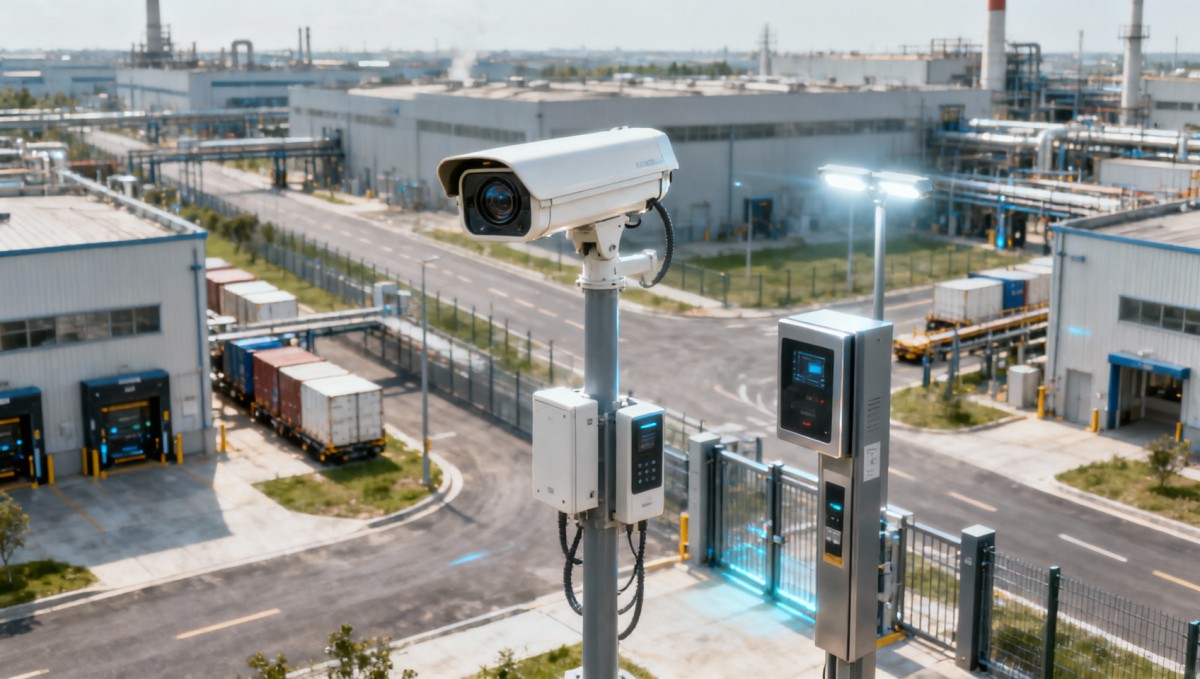
The most important answer for business leaders and project stakeholders is this: risk assessment can predict the conditions under which cascading security failures are likely to happen, and that is often enough to prevent them. In practice, organizations do not need flawless prediction models. They need a credible way to recognize where one control failure could spread into downtime, safety exposure, compliance penalties, reputational damage, or procurement waste.
This matters because modern security architecture is deeply interconnected. A camera outage may not seem catastrophic on its own, but if it coincides with poor site illumination, overloaded monitoring staff, delayed incident escalation, and an access control exception, the result can be far more serious than the original fault. In industrial sites, transport hubs, campuses, logistics facilities, healthcare environments, and smart city deployments, risk rarely stays contained within one subsystem.
That is why mature organizations are moving from asset-by-asset security reviews toward dependency-aware risk assessment. Instead of asking only, “Is this device compliant?” they ask, “If this control degrades, what downstream functions become unreliable?” This shift is especially important in 2026’s infrastructure upgrade cycle, where AI vision, digital surveillance, edge analytics, and optical environment optimization are being deployed at larger scale and with greater operational dependency.
Why cascading security failures are harder to detect than isolated incidents
Traditional security reviews often assume incidents are independent. They score threats, list vulnerabilities, and assign controls. That approach is still useful, but it can miss how failures interact across operations. Cascading failures usually develop through linked weaknesses across technology, environment, people, and governance. A site may pass a basic audit while still being exposed to multi-step breakdown scenarios.
Consider a practical example. In a public infrastructure setting, low-quality lighting reduces image clarity at the perimeter. AI-based analytics begin producing lower-confidence detections. Operators receive more false positives and become slower to respond. At the same time, maintenance delays leave one access point running with degraded fail-safe settings. None of these issues alone guarantees a breach, but together they create a pathway for intrusion, delayed verification, and escalation.
This is where optical engineering and physical security assurance become highly relevant. Security performance is not determined only by policy or software. It is also shaped by the optical environment: visibility, contrast, glare control, coverage geometry, sensor placement, illumination consistency, and the interaction between hardware capability and real-world conditions. Risk assessment that ignores these variables may underestimate failure probability and overestimate system resilience.
What a useful risk assessment must include if the goal is prediction
If organizations want risk assessment to predict cascading security failures in a meaningful way, the model must be broader than compliance scoring. It should include dependency mapping, operational context, failure propagation analysis, and environmental performance factors. In other words, it must evaluate not only whether controls exist, but whether they continue to function under stress, partial degradation, and abnormal conditions.
At a minimum, a predictive assessment should identify critical assets and functions, upstream and downstream dependencies, single points of failure, manual workarounds, recovery assumptions, and the time window in which a local issue can spread. It should also account for human factors such as monitoring workload, training gaps, incident escalation discipline, and role confusion between security, IT, facilities, and external service providers.
For sites using optical sensing, AI vision, smart lighting, or integrated surveillance systems, assessment criteria should go even deeper. Teams need to test image usability under varying light levels, weather effects, reflective surfaces, occlusion, bandwidth stress, storage latency, and device synchronization. These are not minor technical details. They can determine whether detection happens early enough to break the chain of escalation.
How to recognize the early signals of a cascading security problem
Organizations often miss warning signs because they track component failures but not pattern changes. A predictive security strategy looks for weak signals that suggest systemic fragility. These signals may include rising false alarm rates, repeated temporary overrides, recurring visibility complaints from operators, inconsistent event logs, delayed maintenance close-outs, patching exceptions on edge devices, or unexplained differences between site conditions and design assumptions.
Another useful indicator is control drift. Over time, systems that were properly designed can become less effective as operating conditions change. New building layouts, expanded traffic volume, added equipment, altered lighting conditions, staffing shortages, or software updates can all reduce the reliability of existing controls. If the assessment process is not continuous, organizations may rely on outdated assumptions while their actual exposure increases.
Procurement and commercial evaluation teams should also watch for hidden lifecycle risks. A low-cost deployment may appear efficient during acquisition but create cascading exposure later if it lacks interoperability, diagnostics, spare-part availability, firmware support, calibration guidance, or compliance documentation. In security environments, total resilience matters more than acquisition price alone. Good risk assessment helps buyers compare operational durability, not just specifications.
How different stakeholders should use the findings
Not every reader needs the same level of detail, but all stakeholder groups benefit from a shared risk picture. Enterprise decision-makers need to understand business impact: what failure chains could interrupt service, violate regulations, damage trust, or delay strategic programs. Their focus should be on material risk concentration, budget prioritization, governance accountability, and resilience return on investment.
Technical evaluators and project engineers need more operational specificity. They should use assessment outputs to test system architecture, environmental suitability, redundancy logic, optical performance, sensor placement, and integration integrity. Their goal is to challenge whether the system will still perform under degraded conditions, not just whether it works under ideal demonstration settings.
Operators and site users need actionable thresholds. They must know which anomalies deserve escalation, what fallback procedures apply, when manual verification is required, and how to distinguish nuisance faults from early-stage systemic failure. Meanwhile, procurement teams, distributors, and channel partners should use the findings to align product selection, maintenance planning, and service commitments with actual site risk profiles rather than generic product positioning.
Where many risk assessments fail in real projects
The most common failure is treating risk assessment as a one-time document created for approval rather than a decision-support tool used through the asset lifecycle. Projects often begin with robust planning, then lose discipline during integration, commissioning, handover, and operations. As a result, assumptions made during design are never revalidated against real environmental performance or evolving threat conditions.
A second problem is fragmented ownership. Physical security, cybersecurity, facilities management, lighting design, OT engineering, and compliance teams may each manage part of the risk, but no one owns the whole propagation pathway. Cascading failures grow in those gaps. Without cross-functional review, organizations may optimize individual systems while leaving dangerous interdependencies unresolved.
A third issue is overreliance on static scoring. Numeric risk scores can be useful for prioritization, but they often hide important context. Two sites may receive the same score while having very different exposure patterns. One may have a recoverable local weakness; the other may have a hidden chain that could disable surveillance verification, delay response, and trigger regulatory consequences. Senior teams should ask for scenario-based analysis, not just rankings.
A practical framework for assessing cascade risk across modern infrastructure
A stronger approach begins by defining critical functions rather than only critical assets. Ask which outcomes must be preserved: perimeter visibility, incident detection, access integrity, evidence capture, communication continuity, safe evacuation, or remote situational awareness. Then identify what technical, environmental, and human conditions each function depends on.
Next, map plausible failure chains. For each key function, ask what happens if one dependency degrades, what secondary effects follow, how quickly they spread, and which controls can interrupt the chain. This can be done through workshops, tabletop simulations, incident reviews, and design validation tests. The objective is not to model every possibility, but to expose the most credible and highest-impact pathways.
Finally, convert findings into action tiers. Some risks require immediate engineering correction, such as blind spots, insufficient illumination, unsupported firmware, or missing redundancy. Others need procedural controls, such as escalation playbooks, maintenance SLAs, training refresh cycles, or governance reviews. A useful framework ends with clear ownership, measurable indicators, and a schedule for reassessment as conditions change.
Why optical environment optimization matters more than many organizations realize
Security outcomes depend heavily on what systems can actually see. In many environments, detection quality is shaped less by nominal camera resolution and more by scene conditions. Poor lighting uniformity, glare, shadow transitions, reflective materials, weather variability, and improper luminaire placement can undermine analytics, operator confidence, and forensic value. Yet these factors are still underweighted in many assessments.
That is why the combination of physical security assurance and optical environment optimization is increasingly important. A resilient security system must be designed for visual reliability, not just equipment presence. This includes matching sensor characteristics with scene geometry, aligning illumination with surveillance objectives, reducing environmental interference, and validating performance under realistic operating conditions.
For organizations managing public projects, industrial zones, commercial campuses, or smart urban infrastructure, this is also a procurement and planning issue. Better optical design may reduce false alarms, improve operator efficiency, strengthen evidence quality, and lower the chance that a local visibility problem becomes a broader security failure. In that sense, optical engineering is not an aesthetic enhancement; it is a risk control measure.
So, can risk assessment predict cascading security failures?
Yes—if it is built to predict interaction, not just isolated defects. The most effective risk assessment does not promise certainty. It provides structured foresight. It identifies where weaknesses are likely to combine, where conditions are changing faster than controls, and where business, safety, and compliance exposure is concentrated. That is what allows organizations to intervene before a chain reaction develops.
For modern infrastructure leaders, the key takeaway is simple: resilience comes from understanding dependencies across physical security, digital systems, optical conditions, human response, and policy enforcement. A static audit may confirm that controls exist. A predictive assessment shows whether they will still work when pressure, complexity, and partial failure appear at the same time.
As global infrastructure upgrades continue, organizations that treat risk assessment as an active intelligence function—not a paperwork exercise—will make better security investments, reduce operational surprises, and build systems that are more adaptive, compliant, and durable. In a landscape shaped by AI vision, connected devices, and rising public safety expectations, that is the difference between reacting to failure and preventing it.
The VitalSync Intelligence Brief
Receive daily deep-dives into MedTech innovations and regulatory shifts.