
Security
Digital transformation goals can weaken site security
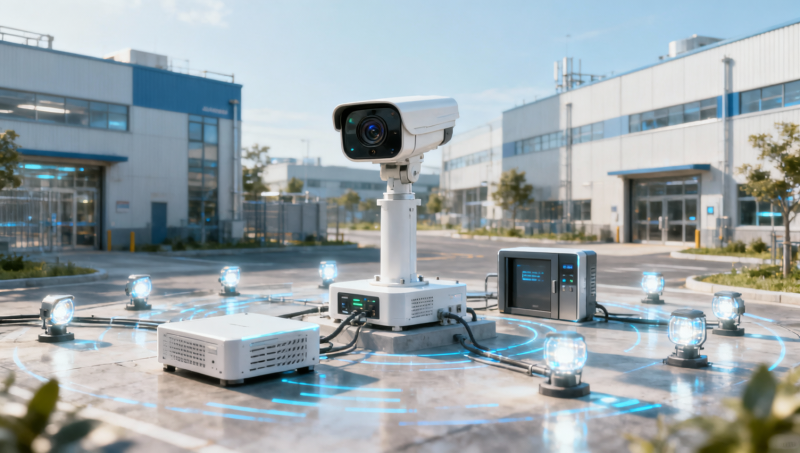
As digital transformation accelerates across industries, many organizations unknowingly create gaps in digital security, security architecture, and critical infrastructure protection. Without robust risk assessment, aligned security policies, and integrated security systems, modernization can expose new vulnerabilities. This article explores how smarter security solutions, optical sensing, and optical engineering can help decision-makers strengthen resilience while advancing transformation goals.
Why digital transformation goals often create new security exposure
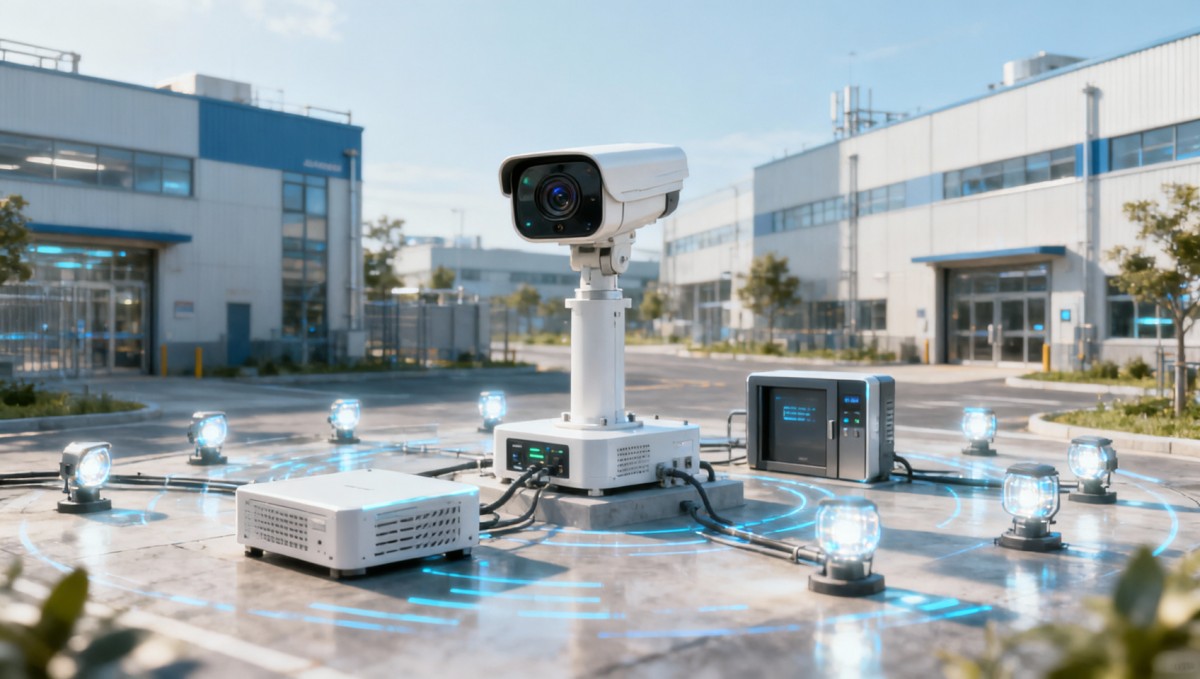
Across manufacturing, logistics, construction, healthcare, education, retail, utilities, and public infrastructure, digital transformation usually starts with speed, automation, and visibility targets. The problem is that cyber-physical risk rarely moves at the same pace. When organizations digitize access control, surveillance, lighting control, remote monitoring, and AI-based analytics in 3–5 parallel workstreams, integration gaps can appear before governance catches up.
This is not only an IT issue. It affects physical security assurance, optical environment optimization, compliance planning, procurement timing, and operational continuity. A site may add smart cameras, edge processors, wireless gateways, and cloud dashboards within 2–4 quarters, yet still lack a unified security architecture. As a result, digital security weaknesses emerge at interfaces: device onboarding, permissions management, firmware updates, sensor calibration, and third-party maintenance access.
For operators and project managers, the pain point is practical. A system that looks modern on paper may increase daily complexity on the ground. For procurement teams, the challenge is different: comparing suppliers without clear criteria for resilience, optical performance, and lifecycle support. For executives, the risk is strategic: transformation budgets can improve efficiency while weakening site security if resilience requirements were not embedded from phase 1.
Where the hidden risks usually begin
In most cross-industry projects, weak points appear in a small set of recurring areas. These are rarely caused by one bad product. More often, they come from fragmented decisions made across 4 key layers: infrastructure, devices, software, and governance. GSIM focuses on this intersection because physical security and optical systems are now deeply linked to digital decision-making.
- Legacy equipment remains active beside new connected devices, creating mixed environments with uneven update cycles and inconsistent authentication controls.
- Optical sensing, surveillance, and lighting upgrades are deployed for performance goals, but network segmentation and access rules are defined too late.
- Procurement specifications emphasize image quality, range, or automation functions, yet omit maintenance windows, patching responsibilities, and audit visibility.
- Global projects must align with local electronic surveillance rules, data retention expectations, and contractor access protocols, which vary by region and project type.
GSIM’s Strategic Intelligence Center is valuable here because it connects policy interpretation, optical technology evolution, and commercial procurement signals. That helps teams avoid a common transformation mistake: treating security controls as a final checklist instead of a design input. In practice, 3 early decisions often determine downstream resilience: system topology, visibility of device status, and role-based access design.
Which transformation scenarios most often weaken site security?
Not every modernization initiative creates the same level of risk. The most exposed environments are usually multi-site operations, temporary or semi-temporary project locations, and facilities with mixed public-private access. Smart construction sites, transport hubs, campuses, warehouses, municipal assets, and industrial yards often add new digital tools under schedule pressure. In these settings, a 7–15 day deployment target can compress validation and leave critical security assumptions untested.
Optical engineering adds another layer. Better illumination, machine vision, thermal sensing, or VLC-related infrastructure can strengthen operational awareness, but only if design choices fit the environment. Poorly aligned lighting for video analytics, blind zones in perimeter imaging, or insufficient environmental hardening can reduce detection reliability. The issue is not that advanced optical systems are risky by nature; it is that their security value depends on disciplined integration.
The table below summarizes common digital transformation scenarios and the site security weaknesses they may trigger. It is especially useful for technical evaluators, procurement staff, and distributors who need to frame project discussions beyond headline features.
A useful takeaway is that site security usually weakens at transition points, not at the core function itself. Organizations often buy capable equipment but under-specify commissioning, access governance, and environmental fit. That is why GSIM emphasizes both physical security assurance and optical environment optimization rather than discussing hardware in isolation.
High-risk signals decision-makers should not ignore
If a project shows two or more of the following conditions, resilience should be reviewed before scaling to additional sites. This applies across sectors because the root issue is governance maturity, not industry label.
- More than 3 vendors are responsible for interconnected surveillance, access, lighting, and analytics functions, but there is no shared acceptance matrix.
- The project requires regional compliance review, yet policy interpretation is handled only at the end of procurement.
- Devices are expected to operate continuously, but maintenance windows, update cycles, and fallback modes are not documented on a monthly or quarterly basis.
- Project success is measured mainly by deployment speed or device count rather than by uptime, response quality, incident traceability, and safe access control.
For information researchers and business evaluators, these signals help distinguish a promising proposal from a risky one. For distributors and agents, they also improve upstream communication because clients increasingly ask for decision support, not just product delivery.
How to evaluate smarter security solutions without slowing transformation
The right question is not whether to digitize, but how to digitize without opening avoidable security gaps. In practice, buyers should assess solutions through 5 dimensions: architecture, optical suitability, maintainability, compliance fit, and commercial scalability. This framework works well for enterprise decision-makers, technical teams, and procurement staff because it connects engineering choices with lifecycle risk.
Architecture refers to segmentation, credential management, event logging, and integration clarity. Optical suitability means checking whether illumination, camera placement, sensing range, and environmental conditions match the intended task. A system can look advanced but perform poorly if glare, shadow contrast, dust, vibration, or weather exposure were underestimated. Many digital security issues start as environmental design issues and only later appear as software complaints.
The table below can be used as a practical procurement guide during bid review, technical clarification, or pre-installation planning. It is built for multi-stakeholder decisions where security systems, optical sensing, and project delivery must align within a 2–6 month implementation horizon.
A strong evaluation process should include at least 4 implementation checkpoints: design review, pre-delivery verification, site commissioning, and post-launch inspection. In many environments, a 30-day review after activation is just as important as day-one acceptance because configuration drift often appears after users and contractors start interacting with the system.
A practical 4-step review process
1. Define mission-critical functions first
Separate must-have functions from optional digital features. If perimeter detection, evidence retention, or access event traceability are mission-critical, they should drive architecture choices before convenience features are added.
2. Validate environmental and optical fit
Check lighting levels, reflective surfaces, weather conditions, and operating hours. A day-shift proof of concept does not confirm night performance or harsh-weather reliability.
3. Review compliance and responsibilities
Clarify which party manages updates, access approvals, data retention rules, and maintenance records. This is especially important in distributed projects with multiple subcontractors.
4. Plan for operation, not only installation
Schedule training, monthly inspection routines, and escalation paths. A system that is easy to install but hard to govern becomes expensive over 12–24 months.
What standards, compliance checks, and implementation controls matter most?
Digital transformation in site security now sits at the intersection of physical protection, data handling, surveillance governance, and system reliability. While exact obligations vary by country and application, most organizations need a repeatable method for checking legal, contractual, and operational controls before rollout. This is where GSIM’s intelligence-led approach is especially relevant: it helps teams interpret global security policy shifts without losing sight of real deployment constraints.
For electronic surveillance and connected security systems, compliance review commonly covers 3 layers. First, lawful use and notification requirements. Second, retention, access, and audit controls for recorded events. Third, technical governance for updates, maintenance, and vendor access. When optical systems are part of the project, environmental suitability and safe operation standards also matter because poor optical conditions can undermine the control objective even if the device itself is compliant.
The checklist below provides a practical implementation framework. It does not replace legal review, but it helps project leaders and buyers align internal teams before tender, installation, or regional expansion.
- Map the project into 3 stages: design, deployment, and operation. Each stage should have documented owners and acceptance criteria.
- Define 5 core control points: account governance, device inventory, update process, evidence retention, and contractor access logging.
- Review optical environment factors every quarter or after major site changes, especially where lighting, line of sight, or traffic flow affect system reliability.
- Maintain decommissioning procedures for temporary installations so devices, credentials, and stored data are not left unmanaged after project closure.
A disciplined control model protects budgets as well as compliance. Rework caused by late governance changes often costs more than early validation. For procurement and commercial evaluators, that means the lowest initial quote may not be the lowest-risk option when training, service response, and policy alignment are considered over the project lifecycle.
Common misconceptions that weaken resilience
One common misconception is that a cloud dashboard automatically means better control. In reality, visibility is useful only when permissions, alert thresholds, and incident workflows are properly configured. Another misconception is that more sensors always improve security. In many sites, too many unmanaged inputs create noise and delay response. A third misconception is that security and illumination should be purchased separately. For AI vision, detection accuracy, and operator effectiveness, optical environment optimization is often inseparable from security performance.
How GSIM helps buyers, engineers, and decision-makers reduce transformation risk
GSIM is positioned for organizations that need more than product listings. Its role as a global intelligence portal supports both strategic and operational decisions by connecting physical security assurance with optical environment optimization. For users evaluating digital transformation programs in 2026 and beyond, that matters because the market is no longer defined only by hardware capability. The real differentiator is how well policy, optical engineering, commercial timing, and implementation discipline are stitched together.
The Strategic Intelligence Center provides value in three practical ways. First, Latest Sector News helps teams track changes in surveillance-related compliance expectations across regions. Second, Evolutionary Trends supports forward planning around AI vision and Visible Light Communication integration. Third, Commercial Insights helps procurement and business evaluators understand demand patterns in smart construction and public safety projects, which is useful when lead times, sourcing strategy, and competitive positioning are under pressure.
This makes GSIM relevant to multiple roles at once. Information researchers gain a structured map of risks and standards. Operators get clearer guidance on usable, maintainable site security systems. Technical evaluators can compare architecture and optical performance more intelligently. Procurement teams can frame RFQs around lifecycle requirements rather than headline claims. Distributors and agents can use GSIM intelligence to qualify opportunities and communicate with clients more credibly.
Why choose us for transformation-era security decisions
GSIM helps bridge the gap between fast digital change and disciplined risk control. Instead of treating site security, optical sensing, and procurement as separate conversations, we support a unified decision process. That means you can discuss 6 practical areas in one consultation: parameter confirmation, system selection, delivery cycle expectations, customization routes, compliance requirements, and quotation alignment.
If your team is planning a new deployment, a retrofit, or a multi-site expansion, contact GSIM to review project architecture, optical environment assumptions, vendor comparison logic, and implementation checkpoints. We can help you clarify which specifications belong in the tender, what risks should be checked before installation, how long a realistic deployment window may be, and where sample validation or phased rollout makes sense.
For organizations facing tight schedules, mixed compliance requirements, or difficult cross-functional approvals, an early discussion can reduce avoidable rework. Share your use scenario, target timeline, regional requirements, and preferred sourcing model. GSIM can support more informed decisions on security solutions, optical engineering fit, procurement planning, and resilience-first modernization.
- physical security assurance
- optical environment optimization
- global intelligence portal
- strategic intelligence center
- security policies
- optical technology
- electronic surveillance
- AI vision
- Visible Light Communication
- smart construction sites
- public safety projects
- risk assessment
- security solutions
- optical systems
- digital security
- sector news
- evolutionary trends
- commercial insights
- digital transformation
- optical engineering
- security systems
- critical infrastructure protection
- optical sensing
- security architecture
The VitalSync Intelligence Brief
Receive daily deep-dives into MedTech innovations and regulatory shifts.