
Security
Emerging Security Technologies Worth Tracking in 2026
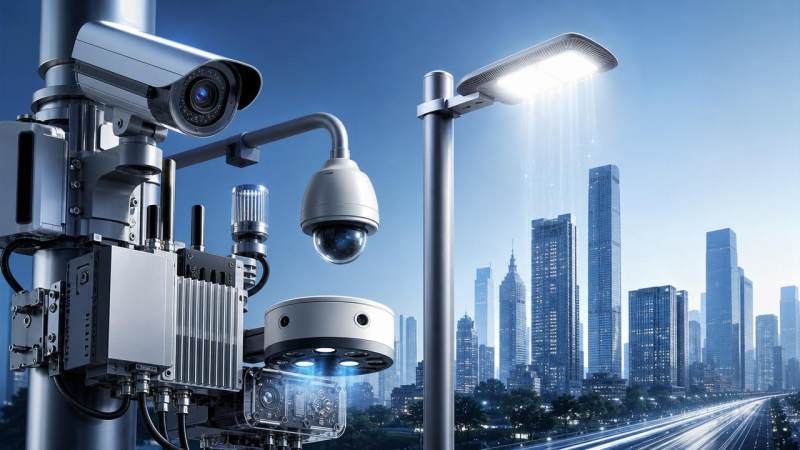
Emerging Security Technologies Worth Tracking in 2026
As cities, critical infrastructure, and digital ecosystems evolve, emerging security technologies are becoming central to resilient operations in 2026.
The real challenge is not spotting new tools. It is judging which technologies align with regulation, interoperability, optical performance, and long-term operational value.
That is where GSIM adds relevance. Its intelligence model connects physical security assurance, optical environment optimization, compliance tracking, and market direction into one strategic view.
For anyone researching emerging security technologies, the priority is strategic clarity. This means understanding what is maturing, what is risky, and what deserves monitoring now.
Why a Structured Review Matters in 2026
Security innovation is accelerating across sensors, AI, edge computing, lighting systems, and communications infrastructure.
Yet adoption decisions often fail because technologies are reviewed in isolation. A camera, sensor, or network feature may look advanced but still weaken compliance or maintenance efficiency.
A structured review helps compare emerging security technologies through consistent filters. It also reduces blind spots in cyber-physical integration, legal exposure, procurement timing, and environmental suitability.
In global projects, this method is even more important. Standards, surveillance laws, data residency rules, and infrastructure readiness vary by region and application.
Core Technologies Worth Tracking
The following emerging security technologies stand out in 2026 because they influence both security effectiveness and operational intelligence.
- AI vision analytics with behavior recognition now move beyond detection, helping systems identify anomalies, unsafe patterns, and perimeter threats with better contextual accuracy.
- Edge AI processing reduces bandwidth dependence and latency, enabling faster decisions in remote, mobile, and high-volume surveillance environments.
- Visible Light Communication, or VLC, is gaining attention for secure indoor data transmission and dual-use lighting infrastructure.
- Multispectral and low-light imaging improve detection quality where weather, smoke, glare, or poor illumination limit conventional camera performance.
- Autonomous patrol robotics and drones are becoming more useful when integrated with real-time analytics, geofencing, and incident response workflows.
- Digital twins for security planning support simulation, vulnerability mapping, and infrastructure testing before physical deployment begins.
- Zero-trust architecture for physical security systems is expanding, especially where devices, identities, and access events need unified verification.
- Sensor fusion platforms combine video, lidar, radar, thermal, and environmental inputs to improve confidence levels and reduce false alarms.
These emerging security technologies matter because they no longer operate as standalone hardware categories.
They increasingly shape data governance, infrastructure design, optical performance standards, and lifecycle budgeting.
Key Evaluation Points Before Tracking or Adoption
Use the following points to judge whether emerging security technologies deserve close monitoring or pilot consideration.
- Check regulatory fit first. Surveillance laws, biometric restrictions, recording retention rules, and cross-border data obligations can reshape technology value overnight.
- Review optical and environmental performance. Illumination conditions, reflection, fog, dust, and thermal variation often determine whether advanced detection works in practice.
- Assess interoperability with existing platforms. Open protocols, API maturity, and integration depth affect deployment complexity and future scalability.
- Measure edge versus cloud dependency. Latency, resilience, privacy, and network availability should guide architecture decisions.
- Evaluate model transparency and update governance. AI systems require clear retraining logic, bias monitoring, and auditability.
- Examine total operational cost, not just acquisition price. Maintenance cycles, licensing, storage, and specialist support often define long-term viability.
- Track procurement momentum across public and private sectors. Strong demand patterns can signal ecosystem maturity and support availability.
- Confirm cyber-hardening capabilities. Device authentication, encrypted communications, secure firmware, and access segmentation are essential in connected environments.
This evaluation model keeps emerging security technologies tied to measurable outcomes rather than hype cycles.
Where These Technologies Matter Most
Smart Cities and Urban Safety
Urban upgrades are pushing emerging security technologies into traffic control, public space monitoring, and emergency coordination.
In this setting, AI vision, sensor fusion, and VLC-enabled lighting can improve both situational awareness and infrastructure efficiency.
The key checks are privacy compliance, optical consistency across mixed lighting, and integration with legacy municipal systems.
Critical Infrastructure
Power facilities, transport hubs, water systems, and telecom assets require layered resilience.
Here, emerging security technologies should be judged by redundancy, low-latency response, tamper resistance, and offline continuity.
Thermal imaging, edge analytics, and zero-trust device controls are especially relevant in high-risk or remote environments.
Smart Construction and Industrial Sites
Temporary infrastructure creates shifting risk zones. Standard systems often struggle to maintain visibility, access control, and safety intelligence.
Emerging security technologies support dynamic geofencing, worker movement analysis, hazardous area alerts, and portable optical coverage.
The most useful checks involve deployment speed, environmental durability, and interoperability with project management platforms.
Commercial and Public Buildings
Buildings are becoming hybrid environments that combine occupancy intelligence, access security, and lighting optimization.
In these spaces, emerging security technologies should support indoor navigation, energy-aware surveillance, and policy-driven identity verification.
VLC, edge-enabled cameras, and sensor fusion can deliver value when privacy settings and maintenance models are clearly defined.
Commonly Overlooked Risks
One frequent mistake is assuming better analytics automatically mean better security outcomes.
If training data is weak or local conditions differ, detection confidence may drop while false trust increases.
Another overlooked issue is optical mismatch. Camera intelligence cannot compensate for poor placement, glare, shadow, or unstable lighting conditions.
Organizations also underestimate update governance. Emerging security technologies often rely on software revisions, model tuning, and firmware control.
Without strict change management, performance drift and cyber exposure can grow over time.
Procurement timing is another hidden factor. Buying too early may lock projects into immature ecosystems with limited support options.
Buying too late may create integration gaps with evolving standards and rising compliance demands.
Practical Steps for 2026 Tracking
Start with a short watchlist of emerging security technologies tied to real operational scenarios.
Then map each technology against five filters: regulation, optical fit, cyber resilience, integration readiness, and lifecycle cost.
- Create a quarterly review process using policy updates, sector news, and procurement signals from credible intelligence sources.
- Prioritize small pilots in environments with measurable risk patterns, stable governance, and clear technical baselines.
- Document optical conditions during testing, including contrast levels, weather effects, and artificial lighting behavior.
- Require evidence of secure device management, encrypted communication, and update traceability before wider rollout.
- Monitor supplier alignment with international standards and regional compliance changes affecting surveillance and data processing.
GSIM is particularly useful in this stage because it connects global policy interpretation with technology trend analysis and commercial insight.
That combination helps researchers track emerging security technologies with stronger context and fewer assumptions.
FAQ on Emerging Security Technologies
Which emerging security technologies deserve the closest attention in 2026?
AI vision analytics, edge AI, sensor fusion, VLC, low-light imaging, and zero-trust physical security architecture are among the most important areas to track.
Why is VLC relevant to security research?
VLC combines illumination and communication. It can support secure indoor data exchange while contributing to optical environment optimization.
How should new technologies be compared fairly?
Use the same criteria for each option: compliance, environmental fit, cyber-hardening, interoperability, support maturity, and operational cost.
Final Direction for Strategic Tracking
The most valuable emerging security technologies in 2026 are those that strengthen protection, improve intelligence quality, and fit evolving legal realities.
Tracking them effectively requires more than trend awareness. It requires disciplined comparison, field context, and trusted intelligence.
A practical next step is to build a focused review matrix, test assumptions against real environments, and follow global policy and procurement signals continuously.
With that approach, emerging security technologies become easier to evaluate, prioritize, and translate into informed 2026 decisions.
The VitalSync Intelligence Brief
Receive daily deep-dives into MedTech innovations and regulatory shifts.