
Security
Emerging Security Technologies Worth Tracking This Year
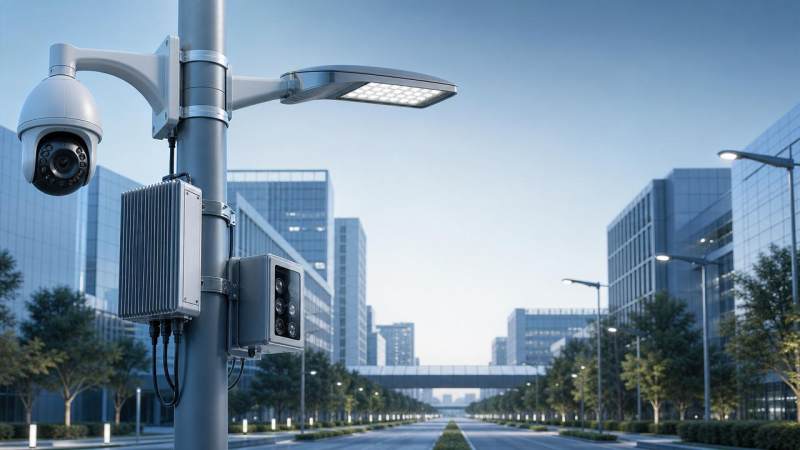
As global infrastructure and urban safety systems evolve, emerging security technologies are reshaping risk assessment, compliance, and operational visibility. This year, the strongest signals come from AI, optics, connectivity, and data governance.
For information researchers, these shifts are not isolated product updates. They indicate broader changes in regulation, procurement logic, urban resilience planning, and the design of future-ready protection systems.
Within this landscape, GSIM provides a useful lens. Its intelligence model connects physical security assurance with optical environment optimization, helping decode how technical innovation aligns with standards, policy pressure, and market demand.
Why emerging security technologies are accelerating now
The pace of adoption has increased because digital infrastructure is becoming more complex, more connected, and more exposed. Cities, campuses, logistics zones, and utilities now depend on layered security visibility.
At the same time, compliance expectations are rising. Cross-border surveillance rules, evidence management requirements, and public accountability standards are forcing security systems to become smarter and more auditable.
Another major signal is convergence. Security is no longer limited to cameras, alarms, and access points. It now overlaps with lighting, networking, analytics, identity, and environmental sensing.
This is why emerging security technologies matter beyond the security sector alone. They increasingly influence smart buildings, transportation, industrial operations, education spaces, healthcare campuses, and public safety programs.
The strongest trend signals shaping this year
AI vision is moving from detection to decision support
AI-enabled video systems are no longer focused only on motion alerts. Newer platforms classify behaviors, detect anomalies, and support event prioritization with stronger contextual accuracy.
This reduces monitoring fatigue and improves incident response speed. It also creates new expectations around explainability, bias control, and lawful use in regulated environments.
Optical environments are becoming part of security architecture
Lighting quality now directly affects surveillance performance. Low-light imaging, adaptive illumination, infrared balance, and glare management are gaining strategic importance across critical sites.
This aligns with GSIM’s focus on optical environment optimization. Better visibility conditions improve analytics reliability, support evidence clarity, and reduce false interpretation during incident review.
Visible Light Communication is gaining practical relevance
VLC is attracting attention as infrastructure operators seek secure, localized, and interference-resilient communication options. It may support indoor positioning, device signaling, and controlled data exchange.
Although still emerging, VLC reflects a wider pattern. Security and illumination are increasingly integrated rather than managed as separate engineering domains.
Edge processing is becoming a default requirement
Organizations want faster decisions without sending every data stream to centralized clouds. Edge AI supports privacy controls, bandwidth efficiency, and near-real-time response in distributed environments.
This is especially relevant in transport corridors, industrial areas, and temporary construction zones, where connectivity conditions can be unstable or policy-sensitive.
Cyber-physical integration is no longer optional
Physical security devices are networked assets. Cameras, controllers, sensors, and lighting gateways must now meet stronger cybersecurity expectations across firmware, identity, and lifecycle management.
As a result, emerging security technologies are increasingly evaluated through both safety and cyber resilience lenses.
What is driving the rise of emerging security technologies
Which emerging security technologies deserve the closest watch
- AI video analytics with explainable event logic
- Low-light and adaptive optical sensing systems
- Visible Light Communication for controlled indoor signaling
- Multisensor fusion across video, access, and environment data
- Edge-based processing for privacy-aware local decisions
- Zero-trust device identity and secure firmware frameworks
- Digital twins for scenario testing and infrastructure planning
Each of these emerging security technologies offers value, but their real significance appears when combined. The market is moving toward interoperable ecosystems rather than isolated devices.
How these shifts affect operations, planning, and investment
The first impact is on planning logic. Security programs now need stronger coordination across compliance, facilities, networking, lighting, and digital operations. Siloed evaluation creates blind spots.
The second impact is on performance measurement. Traditional metrics such as camera count or guard coverage are no longer enough. Decision quality, visibility accuracy, and response integrity matter more.
The third impact is on procurement timing. Buyers increasingly compare long-term interoperability, legal durability, and analytics trustworthiness instead of focusing only on upfront hardware price.
- Infrastructure projects must consider optical conditions from the design stage.
- Public safety deployments require clearer policy alignment and auditability.
- Smart construction sites need temporary yet intelligent monitoring layers.
- Cross-site operators benefit from edge visibility and centralized intelligence.
What should be monitored most closely this year
Not every innovation will scale at the same speed. The key is to watch where technology maturity, policy acceptance, and procurement momentum intersect.
- Regulatory movement: Watch updates affecting electronic surveillance, data residency, and evidence retention.
- Integration standards: Track open protocols and interoperability frameworks shaping system longevity.
- Optical performance benchmarks: Follow improvements in low-light capture, glare control, and illumination efficiency.
- AI governance: Monitor requirements for explainability, testing, and human oversight.
- Commercial signals: Review where smart city, campus, and industrial budgets are concentrating.
This is where intelligence platforms like GSIM add value. By combining sector news, evolutionary trend analysis, and commercial insight, they help translate technical movement into decision relevance.
A practical framework for responding to emerging security technologies
The outlook: convergence will define the winners
The most important conclusion is simple. Emerging security technologies are becoming valuable not as standalone novelties, but as connected layers within resilient infrastructure strategies.
Organizations that track only devices may miss the bigger transition. The stronger opportunity lies in understanding how AI, optical engineering, policy, and communication systems are converging.
That convergence also explains why market intelligence matters. Better decisions now depend on seeing technical change, legal direction, and commercial demand in one coordinated view.
To stay ahead, build a monitoring routine around standards, optical performance, analytics governance, and infrastructure investment signals. Use that framework to separate durable trends from short-term noise.
If this year’s developments are assessed with discipline, emerging security technologies can move from abstract trend language to practical advantage. That is the clearest path to foreseeing risks and illuminating the future.
- physical security assurance
- optical environment optimization
- digital infrastructure
- urban safety upgrades
- optical technology
- electronic surveillance
- AI vision
- Visible Light Communication
- smart construction sites
- risk assessment
- sector news
- optical engineering
- security systems
- emerging security technologies
- optical sensing
- security architecture
The VitalSync Intelligence Brief
Receive daily deep-dives into MedTech innovations and regulatory shifts.