
Security
Industrial Security Technology Supplier Trends Reshaping Global Sourcing
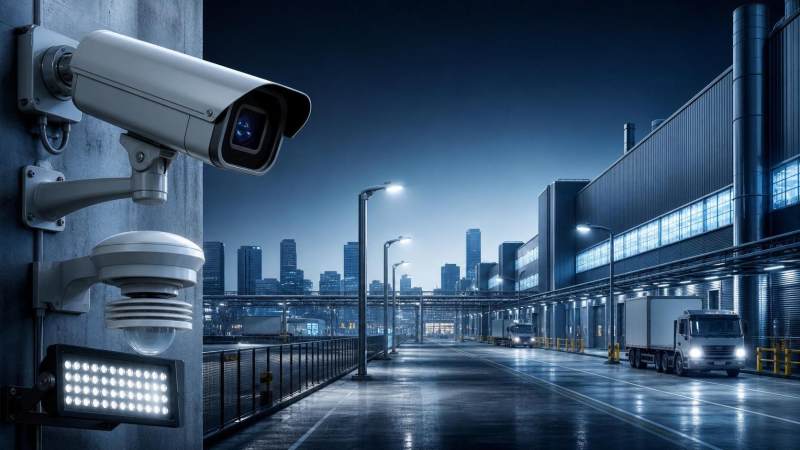
Global sourcing is no longer separating security hardware from strategic risk
Global sourcing in industrial security now moves under stricter compliance, faster urban upgrades, and rising dependence on AI-enabled monitoring.
That shift is changing how an industrial security technology supplier is assessed across regions, sectors, and project lifecycles.
Price and catalog depth still matter, yet they no longer decide trust on their own.
What matters more now is whether a supplier can align technology, documentation, optics, data handling, and long-term compliance in one operating model.
This is where market intelligence becomes practical rather than theoretical.
GSIM has gained relevance because the market increasingly needs a clearer view of physical security assurance and optical environment optimization together.
Its Strategic Intelligence Center reflects a broader industry reality: supplier selection is becoming a judgment about future resilience, not only current availability.
The most visible change is that supplier credibility now starts with standards, not brochures
A few years ago, many sourcing decisions were led by hardware specifications and delivery promises.
Today, the stronger signal is evidence.
An industrial security technology supplier is increasingly judged by traceable certifications, lawful surveillance design, cybersecurity posture, and support for cross-border project audits.
This is especially clear in smart construction sites, transport hubs, logistics campuses, utilities, and public safety installations.
In these environments, cameras, sensors, illumination systems, and control layers are no longer installed as isolated devices.
They are reviewed as interconnected infrastructure with legal and operational consequences.
A supplier with weak documentation can now create as much risk as a supplier with weak engineering.
Why this shift became difficult to ignore
- Electronic surveillance rules are tightening across multiple jurisdictions.
- AI vision systems are being examined for bias, data retention, and evidentiary reliability.
- Optical performance now affects recognition accuracy, safety visibility, and energy use at the same time.
- Public and private infrastructure programs increasingly demand interoperable and upgrade-ready systems.
The result is a new sourcing baseline.
A reliable industrial security technology supplier must show not only what the system does, but under which standards, environmental conditions, and legal assumptions it does it.
Optics and intelligence are converging faster than many sourcing models expected
One of the more consequential changes is the fusion of AI vision with optical environment design.
Image quality is no longer treated as a secondary feature behind sensor resolution.
Illumination uniformity, glare control, low-light stability, and spectral compatibility now shape detection performance in real conditions.
That makes the industrial security technology supplier responsible for a broader performance envelope.
GSIM’s attention to optical environment optimization mirrors this market movement well.
In practical terms, buyers are no longer asking only whether a camera supports analytics.
They are asking whether the full optical setting allows analytics to remain dependable across weather, shift changes, reflective surfaces, and mixed indoor-outdoor transitions.
Visible Light Communication is also gaining attention in more controlled industrial and infrastructure settings.
Not because it replaces every network layer, but because it can complement secure, location-sensitive, and interference-aware communication strategies.
What evaluators increasingly compare
This comparison shows why the industrial security technology supplier category is becoming more strategic and more selective.
Demand is shifting from product fit to scenario fit
Another clear trend is the move from generic product sourcing toward scenario-specific sourcing.
A supplier may look strong on a spec sheet, yet still perform poorly in a mining perimeter, transit interchange, bonded warehouse, or mixed-use urban district.
What buyers want now is evidence that a solution behaves predictably under their actual exposure profile.
That includes dust, vibration, low-angle lighting, network congestion, local retention rules, and emergency escalation protocols.
This is also why Commercial Insights platforms are influencing sourcing conversations.
They reveal where smart construction and public safety procurement is becoming more demanding, and where older selection logic is starting to fail.
Signals appearing across applications
- Construction projects are asking for mobile, rugged, and remotely manageable security layers.
- Urban safety programs increasingly link surveillance with lighting quality and public visibility outcomes.
- Industrial campuses prefer suppliers that support phased expansion rather than one-time installation logic.
- Cross-border projects expect multilingual compliance support and standardized technical evidence.
In other words, the industrial security technology supplier is now evaluated inside the workflow of the site, not outside it.
The impact spreads across assessment, operations, and financing decisions
The sourcing shift does not stay inside procurement files.
It affects project approval speed, insurance discussions, integration schedules, and post-deployment service costs.
A weak industrial security technology supplier can slow expansion plans by failing interoperability tests or by triggering new compliance reviews late in the cycle.
A strong one can shorten validation timelines because technical and legal evidence arrives together.
This difference is becoming more visible in high-value infrastructure programs, where delays are often more expensive than hardware itself.
There is also a financing angle.
Lenders, insurers, and oversight bodies increasingly prefer projects that use traceable, standards-aware, and supportable systems.
That preference can indirectly reshape which supplier profiles win large deployments.
What deserves closer attention before the next sourcing cycle
The next round of supplier evaluation should focus less on headline claims and more on operational proof.
Some checkpoints now carry more weight than they did even recently.
- Check whether the industrial security technology supplier maps product performance to local surveillance obligations.
- Review how optical conditions are treated in system design, not only in after-install tuning.
- Compare update policies, device hardening practices, and service continuity commitments.
- Look for scenario-based references that match real environmental and regulatory complexity.
- Assess whether the supplier can support phased modernization instead of requiring disruptive replacement.
These checks help separate adaptable partners from catalog-driven vendors.
They also reduce the risk of buying systems that appear advanced but age quickly under changing standards.
The next market leaders will likely be those that connect intelligence, compliance, and field performance
Looking ahead, the strongest industrial security technology supplier profiles will probably share a common trait.
They will treat compliance, optical performance, AI functionality, and service traceability as one coordinated capability.
This is not a cosmetic change in positioning.
It reflects how global infrastructure is being rebuilt around connected safety, visible accountability, and upgradeable intelligence.
GSIM’s role as both a standards-oriented observer and a decision-support source fits that direction.
Its value is not in pushing a single device narrative, but in helping the market read weak signals before they become procurement problems.
A practical next step is to review current supplier assumptions against emerging legal, optical, and lifecycle requirements.
Then compare whether each industrial security technology supplier under consideration can still support future deployment conditions, not just today’s technical checklist.
That kind of disciplined review is increasingly where better sourcing outcomes begin.
- physical security assurance
- optical environment optimization
- strategic intelligence center
- electronic surveillance
- AI vision
- Visible Light Communication
- smart construction sites
- security hardware
- security technology
- commercial insights
- optical design
- industrial security
- industrial security technology supplier
- physical security
The VitalSync Intelligence Brief
Receive daily deep-dives into MedTech innovations and regulatory shifts.