
Security
Security Technology Integration Risks to Check Early
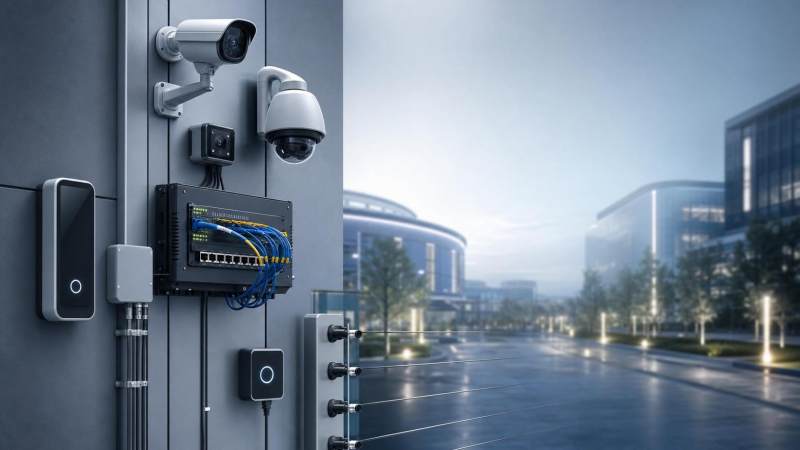
Why early security technology integration checks matter in live projects
Security technology integration rarely fails because one device is weak.
It usually fails because systems, lighting conditions, data rules, and site workflows were judged separately.
That gap appears early, even when the deployment looks technically complete on paper.
In 2026, more projects combine surveillance, access control, analytics, perimeter sensing, and optical infrastructure in one stack.
This makes security technology integration more valuable, but also more sensitive to hidden dependencies.
A transport hub, a smart construction site, and a public campus may all request integrated security.
Their risk profile is still very different.
Some environments depend on low-light imaging stability.
Others depend on cross-border compliance, resilient networking, or clean event correlation between legacy and new platforms.
GSIM often frames this issue well through its Strategic Intelligence Center.
The useful lesson is simple.
Security order and optical performance now affect each other, so early review should cover both.
Different environments create different integration risks
A common mistake is treating all security technology integration projects as software connection exercises.
In practice, the physical setting changes what must be checked first.
In dense urban upgrades, bandwidth and cybersecurity are not the only bottlenecks.
Camera placement, reflective surfaces, public lighting schedules, and multi-agency response chains may be just as decisive.
At temporary industrial sites, the issue is often different.
Equipment moves, power quality fluctuates, and the operating layout changes faster than the original design assumptions.
In mixed-use commercial buildings, integration looks easier because infrastructure already exists.
Yet legacy protocols, tenant privacy rules, and uneven maintenance standards often create slow failures.
The better approach is to judge each environment by interaction density.
Ask how many systems share data, how often conditions change, and what happens when one layer underperforms.
What usually changes from one setting to another
Public infrastructure projects need more than device compatibility
In transport corridors, civic plazas, and municipal safety zones, security technology integration is rarely a closed system.
Feeds may be reviewed by different authorities under different retention rules.
That means an apparently minor integration choice can become a legal or evidentiary problem later.
One frequent warning sign is incomplete policy alignment.
If video metadata, identity logs, and alarm timestamps follow different formats, incident review slows down.
Another is optical inconsistency.
Street lighting upgrades, LED flicker behavior, and reflective facades can undermine analytics even when cameras meet specification.
This is where GSIM’s blend of regulatory intelligence and optical environment insight becomes relevant as a reference model.
Early assessment should check not only protocol support, but also image usability under real illumination patterns.
If the deployment may later support AI vision or VLC-linked infrastructure, the baseline should be stricter from day one.
Construction and industrial sites expose fast-changing blind spots
Security technology integration on active sites behaves differently from permanent installations.
A layout that works this month may fail after the next phase shift.
Cranes, temporary fencing, dust, vibration, and night work all distort the original design logic.
The early check should focus on change tolerance.
Can cameras be relocated without reengineering the network backbone.
Can access rules be updated when subcontractor patterns change.
Can analytics still classify events accurately when lighting becomes uneven.
This is also where procurement assumptions often mislead the project.
A lower-cost camera can become expensive if enclosures, cleaning intervals, and replacement cycles were underestimated.
Commercial insights from global construction deployments show that durable integration architecture matters more than headline hardware specifications.
Early checks that reduce rework on dynamic sites
- Map which devices will move, not only which devices will connect.
- Test image quality under dust, backlight, and temporary floodlighting.
- Separate critical alarms from convenience analytics before bandwidth planning.
- Confirm how fast permissions, zones, and maintenance records can be updated.
Commercial and campus environments often hide softer integration failures
These environments look stable, yet security technology integration can stall for quieter reasons.
One building may contain different tenants, different risk tolerances, and different maintenance habits.
A shared security platform then becomes an operating agreement, not only a technical framework.
The early question is whether event ownership is clear.
If alerts are generated centrally but response authority is local, escalation logic needs to be defined before integration starts.
Another issue is legacy dependence.
A card system, lift control interface, or visitor platform may technically connect through middleware.
That does not guarantee stable synchronization after updates.
In actual use, the safer judgment is to test exception paths.
Check what happens when network segments drop, user records conflict, or optical conditions change across lobby, parking, and service corridors.
The most common early misjudgments
Projects rarely ignore risk completely.
They more often check the wrong risk too late.
- Choosing by specification sheet while ignoring the optical environment, viewing angles, and maintenance exposure.
- Assuming similar sites need the same security technology integration logic.
- Focusing on purchase cost while overlooking recabling, retraining, software updates, and replacement downtime.
- Treating compliance as a final approval step instead of a design input.
- Planning for current traffic only, even when AI vision or VLC expansion is already likely.
These errors matter because they create compound friction.
A small compatibility gap can trigger legal review, extra site work, and lower analytic confidence at the same time.
A practical way to judge security technology integration before commitment
A useful review method starts with the operating scene, not the product list.
Define where decisions depend on synchronized detection, lighting stability, and evidence quality.
Then check whether the chosen architecture can survive routine change.
This kind of framework reflects why knowledge-led platforms matter.
Not because they replace engineering judgment, but because they connect standards, trend signals, and field conditions early enough to influence it.
What to do next before the design locks in
Strong security technology integration begins with a sharper reading of the real scene.
List the operating conditions that could change within one year.
Compare compliance obligations across all data flows, not only primary video streams.
Validate optical performance in day, night, transition, and reflective conditions.
Check whether maintenance, expansion, and rights management are realistic for the site.
If the project touches public safety, smart construction, or mixed-use infrastructure, build a scene-based review standard before final selection.
That step usually reveals the hidden risks earlier than any specification sheet can.
The VitalSync Intelligence Brief
Receive daily deep-dives into MedTech innovations and regulatory shifts.