
Security
Optical Research Methods Shaping Lens Innovation in 2026
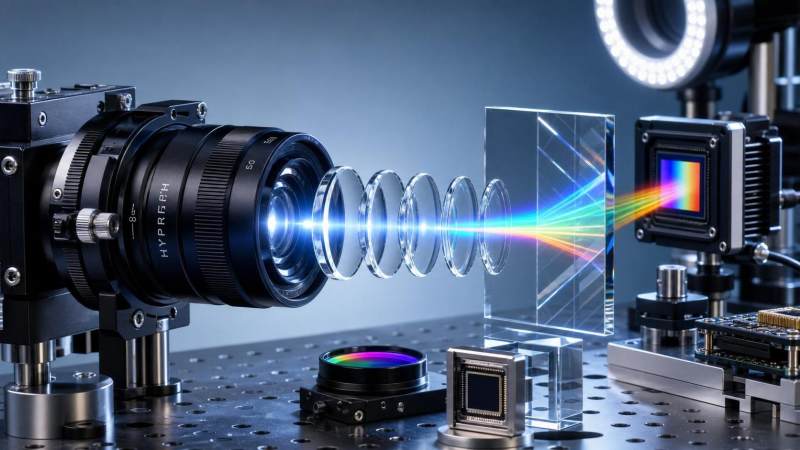
Optical research is moving from lab discipline to infrastructure signal
In 2026, lens innovation is no longer shaped only by component upgrades.
It is increasingly shaped by optical research methods that connect imaging performance with security reliability, lighting quality, and regulatory accountability.
That shift matters across public safety networks, smart construction sites, transport corridors, and urban lighting retrofits.
In these environments, a lens is judged less by headline resolution alone.
It is judged by how well it holds detail, contrast, stability, and signal integrity under mixed illumination and complex weather.
This is where optical research becomes decisive.
Recent market movement shows a stronger link between research-grade validation and real deployment decisions.
GSIM reflects this shift clearly through its Strategic Intelligence Center, where policy reading, sector news, and optical trend analysis increasingly appear in the same decision frame.
The practical implication is simple.
Optical research is becoming the language that translates lens design into measurable operational trust.
Why the change is becoming more visible in 2026
Several signals are converging at once.
Digital infrastructure programs are expanding camera density, edge analytics, and adaptive lighting at the same time.
That combination exposes lens weaknesses that older test routines often missed.
A lens that performs well in static daylight can still fail under pulsed LED lighting, glare, haze, or infrared spill.
As AI vision becomes more common, optical defects also have a downstream cost.
Blur, chromatic shift, distortion, and poor edge consistency can reduce detection confidence before software even begins to classify a scene.
Visible Light Communication adds another layer.
When lighting systems carry data or synchronization signals, optical research must account for spectral behavior, flicker interactions, and optical channel stability.
More noticeably, compliance pressure is changing evaluation habits.
Documentation is now expected to show not just what a lens claims, but how performance was verified across realistic operating conditions.
The main forces behind this research shift
The methods influencing next-generation lens design
The more interesting story is not that testing has expanded.
It is that optical research now begins earlier in design and stays active through deployment review.
Modulation Transfer Function remains central, but it is no longer read in isolation.
Teams increasingly compare MTF with distortion mapping, stray light analysis, focus drift under temperature change, and spectral response curves.
That creates a fuller picture of field behavior.
Wavefront sensing is also gaining ground because it reveals optical errors that can quietly undermine AI-based recognition.
In practical terms, this helps separate cosmetic sharpness from reliable scene interpretation.
Another visible development is simulation-linked optical research.
Instead of testing one finished prototype after another, teams use optical modeling with environmental data to predict lens behavior before tooling is finalized.
That shortens iteration cycles and reduces the risk of late-stage redesign.
Methods now drawing more attention
- Spectral transmission testing for day-night imaging and LED-heavy environments
- Stray light and flare analysis for urban scenes with reflective surfaces
- Thermal and humidity stress testing for long-duration outdoor stability
- Field-of-view consistency checks across sensor formats and mounting positions
- Optical data analysis tied to analytic events, not only laboratory charts
These methods do not replace classic optical research.
They extend it toward actual operating risk.
Impact is spreading beyond the lens itself
Lens innovation in 2026 affects more than image quality.
It influences camera calibration, lighting layout, storage efficiency, and the credibility of incident review.
That is why optical research now sits closer to system architecture discussions.
In transport environments, for example, better optical research reduces false confidence from clean daytime samples.
It highlights whether low-angle sun, headlight bloom, or tunnel transitions will break scene continuity.
On smart construction sites, the pressure is different.
Dust, vibration, temporary lighting, and irregular mounting points mean lens selection must be tied to rugged optical validation.
In public space lighting, optical research increasingly links illumination design with surveillance usability.
The old separation between lighting engineering and imaging performance is fading.
GSIM’s cross-domain intelligence model is relevant here because market signals, policy interpretation, and optical evidence are no longer separate decisions.
Where the effect is most immediate
- Electronic surveillance projects needing verifiable imaging consistency
- Urban lighting upgrades where optical environment optimization affects safety outcomes
- Hybrid AI vision systems that depend on clean optical input
- Cross-border programs facing varied standards and reporting expectations
What deserves closer attention before specifications harden
One common mistake is treating optical research as a final validation layer.
In current projects, it should inform requirement writing from the start.
The more useful question is not whether a lens passes a benchmark.
It is whether the benchmark reflects the deployment environment that will actually matter.
From recent demand patterns, four checkpoints stand out.
- Check whether optical research data includes night scenes, mixed spectra, and thermal variation
- Compare lens performance with the intended sensor, codec, and analytic stack
- Review whether imaging standards align with regional compliance expectations
- Look for optical data analysis that explains failure cases, not only best-case output
This also changes how commercial claims should be read.
A specification sheet may show strong aperture, focal range, and resolution support.
Yet without contextual optical research, those numbers say little about performance under pressure.
The next market signal will come from evidence quality
Looking ahead, the most competitive lens programs will likely be those backed by richer evidence, not just broader catalogs.
Optical research is becoming a market filter.
It helps distinguish durable innovation from short-cycle specification inflation.
More importantly, it supports better alignment between security assurance and optical environment optimization, which is exactly where 2026 infrastructure investment is moving.
For that reason, the smartest next step is not simply to track new lens launches.
It is to track how optical research is framed, what conditions it covers, and whether the data can survive operational scrutiny.
GSIM’s value in this environment is less about promotion than interpretation.
By connecting compliance updates, commercial signals, and optical research developments, it helps turn scattered information into structured judgment.
That is likely to matter even more as AI vision, VLC, and urban safety standards continue to converge.
A useful action path is clear.
Review current optical research assumptions, compare them with real scene demands, watch standards evolution, and build a staged evaluation model before requirements become fixed.
In 2026, better lens decisions start with better research questions.
The VitalSync Intelligence Brief
Receive daily deep-dives into MedTech innovations and regulatory shifts.