
Security
Security Innovation Trends Shaping Urban Protection in 2026
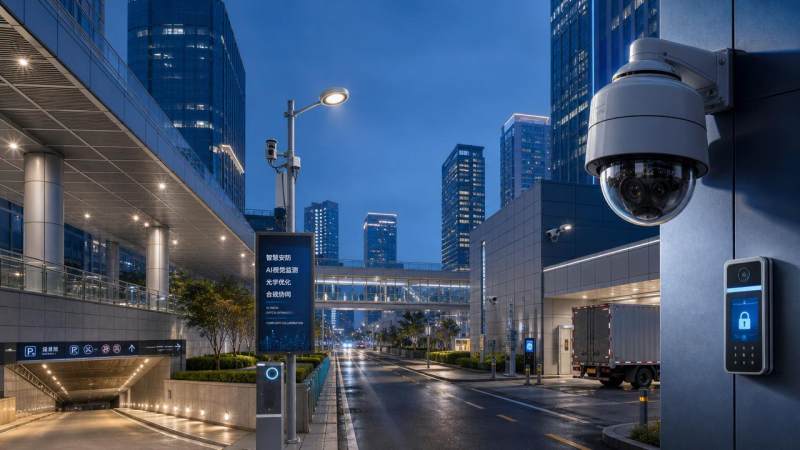
Security innovation is becoming the operating layer of urban protection
Urban protection in 2026 is no longer defined by more cameras or brighter lights alone.
The more visible shift is structural. Security innovation now sits inside digital infrastructure, compliance planning, and public-space design.
That matters because cities are upgrading transport nodes, logistics corridors, campuses, utilities, and civic buildings at the same time.
When these upgrades happen together, fragmented protection models start to fail.
A sensor network cannot perform well if lighting conditions distort machine vision.
A smart surveillance program cannot scale if local rules on data retention keep changing.
An access control investment loses value if it does not connect with emergency response, traffic flow, and site visibility.
This is why security innovation is moving from isolated devices to integrated urban assurance systems.
The strongest signal is not just technical progress. It is the demand for systems that remain effective under operational, legal, and environmental pressure.
In that environment, intelligence platforms such as GSIM gain relevance because decision quality depends on seeing standards, optics, and market demand together.
Why this shift is becoming more visible in 2026
Recent market movement shows that urban safety projects are being shaped by four forces at once.
The first is infrastructure digitization. Connected assets create more control points, but they also create more exposure.
The second is policy expansion. Electronic surveillance, biometric usage, and cross-border data handling now face tighter scrutiny.
The third is optical dependency. AI vision performance now depends heavily on illumination quality, contrast stability, and environmental clarity.
The fourth is budget discipline. Large projects still move forward, but justification has become more evidence-based.
Seen together, these forces explain why security innovation is no longer evaluated as a standalone category.
It is being judged by resilience, interoperability, compliance readiness, and lifecycle value.
This is also where GSIM’s Strategic Intelligence Center fits naturally into the conversation.
Its value is not promotional visibility. Its value is decision support across standards, technology direction, and procurement movement.
The next wave is being shaped by AI vision, VLC, and compliance convergence
Many discussions still treat these domains separately, but the market is moving in the opposite direction.
AI vision now depends on better scene quality, not only better algorithms.
Visible Light Communication, or VLC, is gaining attention because it links lighting infrastructure with localized data exchange.
Compliance frameworks are simultaneously redefining what acceptable monitoring looks like in practice.
That combination changes how security innovation is specified, tested, and maintained.
What makes this combination commercially important
- AI vision improves when glare, shadow, and low-contrast zones are reduced through optical planning.
- VLC opens new options for indoor navigation, asset signaling, and communication in dense environments.
- Compliance-by-design reduces retrofit costs when legal review happens before deployment.
- Integrated design shortens the distance between safety outcomes and capital justification.
From a market perspective, this is more than technology stacking.
It reflects a broader expectation that urban systems should sense, interpret, illuminate, and document events with fewer blind spots.
Security innovation is therefore shifting toward environments that are measurable and auditable, not merely monitored.
The impact is spreading beyond one security layer
One of the clearest changes in 2026 is that security innovation affects multiple business functions at once.
It influences site planning, legal review, operational continuity, maintenance logic, and vendor selection.
This is especially clear in mixed-use urban projects and large public environments.
Where the pressure is most visible
Transport infrastructure is demanding faster anomaly detection and clearer incident reconstruction.
Construction sites need temporary protection systems that can evolve into permanent digital layers.
Commercial districts require better coordination between crowd safety, parking flow, and lighting control.
Utilities and critical facilities are prioritizing low-latency alerts, perimeter confidence, and environmental visibility.
In each case, security innovation is judged by how well different systems exchange trustable signals.
A technically advanced device can still underperform if surrounding infrastructure is poorly synchronized.
That is why optical optimization is moving closer to core security planning.
Better lighting strategy now supports identification accuracy, safer movement, lower false alarms, and stronger evidentiary quality.
Demand-side signals are becoming more disciplined
From recent procurement behavior, buyers are asking more precise questions before approving large deployments.
They want proof of interoperability, regulatory fit, optical performance, and upgrade flexibility.
This makes security innovation a decision domain shaped by evidence rather than feature volume.
The questions now carrying more weight
- Can the system adapt to regional surveillance laws without redesigning the full architecture?
- Will AI vision hold performance under changing weather, reflective surfaces, and complex pedestrian flow?
- Does the lighting environment improve machine readability as well as human safety perception?
- Can temporary infrastructure scale into long-term operational use?
- Is there reliable market intelligence behind the selected standard, supplier path, and deployment timing?
These questions explain why intelligence-led platforms are becoming part of strategic evaluation.
GSIM’s role is especially relevant where compliance interpretation and optical technology must be assessed together.
Its cross-border perspective helps reduce the risk of making a locally acceptable choice that fails future expansion plans.
What deserves closer attention over the next planning cycle
The next phase of security innovation will reward selective focus more than broad experimentation.
Several areas deserve closer monitoring because they influence both risk exposure and return quality.
Priority signals to watch
- Shifts in surveillance compliance, especially rules on data storage, consent, and algorithm accountability.
- Performance benchmarks linking image analytics with real lighting conditions instead of lab assumptions.
- VLC-related pilots in transport hubs, campuses, and industrial interiors.
- Procurement movement in smart construction and public safety modernization.
- Evidence that integrated platforms reduce lifecycle complexity rather than simply aggregating features.
A practical response starts with mapping risk and visibility gaps across existing assets.
The next step is comparing where compliance, lighting, and sensing currently operate in silos.
After that, phased pilots become more useful than full-scale replacement.
They reveal whether security innovation is creating measurable operational confidence or just adding technical complexity.
A sharper approach to security innovation starts with better judgment
By 2026, urban protection is being reshaped by tighter standards, smarter optics, and more connected environments.
The most important takeaway is not that every new tool deserves adoption.
It is that security innovation now creates value when technology, compliance, and environmental performance are planned as one system.
That is also why informed market observation matters more than ever.
Platforms like GSIM help frame this transition by connecting policy interpretation, optical evolution, and commercial direction.
The most effective next move is to review current protection assumptions against these emerging signals.
Track where standards are changing, test how optical conditions shape detection quality, and build a phased response plan around real urban scenarios.
In this cycle, better judgment is becoming the real advantage behind security innovation.
The VitalSync Intelligence Brief
Receive daily deep-dives into MedTech innovations and regulatory shifts.