
Security
Optical Research Trends Reshaping Security Technology in 2026
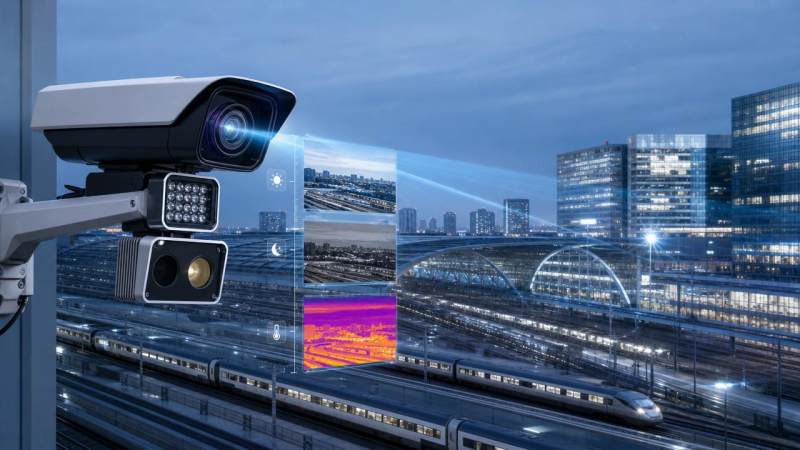
In 2026, optical research is no longer confined to laboratories—it is actively reshaping how security systems see, interpret, and respond to risk. From AI-enabled surveillance to visible light communication and compliance-driven infrastructure upgrades, these advances are redefining public safety priorities worldwide. For information researchers, understanding this shift is essential to tracking technology direction, procurement logic, and the future of secure urban environments.
Why is optical research becoming a strategic issue in security technology rather than just a technical niche?
The reason optical research now matters at a strategic level is simple: modern security systems depend on how accurately they capture, transmit, and interpret visual and environmental signals. In 2026, cameras, sensors, smart lighting, AI vision engines, and networked infrastructure are no longer separate investments. They function as an integrated decision layer for cities, transport hubs, industrial facilities, campuses, and critical public spaces. As a result, optical research influences not only image quality, but also risk detection speed, compliance readiness, operational cost, and system resilience.
For information researchers, this shift means that following optical research is no longer optional when evaluating security trends. It directly affects procurement standards, infrastructure design, surveillance performance, and regulatory alignment. Platforms such as GSIM are especially relevant in this environment because they connect policy interpretation with technology evolution, helping decision-makers understand which innovations are commercially meaningful and which are still experimental.
Another reason for this growing importance is that threat environments have changed. Security teams are being asked to monitor crowded, dynamic, and low-visibility settings while reducing false alarms and respecting privacy constraints. That challenge cannot be solved by software alone. It requires advances in optical research across sensor sensitivity, low-light imaging, spectral analysis, glare control, optical filtering, and communication between illumination and surveillance systems.
What parts of optical research are having the biggest impact on security systems in 2026?
Several branches of optical research are now shaping security technology in practical, measurable ways. The first is low-light and high-dynamic-range imaging. Security incidents do not happen under perfect lighting conditions, so the ability to retain detail in shadows, bright entrances, tunnel exits, or nighttime streets is increasingly valuable. Better optical design and sensor research help systems preserve identification quality where traditional cameras fail.
The second major area is multispectral and intelligent sensing. Traditional visible imaging is still important, but optical research now supports the use of infrared, near-infrared, thermal-adjacent sensing, and advanced filtering to improve detection in rain, smoke, fog, or partial obstruction. In a security context, this can mean better perimeter awareness, improved anomaly recognition, and more reliable event confirmation.
A third area is the fusion of optics and AI vision. Artificial intelligence depends heavily on the quality and consistency of incoming data. If the optical layer is weak, the algorithm performs poorly. Strong optical research improves edge definition, contrast, color fidelity, and signal stability, which in turn improves object classification, behavioral analysis, and license or identity recognition.
Visible Light Communication, or VLC, is also attracting attention. While still uneven in adoption, VLC represents an important convergence point between lighting and secure information transfer. In selected smart infrastructure scenarios, optical research into VLC can support localized communication, positioning, indoor navigation, and specialized data channels where radio frequency congestion or interference is a concern.
Finally, optical environment optimization is becoming a discipline of its own. This includes how light is placed, reflected, controlled, and synchronized with surveillance objectives. A poorly lit site can undermine an expensive camera deployment, while a well-designed optical environment can improve analytics performance without replacing the full hardware stack.
Which sectors and use cases are most affected by these optical research trends?
The impact is broad, but some sectors are moving faster because their risk profile and infrastructure complexity make optical research especially valuable. Public safety projects are among the first. Urban monitoring systems, transport interchanges, municipal corridors, and emergency response networks all benefit from better imaging accuracy, stronger environmental adaptability, and more efficient optical communication layers.
Smart construction sites are another major area. These environments combine moving equipment, temporary access points, variable lighting, dust, and safety hazards. Optical research helps improve worker detection, restricted-zone enforcement, and incident verification. For procurement teams, the focus is often not on the camera alone, but on the total visual operating environment.
Industrial facilities and logistics centers are also heavily affected. In these settings, security technology must work across warehouses, loading areas, control rooms, and perimeter zones with different lighting conditions. Optical research enables more dependable monitoring while supporting operational continuity. In many cases, better optical performance reduces the number of manual reviews required after an alarm event.
Healthcare campuses, education environments, data centers, and commercial real estate are increasingly relevant as well. These sectors are under pressure to improve safety without creating oppressive visual conditions. Optical research supports this balance by making surveillance more precise and illumination more purposeful.
How can information researchers judge whether an optical research trend is commercially meaningful or just industry noise?
This is one of the most important questions in 2026 because not every innovation deserves immediate attention. A useful way to assess optical research is to ask whether it changes measurable decision outcomes. Does it improve detection accuracy? Does it reduce false positives? Does it support compliance requirements? Does it shorten response time? Does it fit existing infrastructure? If the answer is unclear, the trend may still be immature.
Researchers should also examine whether the trend is appearing in procurement language, pilot programs, standards discussions, or cross-border regulatory frameworks. Once a topic moves from conference presentations into tenders, deployment guidelines, or interoperability specifications, it usually signals market relevance. GSIM’s role as a strategic intelligence portal is valuable here because it connects technology signals with policy and commercial evidence rather than treating trends as isolated headlines.
Another strong indicator is ecosystem readiness. A promising development in optical research may still struggle if manufacturers, integrators, software vendors, and public buyers cannot align around implementation. Commercially meaningful trends often show three signs at once: usable performance gains, realistic deployment pathways, and a clear compliance narrative.
The table below can help researchers quickly evaluate whether a security-related optical research trend deserves closer attention:
What are the most common misunderstandings about optical research in the security market?
One common mistake is treating optical research as a camera specification issue only. In reality, it affects the entire visual chain: illumination design, lens behavior, signal transmission, AI interpretation, environmental adaptability, and post-event analysis. Organizations that focus only on device resolution often miss the factors that determine real-world performance.
Another misunderstanding is assuming that more advanced optics always mean higher complexity without practical return. In fact, many advances in optical research are valuable precisely because they reduce operational friction. Better low-light capture, improved contrast management, or smarter optical filtering can lower false alerts and reduce the need for manual review, creating savings over time.
A third error is believing that AI can compensate for weak visual input. This is rarely true in demanding environments. If the optical foundation is poor, AI analytics inherit that weakness. Security leaders increasingly understand that better vision systems begin with stronger optical research, not only stronger software claims.
There is also a policy misunderstanding. Some buyers view optical upgrades as purely technical enhancements and delay regulatory review until later. Yet in 2026, surveillance compliance, data handling, public accountability, and infrastructure governance are tightly linked. Optical research becomes more valuable when it can be mapped to lawful, standards-aware deployment rather than standalone performance benchmarks.
What should organizations verify before investing in security systems influenced by new optical research?
Before moving from trend awareness to implementation, organizations should verify a set of practical conditions. The first is environment fit. A solution that performs well in a controlled demo may not work equally well in foggy ports, reflective retail entrances, uneven campus lighting, or high-speed traffic zones. Optical research must be translated into site-specific expectations.
Second, they should confirm data and analytics compatibility. If improved optical capture is expected to strengthen AI surveillance, then the analytics layer, storage logic, and incident workflows must be able to use that higher-quality data effectively. Otherwise, the added optical capability may be underused.
Third, they should assess lifecycle economics rather than initial hardware cost alone. Some forms of optical research lead to better durability, lower reconfiguration needs, and stronger long-term accuracy. Others may require specialized maintenance or integration skills. A responsible evaluation compares acquisition cost with operational benefit, training requirements, and upgrade flexibility.
Fourth, compliance mapping should happen early. This includes surveillance law, public procurement rules, infrastructure standards, and cross-border data expectations where applicable. GSIM’s intelligence-driven approach is useful because organizations increasingly need a knowledge system that links optics, security assurance, and legal frameworks in one place.
A practical pre-evaluation checklist
- What exact risk scenario is the optical upgrade meant to improve?
- Which environmental limitations currently weaken detection quality?
- How will the optical improvement affect AI analysis, storage, and network design?
- Is the innovation recognized in standards, tenders, or major deployments?
- What compliance reviews are needed before rollout?
- Can suppliers explain performance with scenario-based evidence instead of generic claims?
What does this mean for researchers tracking the future of secure urban environments?
For information researchers, optical research has become a signal of how security priorities are evolving across infrastructure, governance, and commercial investment. It reveals where cities and enterprises are shifting from passive monitoring to active environmental intelligence. It also helps explain why illumination, optics, AI vision, and regulatory design are converging into one planning conversation.
This matters because future-ready security systems will not be judged by hardware counts alone. They will be judged by whether they can see clearly, adapt to real conditions, support lawful operation, and produce usable decision intelligence. Optical research sits at the center of that transformation. It is shaping not just what security systems look like, but how they perform under pressure and how they fit into modern public infrastructure strategies.
For anyone studying trend direction, procurement logic, or cross-market opportunity, the most useful next step is to ask more precise questions. Which optical research themes are already influencing public safety tenders? Where are AI vision and optical environment optimization being specified together? How are compliance requirements affecting product selection? Which markets are exploring VLC as part of smart infrastructure planning? These are the questions that turn broad trend awareness into actionable intelligence.
If you need to confirm a specific direction, deployment pathway, evaluation cycle, or collaboration model, it is best to begin by clarifying the scenario, required performance threshold, regulatory context, and integration assumptions. From there, conversations about suppliers, timelines, technology fit, or research priorities become far more productive.
The VitalSync Intelligence Brief
Receive daily deep-dives into MedTech innovations and regulatory shifts.