
Security
Optical Standards That Matter in Modern Security Projects
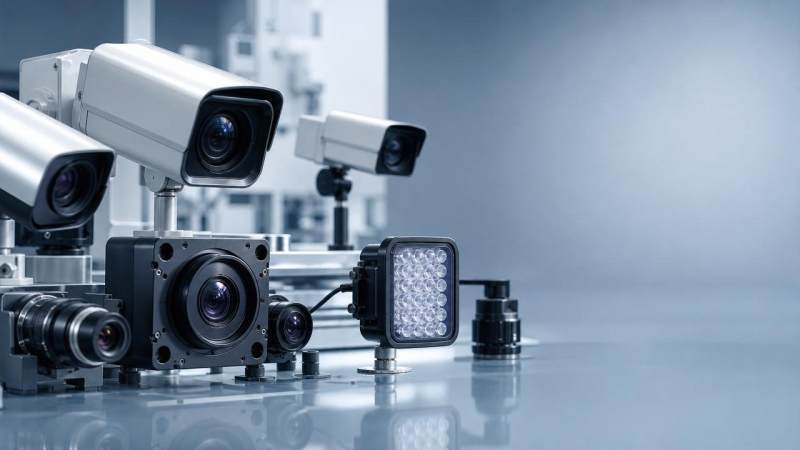
In modern security projects, optical standards are no longer optional benchmarks but critical foundations for accuracy, compliance, and long-term system performance. For technical evaluators navigating surveillance, illumination, and smart infrastructure upgrades, understanding how these standards shape device selection, interoperability, and risk control is essential to making informed decisions in an increasingly regulated global environment.
Why optical standards are moving to the center of security decisions
A visible shift is underway across physical security, public safety, transport, utilities, and smart construction projects: buyers are no longer evaluating cameras, illuminators, lenses, and sensing systems as isolated products. They are assessing whether the full optical chain can deliver measurable performance under real operating conditions, and whether that performance can be defended against compliance reviews, procurement audits, and lifecycle risk.
This is why optical standards now matter more than they did even a few years ago. As AI-assisted video analytics, low-light surveillance, machine vision, adaptive lighting, and connected infrastructure become more common, technical evaluators face a more complex task. A camera spec sheet may promise sensitivity, resolution, wide dynamic range, or infrared capability, but without recognized optical standards, those claims may not be comparable across vendors or reliable in deployment.
For organizations following the GSIM view of security assurance and optical environment optimization, the trend is clear: standards are becoming a strategic filter. They affect not only product quality, but also project eligibility, cross-border acceptance, maintenance planning, and the credibility of risk assessments.
The market signals technical evaluators should not ignore
Several signals explain why optical standards are gaining weight in modern security projects. First, end users are demanding proof of performance in difficult environments such as low illumination zones, mixed indoor-outdoor transitions, tunnels, data centers, ports, campuses, and high-density urban corridors. Second, public and enterprise buyers increasingly expect interoperability between security devices, control systems, lighting infrastructure, and analytics software. Third, regulatory attention is rising around data quality, system accountability, and operational safety.
As a result, technical evaluation is shifting from feature comparison to evidence-based validation. Optical standards help answer practical questions: How is image quality measured? Under what lighting conditions was performance tested? How stable is color rendering for identification tasks? How does optical distortion affect analytics accuracy? Can infrared output, glare control, or illuminance uniformity support the intended security outcome without creating safety issues?
This trend is especially relevant in projects where optical performance directly affects detection, recognition, tracking, or incident reconstruction. In these cases, optical standards serve as a common language between integrators, procurement teams, engineering consultants, compliance officers, and operations managers.
What is driving the stronger focus on optical standards
The rise of optical standards is not caused by one factor. It comes from the convergence of technology upgrades, policy pressure, and operational expectations.
From a GSIM intelligence perspective, another important driver is the growing connection between security order and optical environment quality. In many sites, surveillance performance is no longer determined by the camera alone. It depends on lighting design, reflection control, lens selection, sensor response, environmental conditions, and digital processing. That wider view makes optical standards a system-level issue rather than a component-level checkbox.
How these changes affect technical evaluation work
For technical evaluators, the most important change is methodological. The evaluation process must move beyond advertised specifications and ask whether the measurement basis is credible, transferable, and relevant to the deployment scenario. Optical standards support this by defining test conditions, tolerances, and reference methods that improve comparability.
In practical terms, this affects at least five areas. First, pre-qualification becomes more disciplined because vendors must show how optical claims were validated. Second, risk control improves because non-compliant optical performance can be identified earlier. Third, interoperability reviews become more meaningful when lighting, imaging, and transmission assumptions are documented. Fourth, acceptance testing becomes less subjective. Fifth, lifecycle planning becomes more accurate because replacement and calibration needs are easier to forecast.
This does not mean every project needs the same level of optical rigor. The right depth depends on the mission profile. A perimeter intrusion system, a transport surveillance upgrade, a city safety deployment, and a smart warehouse installation may all rely on optical standards, but the evaluation emphasis will differ across detection range, illumination geometry, color fidelity, environmental stability, and anti-glare requirements.
Where the impact is strongest across the project chain
Not every stakeholder feels this trend equally. The influence of optical standards is strongest where technical claims meet operational consequences.
This is one reason GSIM’s role as both a standard-setter and decision-support provider is timely. Security buyers increasingly need intelligence that connects policy trends, optical technology evolution, and procurement behavior. Optical standards are no longer a technical appendix; they are part of strategic project governance.
The standards conversation is expanding from devices to environments
Another major shift is that modern security evaluation is becoming environment-aware. Technical teams are paying closer attention to the optical conditions in which devices must operate: ambient light variability, reflective surfaces, atmospheric interference, thermal overlap, spectral conflicts, and urban lighting pollution. This expands the meaning of optical standards from product-level metrics to deployment-level performance assurance.
That change matters because many project failures are not caused by defective hardware. They arise from mismatches between optical assumptions and site reality. A camera with acceptable lab performance may underperform when facing vehicle headlights, LED flicker, wet ground reflections, or inconsistent supplementary illumination. Similarly, a high-output illuminator may create washout, hotspots, or unintended visibility issues if not matched to scene geometry and sensor response.
For evaluators, this means optical standards should be used as part of a broader field validation strategy. The question is no longer just “Does the device meet a standard?” but also “Does the optical system remain reliable within this operating environment?”
What to watch next in the evolution of optical standards
Looking ahead, several trend directions deserve close attention. One is the tighter alignment between optical standards and AI model performance. As automated detection and classification become central to security operations, image quality standards will increasingly influence algorithm outcomes and accountability. Another direction is the convergence of surveillance and illumination planning, especially in smart city, campus, logistics, and industrial settings where connected lighting can support or degrade security sensing.
A third signal is the likely rise of more scenario-specific evaluation frameworks. Instead of relying only on generic product claims, buyers may require evidence tied to perimeter zones, transport corridors, public spaces, critical rooms, or mixed-use environments. A fourth trend is the growing importance of procurement language. Tenders that vaguely request “high quality imaging” or “suitable low-light performance” are giving way to more measurable requirements anchored in optical standards and verification procedures.
These shifts do not mean technical teams need perfect certainty before acting. They mean that evaluation criteria must become more explicit, more documented, and more connected to operational outcomes.
A practical judgment framework for current projects
When reviewing security upgrades or new infrastructure deployments, technical evaluators can use a staged judgment approach to determine how optical standards should influence the project.
This framework helps convert optical standards from a passive reference into an active decision tool. It also reduces the common gap between procurement intent and field reality.
How organizations can respond without slowing innovation
A frequent concern is that stricter use of optical standards may delay procurement or limit innovation. In practice, the opposite is often true when standards are used intelligently. They create a more reliable basis for comparing emerging technologies, including AI-enhanced imaging, adaptive illumination, multispectral sensing, and VLC-related infrastructure concepts. Rather than blocking innovation, optical standards help teams separate meaningful advancement from marketing noise.
The best response is not to over-engineer every tender. It is to define where optical uncertainty creates the highest project risk and then apply standards with appropriate depth. High-consequence sites, regulated environments, and analytics-heavy deployments deserve stronger optical scrutiny. Lower-risk applications may need a lighter framework, but still benefit from documented measurement logic.
For many organizations, the next useful step is to build a short internal checklist: which optical standards are relevant to our use cases, where current specifications are too vague, which vendors provide comparable evidence, and which site conditions most often undermine expected performance. That kind of discipline supports faster and better decisions over time.
Final takeaways for technical evaluators
The strongest trend in modern security projects is not simply the addition of smarter cameras or brighter illumination. It is the shift toward accountable, testable, environment-aware performance. Optical standards sit at the center of that shift because they influence how systems are specified, compared, deployed, and defended.
For technical evaluators, the implication is straightforward: treat optical standards as decision infrastructure, not as background documentation. Watch for changes in compliance expectations, procurement language, AI dependence on image quality, and the growing integration of lighting with surveillance outcomes. Those are the signals most likely to shape near-term project success.
If your organization wants to judge how these trends affect current or upcoming deployments, focus on a few essential questions: Are our optical requirements measurable? Do our vendors provide comparable evidence? Have we tested performance in the real optical environment? And are we selecting systems that will remain compliant and usable as standards evolve? Clear answers to those questions will do more than improve procurement quality. They will strengthen long-term security assurance and help illuminate the future with confidence.
The VitalSync Intelligence Brief
Receive daily deep-dives into MedTech innovations and regulatory shifts.