
Security
Optical Standards: Key Changes to Watch in 2026
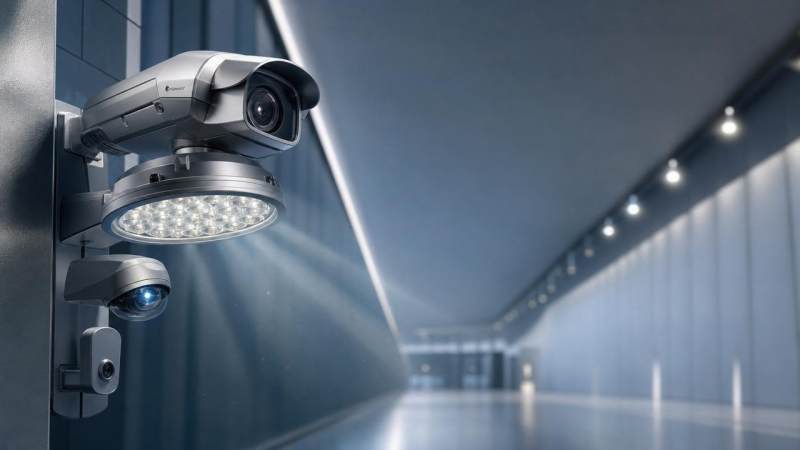
Optical Standards: Key Changes to Watch in 2026
As 2026 accelerates upgrades in digital infrastructure, smart construction, and urban safety systems, optical standards are becoming a critical benchmark for technical evaluators.
They now shape compliance, performance, interoperability, safety, illumination quality, sensor reliability, and emerging Visible Light Communication applications.
For GSIM, optical standards connect physical security assurance with optical environment optimization, turning technical rules into better risk decisions.
What do optical standards mean in 2026?
In 2026, optical standards are no longer limited to lenses, lamps, or laboratory measurement methods.
They define how optical systems perform inside connected buildings, transport hubs, public spaces, and digital security networks.
The scope includes image clarity, light distribution, glare control, color rendering, photobiological safety, sensor calibration, and data-ready optical interfaces.
This wider meaning matters because cameras, lights, displays, sensors, and communication modules increasingly share the same environment.
A surveillance camera may depend on stable illumination, while a VLC system depends on predictable light modulation.
When optical standards are fragmented, system performance becomes difficult to prove and maintain.
GSIM tracks this convergence through its Strategic Intelligence Center, linking compliance rules with practical security and illumination outcomes.
The important shift is from product-level testing toward environment-level assurance.
That means optical standards will increasingly assess how components perform together, not only how each component performs alone.
Key interpretation
- Optical performance will be judged across full operating conditions.
- Lighting quality and imaging reliability will be reviewed together.
- Compliance evidence will need clearer documentation and traceability.
- Security optics will require stronger alignment with privacy and data rules.
Which optical standards changes will influence AI vision systems?
AI vision depends on optical consistency before algorithms can deliver reliable interpretation.
In 2026, optical standards will place more attention on input quality, not just software accuracy.
Poor illumination, lens distortion, flicker, glare, and sensor noise can weaken detection performance.
Newer assessment models are expected to combine camera optics, lighting conditions, and environmental variables.
This is especially relevant for perimeter security, traffic monitoring, construction sites, logistics yards, and public safety infrastructure.
Optical standards may increasingly require repeatable test scenes, low-light validation, weather resilience checks, and lifecycle recalibration plans.
The practical result is a more disciplined approach to AI-enabled surveillance optics.
Systems will need proof that image inputs remain usable across day, night, rain, dust, glare, and seasonal changes.
Optical standards also intersect with cybersecurity and privacy regulations because clearer images can capture more sensitive detail.
A compliant design should balance recognizability, evidence quality, minimization principles, and access control.
Recommended checks for AI vision readiness
- Verify lens performance under real installation angles.
- Test image quality under minimum and maximum illumination.
- Review flicker impact on rolling shutter sensors.
- Confirm calibration procedures after maintenance or replacement.
- Connect optical standards evidence with data governance requirements.
How will illumination quality requirements evolve?
Illumination quality is becoming a central part of optical standards because lighting affects safety, visibility, comfort, and machine perception.
The 2026 trend is toward measurable, scenario-based lighting performance.
Traditional brightness targets are not enough for complex spaces with cameras, workers, vehicles, pedestrians, and automated systems.
Future-oriented optical standards will likely emphasize uniformity, glare limitation, spectral suitability, color accuracy, flicker control, and adaptive dimming behavior.
Smart construction sites provide a useful example.
They require safe work lighting, reliable camera visibility, temporary installation flexibility, and resilience against dust, vibration, and changing layouts.
Urban safety projects add another layer, because lighting must support public comfort and security monitoring without excessive light pollution.
Optical standards are therefore moving from simple output metrics toward balanced environmental quality.
For long-term planning, illumination systems should be reviewed as infrastructure, not decorative equipment.
That view supports better energy strategy, maintenance planning, and evidence-based compliance.
Common illumination mistakes to avoid
- Selecting high lumen output without checking glare.
- Ignoring flicker risks for cameras and sensors.
- Using uniform lighting plans for very different operating zones.
- Overlooking maintenance depreciation in compliance calculations.
Why does Visible Light Communication affect optical standards?
Visible Light Communication changes lighting from a passive utility into a data transmission layer.
This development will push optical standards to address both illumination performance and communication stability.
VLC applications may support indoor positioning, asset tracking, secure local communication, and smart building services.
However, communication through light introduces new testing challenges.
A lamp must remain visually comfortable while sending modulated signals that receivers can interpret accurately.
Optical standards will need to manage modulation depth, flicker perception, interoperability, electromagnetic compatibility, and fail-safe behavior.
The security dimension is also important.
VLC can limit signal leakage beyond physical boundaries, but it still requires authentication and operational controls.
GSIM views VLC as part of the wider fusion between optical engineering and security architecture.
The best preparation is to design lighting networks with upgrade paths, open interfaces, and documented optical performance.
Questions to ask before VLC adoption
- Can the lighting system support modulation without visible discomfort?
- Are receivers tested under realistic ambient light conditions?
- Do optical standards cover both lighting and communication functions?
- Is there a fallback plan if communication performance drops?
How should supplier readiness be evaluated?
Supplier readiness depends on evidence, not marketing claims.
In 2026, optical standards will make documentation quality a stronger selection factor.
Useful documentation includes test reports, calibration records, component traceability, environmental validation, firmware update policies, and installation limitations.
The review should compare declared performance with actual operating conditions.
A product tested in controlled indoor conditions may not be suitable for outdoor perimeter lighting or high-vibration construction environments.
Optical standards also support lifecycle accountability.
Replacement parts, firmware changes, lens cleaning, LED aging, and sensor drift can all change compliance status.
A ready supplier should explain how performance remains stable after installation.
GSIM’s Commercial Insights module follows these readiness signals across smart construction and public safety procurement patterns.
The strongest suppliers align technical specifications, compliance evidence, and operational support into one transparent package.
What risks arise when optical standards are overlooked?
Ignoring optical standards can create hidden operational, legal, and financial risks.
A system may appear functional during commissioning but fail under demanding field conditions.
For example, glare can reduce camera evidence value at night.
Flicker can distort machine vision results and affect comfort.
Inconsistent lighting can create safety blind spots in public spaces or industrial zones.
The compliance risk is also growing.
As surveillance, AI analysis, and connected lighting expand, regulators expect clearer accountability.
Optical standards help demonstrate that technical decisions were based on recognized methods and measurable performance.
Another mistake is treating cost reduction as the primary optimization goal.
Lower upfront cost can lead to higher maintenance, poor evidence quality, replacement delays, and compliance rework.
Practical risk controls
- Define operating scenarios before choosing optical equipment.
- Map each scenario to relevant optical standards.
- Request evidence for full environmental performance.
- Include recalibration and maintenance in lifecycle planning.
- Review privacy, security, and illumination impacts together.
FAQ summary: what should be watched first?
The 2026 landscape makes optical standards a strategic planning tool, not a late-stage technical checklist.
They help connect safety goals, AI performance, illumination quality, supplier accountability, and regulatory confidence.
Organizations preparing upgrades should start with scenario mapping, evidence requirements, and lifecycle performance reviews.
GSIM supports this process by interpreting global rules, tracking technology evolution, and connecting optical decisions with security outcomes.
The next step is clear: review current projects against optical standards before design choices become costly constraints.
With disciplined preparation, optical environments can become safer, smarter, and more interoperable.
That is the practical meaning of GSIM’s mission: Visioning Risks, Illuminating the Future.
The VitalSync Intelligence Brief
Receive daily deep-dives into MedTech innovations and regulatory shifts.