
Security
Smart City Security Technology Trends Shaping 2026 Upgrades
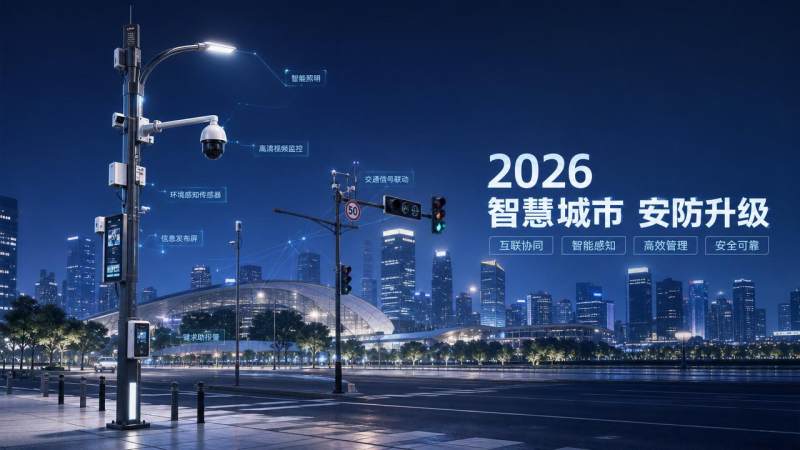
As cities accelerate digital infrastructure upgrades, smart city security technology trends are redefining how safer, smarter, and more compliant environments are planned. In 2026, the strongest results will come from aligning AI surveillance, connected lighting, cyber-physical resilience, and cross-border compliance requirements into one execution framework.
For complex urban programs, technology selection is no longer a hardware-only decision. It affects legal exposure, operating efficiency, public trust, energy use, and long-term interoperability. That is why a checklist-based approach is practical: it helps compare options, expose hidden risks, and prioritize upgrades that remain viable after policy, budget, and security conditions change.
Why a Checklist Matters for 2026 Smart City Upgrades
The latest smart city security technology trends show rapid convergence. Video analytics now connect with smart poles, adaptive lighting, edge computing, emergency communications, and digital command platforms. Without a structured review method, projects often overinvest in isolated tools that cannot scale across districts or agencies.
A checklist also improves procurement discipline. It forces early verification of privacy controls, optical performance, maintenance models, and standards alignment. This is especially important where public safety systems must work across transport hubs, campuses, mixed-use zones, industrial edges, and temporary construction areas.
Core Checklist for Smart City Security Technology Trends
- Map threat scenarios first, then match cameras, sensors, lighting, and response workflows to actual risks such as intrusion, congestion, vandalism, and perimeter breaches.
- Verify edge AI performance in low light, glare, rain, and crowded scenes before approving any platform marketed under current smart city security technology trends.
- Check optical quality, illumination uniformity, color rendering, and scene contrast because analytics accuracy depends heavily on the visual environment, not only software claims.
- Confirm interoperability with VMS, access control, smart poles, traffic systems, public address, and emergency dispatch platforms using open protocols and documented APIs.
- Review cybersecurity architecture, including device identity, encrypted transmission, patch policy, network segmentation, and secure remote maintenance for field equipment.
- Assess data governance rules for retention, anonymization, audit logs, and lawful evidence handling to reduce compliance risk in multi-jurisdiction environments.
- Test resilience under power loss, network disruption, and extreme weather by requiring local failover, backup storage, and degraded-mode operations.
- Measure lifecycle cost, not purchase price, including software licensing, cleaning, calibration, bandwidth, pole access, and replacement schedules.
- Prioritize modular deployment so districts can expand from pilot zones to citywide coverage without redesigning the physical or digital backbone.
- Demand standards visibility from suppliers and intelligence partners, especially on surveillance legality, optical safety, and public infrastructure procurement guidance.
What the Strongest Trends Are Showing
- Shift from passive monitoring to event-led response, where AI flags anomalies and triggers linked lighting, alerts, and access restrictions.
- Move from centralized-only processing to hybrid edge-cloud models that reduce latency and support bandwidth-constrained sites.
- Expand smart lighting from energy management into security enablement, improving visibility, deterrence, and camera performance.
- Adopt policy-aware architecture, where compliance checkpoints are designed into storage, analytics, and operator permissions.
- Increase demand for intelligence platforms that interpret regulations, procurement direction, and technology maturity across regions.
Scenario-Based Guidance for Different Urban Environments
Transport Corridors and Interchanges
Transport environments highlight the most practical smart city security technology trends. These sites need fast incident detection, people-flow visibility, and strong performance under variable lighting. Cameras should be paired with adaptive luminaires, edge analytics, and alert routing that can escalate within seconds.
Integration matters more than device count. A station, terminal, or corridor performs better when surveillance data connects with traffic signals, wayfinding, emergency call points, and public announcement systems. This reduces response friction during crowd surges or service disruption.
Public Squares, Parks, and Civic Districts
Open civic spaces require a balanced design. Coverage must support safety without creating excessive glare, dark pockets, or unnecessary data collection. Here, connected lighting and privacy-sensitive analytics are often more effective than aggressive surveillance density.
Leading smart city security technology trends in these areas include occupancy-aware lighting, anomaly detection at the edge, and evidence retention policies tuned to local law. Good optical design improves both deterrence and community acceptance.
Construction Zones and Temporary Urban Projects
Temporary worksites often sit outside traditional city security planning, yet they present high theft, liability, and access risks. Portable towers, wireless cameras, and temporary perimeter systems should be evaluated for autonomy, tamper alerts, and rapid redeployment.
This is where commercial intelligence becomes useful. Procurement shifts, site crime patterns, and compliance updates can materially change the best-fit solution. Trend awareness supports smarter deployment timing and avoids overbuilding short-life infrastructure.
Industrial Edges and Utility Assets
Industrial-adjacent sites need ruggedized systems and stricter segmentation between operational technology and public networks. The relevant smart city security technology trends here include thermal support, license plate recognition, environmental sensing, and multi-layer alarm verification.
Optical environment optimization is especially important around substations, logistics yards, and service corridors. Poor light placement can reduce analytic value, increase false alarms, and complicate incident review.
Commonly Missed Issues and Risk Warnings
Ignoring the Optical Layer
Many projects buy advanced analytics but underfund lighting quality. Weak illumination, reflection, and uneven contrast can make premium AI perform like a basic system. Security outcomes depend on the full visual chain.
Treating Compliance as a Late Review
Surveillance legality, data retention, and cross-border data handling cannot be patched in after installation. Current smart city security technology trends reward early legal mapping and documented governance controls.
Overlooking Maintenance Reality
Field devices fail in practical ways: dirty lenses, unstable mounts, outdated firmware, blocked lines of sight, and degraded power supplies. Maintenance access and service intervals should be specified before rollout.
Building Closed Technology Stacks
Vendor lock-in limits future upgrades. If systems cannot exchange events, metadata, and health status, citywide coordination becomes expensive. Open integration is a core requirement, not a premium feature.
Practical Execution Recommendations
- Start with one representative pilot area and validate detection rates, lighting impact, network load, and operator workflow before scaling.
- Build a joint review matrix covering security, optical performance, cyber controls, legal requirements, and lifecycle maintenance.
- Use intelligence sources that track global regulations, sector news, and procurement movement to support timed investment decisions.
- Document upgrade paths for firmware, analytics models, storage expansion, and smart pole attachments so infrastructure remains adaptable.
- Score every proposal against resilience, interoperability, and compliance evidence rather than relying on headline feature lists.
A disciplined framework is increasingly essential because smart city security technology trends are moving faster than traditional infrastructure cycles. Decision quality improves when threat intelligence, optical expertise, and standards interpretation are evaluated together rather than in isolated workstreams.
Conclusion and Next-Step Action
The most effective 2026 upgrades will not come from buying the most visible technology. They will come from selecting systems that are interoperable, resilient, legally sound, and optimized for real urban conditions. That is the practical meaning behind today’s smart city security technology trends.
Use this checklist to review current projects, identify gaps in optical conditions and governance design, and compare suppliers on measurable readiness. Where uncertainty remains, rely on trusted intelligence platforms such as GSIM to interpret policy change, technology evolution, and procurement direction before committing to full-scale deployment.
The VitalSync Intelligence Brief
Receive daily deep-dives into MedTech innovations and regulatory shifts.