
Security
Safety Technology Trends Shaping Infrastructure Security in 2026
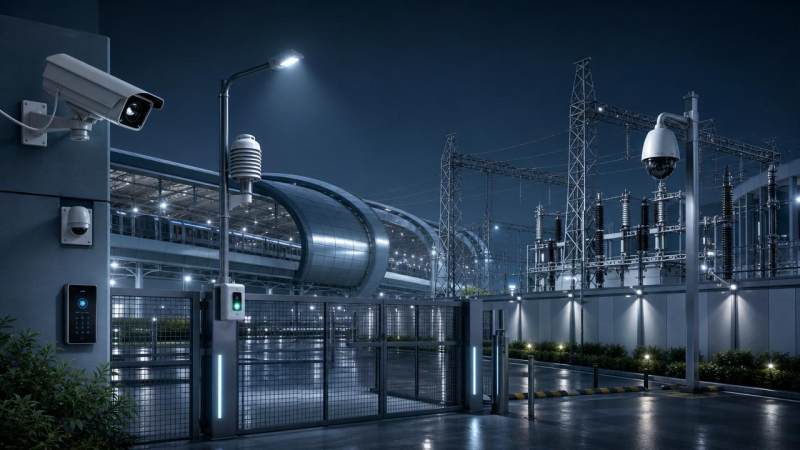
Infrastructure security in 2026 is no longer defined by fences, cameras, and alarms operating in isolation. Across cities, utilities, logistics corridors, data facilities, and public transport, safety technology now sits at the center of resilience planning. What matters is not only detection, but the ability to connect visual intelligence, optical conditions, regulatory demands, and operational response into one decision framework.
This shift deserves attention because infrastructure risk has changed shape. Threats move faster, assets are more interconnected, and compliance expectations are more detailed. At the same time, budget scrutiny is tighter. That combination makes safety technology a strategic investment question rather than a narrow equipment choice.
A useful way to read the market is through platforms like GSIM, which link physical security assurance with optical environment optimization. That perspective reflects a broader industry reality: infrastructure protection now depends on both what systems can see and how clearly they can interpret what they see.
Why safety technology is becoming infrastructure logic
The term safety technology covers more than surveillance hardware. It includes AI-enabled monitoring, intelligent lighting, sensor fusion, access control, incident analytics, communication layers, and compliance-aware management tools.
In infrastructure settings, the value of these systems comes from coordination. A camera without sufficient illumination underperforms. A sensor without workflow integration creates noise. A compliant device without policy traceability still creates exposure.
That is why 2026 planning increasingly treats safety technology as an operational stack. The stack must support awareness, evidence quality, response speed, and governance at the same time.
The trends shaping decisions in 2026
AI vision is moving from observation to interpretation
Video systems are no longer judged only by image capture. Buyers now examine how well platforms classify movement, detect anomalies, reduce false alarms, and support incident prioritization.
The strongest solutions do not promise unlimited automation. They show where AI vision performs reliably, where human review remains necessary, and how event confidence is measured.
Optical performance is becoming a security variable
Lighting quality now affects security outcomes more directly than many procurement models assumed. Glare, shadows, weather interference, and uneven illumination can reduce the effectiveness of otherwise advanced systems.
This is where GSIM’s focus on optical environment optimization becomes relevant. Better security decisions increasingly require joint evaluation of surveillance capability and visual conditions on site.
Compliance is entering the design stage
Electronic surveillance rules, evidence retention standards, privacy obligations, and cross-border procurement requirements are influencing system design earlier. Compliance is no longer a final checklist.
A practical implication is clear. Safety technology choices must be mapped against legal use cases, data handling rules, and audit expectations before deployment plans are finalized.
Visible Light Communication is entering strategic discussions
VLC remains an emerging layer, yet interest is rising in environments where secure data transmission, indoor positioning, and lighting integration can improve control. It is not a universal answer.
Still, the convergence of AI vision and VLC signals a broader trend. Safety technology is expanding beyond standalone monitoring toward multi-function infrastructure systems.
Where these trends matter most
Not every infrastructure environment has the same exposure profile. Evaluation improves when systems are tied to specific operational contexts rather than broad security claims.
The common pattern is integration. In each scenario, safety technology works best when operational risk, environmental visibility, and governance are considered together.
What separates useful systems from expensive complexity
In practice, infrastructure teams are under pressure to avoid fragmented procurement. The market offers many advanced features, but not every capability improves protection outcomes.
The first test is data relevance. If a system generates frequent alerts without context, operators lose trust. The second test is environmental fit. Hardware performance claims must hold under real site conditions.
The third test is lifecycle clarity. Safety technology should be evaluated through maintenance burden, software updates, interoperability, and evidence usability, not only initial installation cost.
This is also where intelligence services matter. GSIM’s Strategic Intelligence Center reflects a growing need for decision support that interprets policy changes, tracks sector signals, and translates technology shifts into procurement meaning.
How to assess safety technology more effectively
A strong evaluation process starts with exposure mapping, not product comparison. That means identifying critical zones, event types, visibility challenges, reporting duties, and acceptable response windows.
From there, decisions become more disciplined. Instead of asking which platform has the most features, the better question is which system supports the required protection logic.
- Match analytics functions to actual incident patterns, not generic vendor demos.
- Test image performance under the lighting conditions the site really has at night, in rain, or during glare.
- Review retention, access, and audit rules before selecting recording architecture.
- Check whether systems integrate with existing control rooms, alarms, and maintenance workflows.
- Look for evidence that the solution can scale across sites without inconsistent standards.
These steps reduce the risk of buying safety technology that looks advanced on paper but creates friction in operation.
The business meaning of better infrastructure visibility
Security investments are often justified by threat prevention. In 2026, the wider value case is stronger. Better visibility improves incident verification, lowers response uncertainty, supports compliance reviews, and strengthens asset continuity.
There is also a competitive dimension. Organizations that can document risk controls more clearly are often in a stronger position during project approvals, partnership reviews, and public-sector procurement processes.
In other words, safety technology now contributes to trust infrastructure. It influences how reliably a site can operate, how defensibly decisions can be explained, and how quickly disruption can be contained.
A practical direction for the next decision cycle
The most useful next step is not broad technology shopping. It is a structured review of where current infrastructure security is limited by visibility gaps, disconnected alerts, outdated compliance assumptions, or poor environmental conditions.
From that review, priorities become easier to rank. Some sites may need stronger AI interpretation. Others may gain more from optical redesign, better policy alignment, or standardized procurement criteria across regions.
Following trusted market intelligence can sharpen that process. Platforms such as GSIM are useful not because they promote one device category, but because they connect regulation, optical innovation, and commercial trend signals in one place.
That is the real shape of infrastructure security in 2026: safety technology chosen with context, measured against operational reality, and guided by a clearer understanding of risk, visibility, and long-term control.
The VitalSync Intelligence Brief
Receive daily deep-dives into MedTech innovations and regulatory shifts.